Минуле
ДОСЛІДЖЕННЯ ТА РОЗВИТОК ТАВРІЙСЬКОГО РОЗПИСУ: МИНУЛЕ
The nineteenth century remains a turning point in the search for, and revival of, the folk art of southern Ukraine. If we take into account the natural and geographical conditions, the way of life and the development of material culture, we can follow how certain classical images of folk art were transformed in our region. The observations of Yevhenia Petrivna Bondarenko (1928–2014), member of the National Union of Journalists of Ukraine and of the National Union of Masters of Folk Art of Ukraine, and a researcher of the living folklore of her land, made during editorial assignments, confirmed the existence of Tavrian painting as an ethnic and cultural phenomenon.
Yevhenia Bondarenko wrote: “I consider it deeply mistaken, for any understanding of the past and of the development of contemporary folk art in Ukraine, when certain theorists try to draw artificial borders between plastic folklore and oral and musical folklore, and deny even the attempt to carry its native images, intonations and motifs from one art into another. Tradition is the living water of folk wisdom, philosophy and aesthetics. When tradition develops and moves, it exists today and will live tomorrow…”
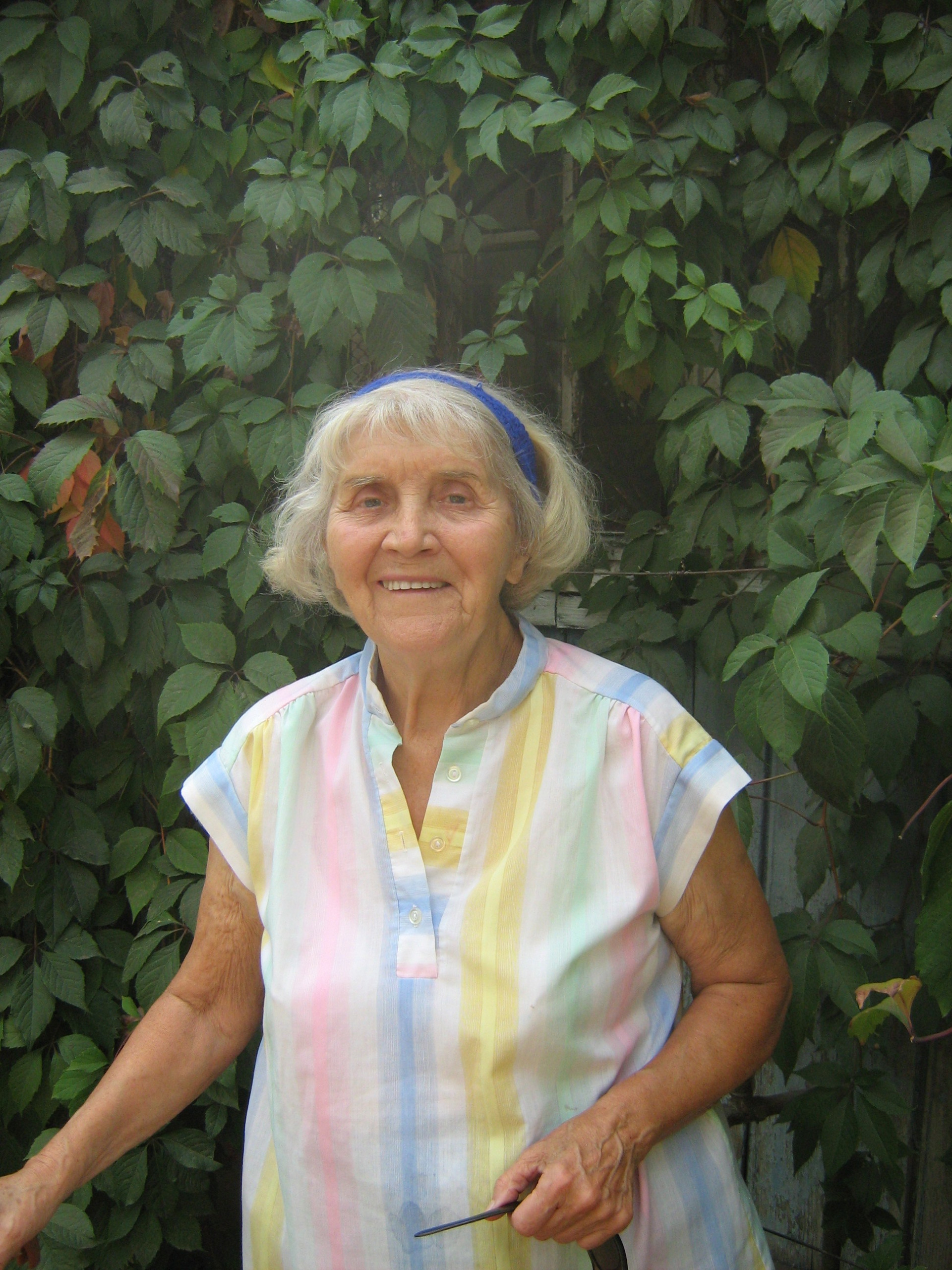
It was Yevhenia Bondarenko who discovered Tavrian painting — a unique ethnic phenomenon of Ukrainian decorative and ornamental art of the Tavrian land: the Kinburn Spit and other coastal settlements of our region, especially the Ochakiv region. An untiring researcher of folk art, she travelled widely along the Black Sea coast and gathered its folklore treasures. The symbolism of folk embroidery and painting became a particular passion.
Once, during a working expedition, she came to Kinburn and fell in love with the land at once. From then on she returned more and more often. Her friend and colleague Tetiana Ivanivna Danylenko recalls that Yevhenia Bondarenko walked the whole spit many times and spoke at length with everyone she met. Age did not matter to her: she found a common language with each person. History, traditions, the details of everyday life, folklore — everything interested her. Especially precious was her meeting with a well-known mazalnytsia of Kinburn. Maria Knyha — that was the woman’s name — taught Yevhenia Bondarenko all the subtleties of the painting that she herself possessed.
What so enchanted Yevhenia Bondarenko in Tavrian painting? Its deep philosophical meaning. It is not only about aesthetic beauty. Still more, it is about the undying values of past generations, masterfully encoded in brushstrokes for those who would come after.
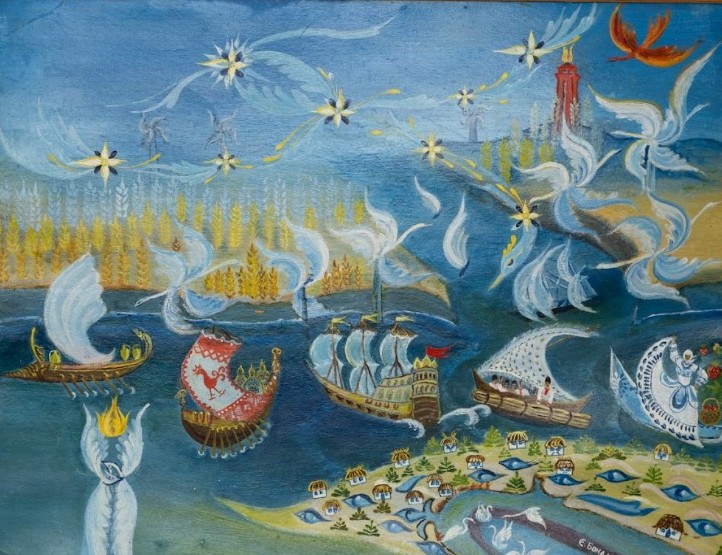
Бондаренко Євгенія. «Ти прокинься, Лимане!». 2001 рік
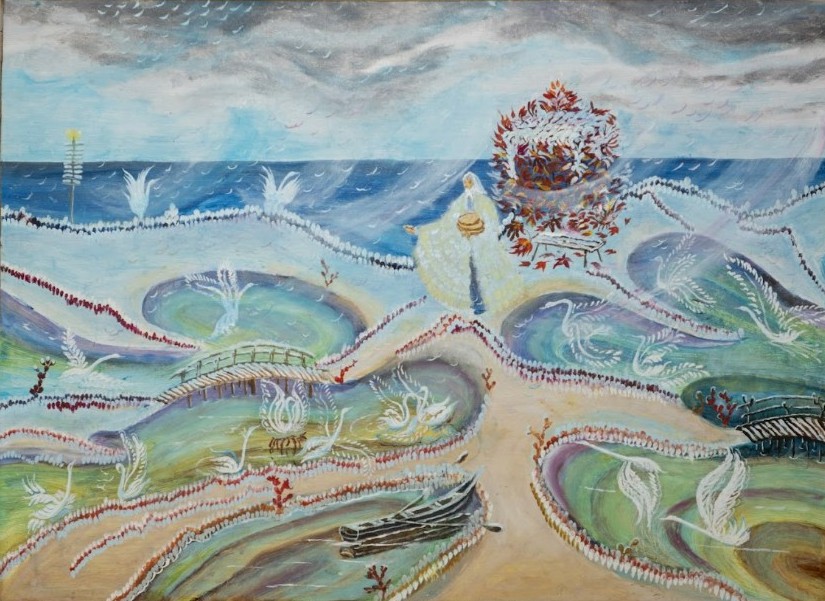
Бондаренко Євгенія. «Скіфське пір'я летить». 2003 рік
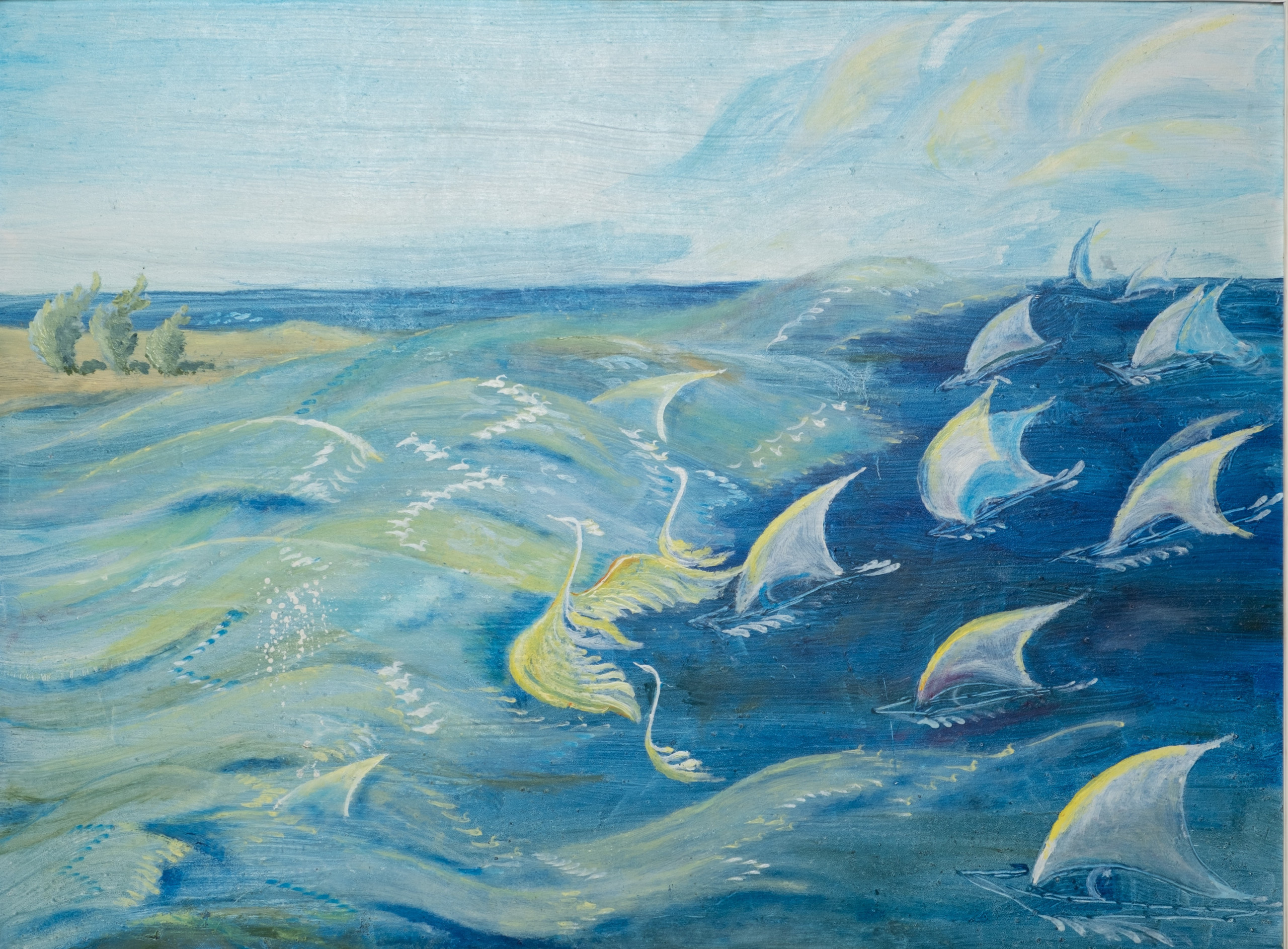
Бондаренко Євгенія. «Зустрічав Лиман регату...». 2002 рік
Yevhenia Bondarenko understood that few bearers of the painting remained. She began to gather information about “Tavryka” with energy and to restore it in her many publications, film stories and books. Later she began to paint and to give masterclasses.
Of course, the greatest canvas for the painting in those years was the walls of village houses, skilfully decorated by the mazalnytsi. But certain elements could also be found on ceramics, jewellery, objects of the home interior, even in embroidery, on textiles and in pictures. The material was scarce — and yet it became priceless for the revival of Tavrian painting.
Yevhenia Bondarenko, member of the National Union of Masters of Folk Art of Ukraine and of the National Union of Journalists of Ukraine, set down the results of her ethnographic observations and searches in numerous works.
She created a full series of paintings of deep philosophical content, in which she revealed the unique beauty of the Northern Black Sea region and of the universe as a whole. She worked in the genre of naïve art, interweaving on the canvas a painterly background with elements or images of folk painting.
Contemporary researchers, masters and admirers of her work still note this. In the journal Folk Art (2004, nos. 1–2), Yevhenia Bondarenko wrote of her own pictures: “The combination, in a single work, of a natural landscape and a fantastical, fairy-tale painting does not, in my view, destroy the classical folk tradition at all — it is that tradition’s contemporary development.”
Her research and publicistic articles, publications, documentary films and video stories also deserve attention. The television work of this well-known journalist, writer, artist and researcher of folk-art traditions won recognition at prestigious competitions and festivals.
Most valuable for the present revival and popularisation of Tavrian painting — and for teaching in particular — is the book Paths to the Lyman, in two parts (2007 and 2009). It gathers the captivating legends and true tales of her native land, collected by the researcher of folklore in the 1950s and 1960s. The volumes are richly illustrated and include photographs of works by Yevhenia Bondarenko herself and by her daughter Oksana. They reveal the full richness of authentic southern ornament, its uniqueness and its character. Their greatest value is this: the samples of oral folk tradition gathered in them explain the symbolism and the protective meaning of the principal images of the painting.
For her boundless love of her native land, and for her clear civic and scholarly stand on the existence of unique Tavrian painting, the journalist T. Danylenko called Yevhenia Bondarenko a patriot of Ukraine’s Northern Black Sea region. In the memory of friends, colleagues, admirers and researchers of her art, writing and journalism, she will remain the Radiant Swan of the Mykolaiv Region.
What is precious is that Yevhenia Bondarenko was not only in love with Tavrian painting herself: she knew how to awaken that love in other gifted and committed people. The work of studying and sharing the painting was taken up by dozens of others. The artist Oksana Lysianska, Professor Inna Cherkesova, preschool teachers Olena Borozdina and Aryna Yakovleva, Svitlana Romanenko — then head of the exhibition department of the Mykolaiv Regional Local History Museum — and her colleagues and like-minded companions all felt, in their time, the importance, value and potential of “Tavryka” for the region and for their own fields of work.
An important role in the revival and popularisation of the painting was played by the Mykolaiv Regional Centre of Folk Art and Cultural and Educational Work, headed by Honoured Artist of Ukraine Nataliia Bashtova. In 2019, Valentyna Kryvtsova, Honoured Worker of Culture of Ukraine, then deputy director of the Centre for mass cultural work and head of the regional creative association “Prybuzhzhia,” together with leading methodologists of intangible cultural heritage Hanna Bozhkova and Svitlana Baburina, gathered and summarised unique ethnographic material — the cultural inheritance of generations — within the educational project “Amulets of the Native Land” and the cultural action “From Community to Community.” The result of that careful work was the collection Tavrian Painting — a Unique Element of the Intangible Cultural Heritage of the Mykolaiv Region, in which they described the character of the painting, drawing on the experience of Yevhenia Bondarenko and Liubov Paraniuk.
Відкриття Євгенії Бондаренко
Дослідниця епосу виявила таврійський розпис під час експедицій на Кінбурнську косу у 50-60-х роках ХХ століття
Навчання від Марії Книги
Знайома мазальниця з Кінбурну – Марія Книга – передала Є.Бондаренко секрети традиційної техніки розпису
Книга «Стежки до Лиману»
Видання 2007 та 2009 років зібрали легенди краю та пояснили сутність головних символів та образів таврійського розпису