Tavrian Painting: The Blue-Eyed Pearl of the Mykolaiv Region
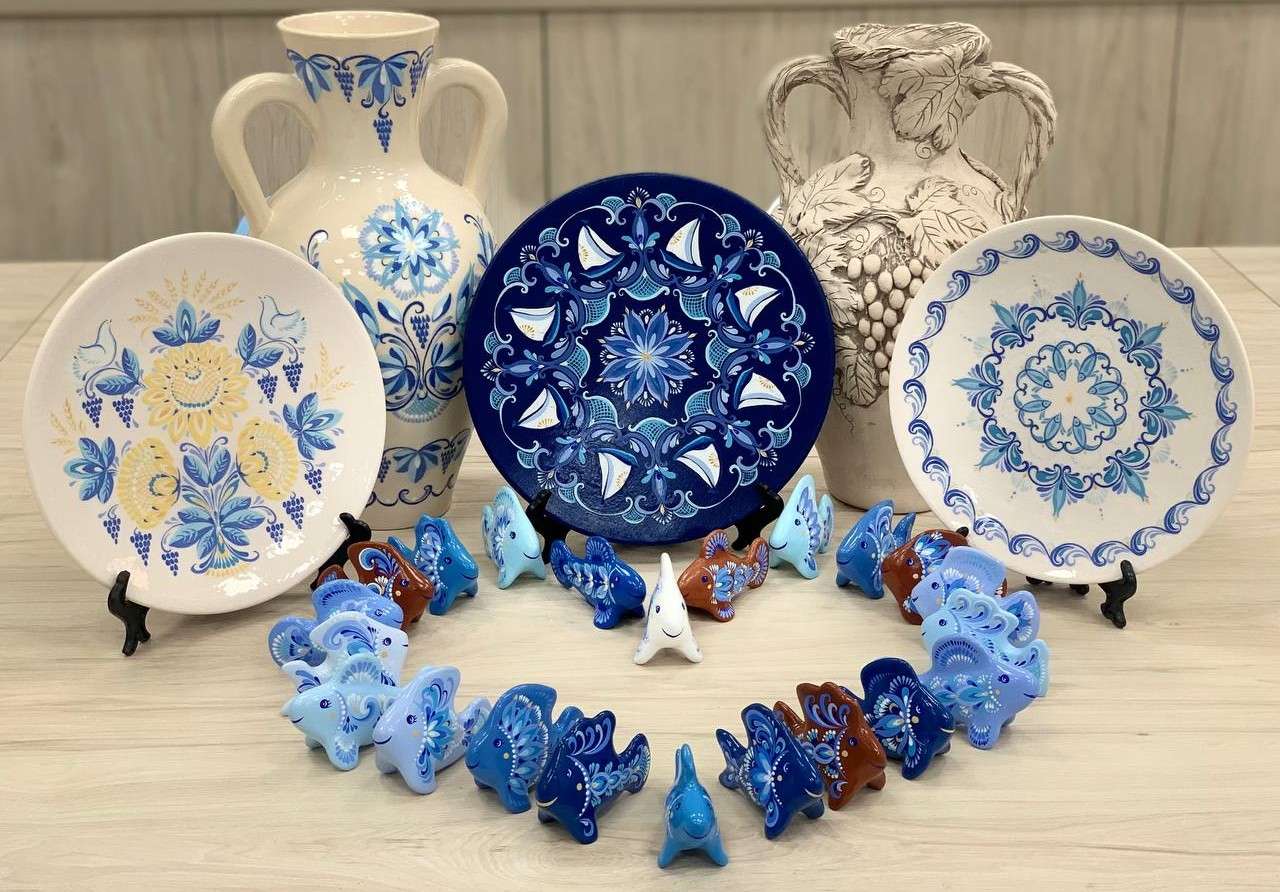
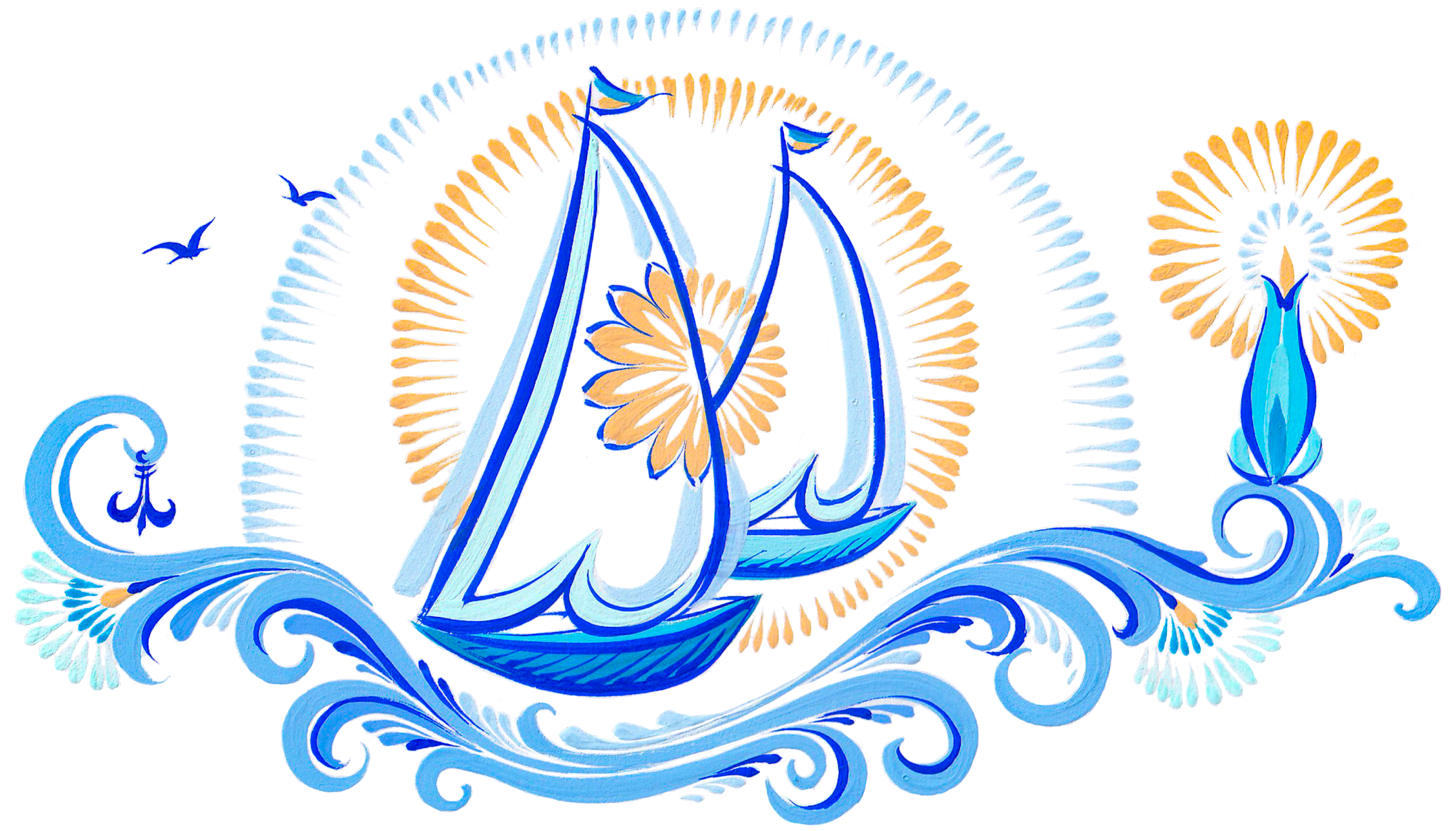
Tavrian painting is the blue-eyed pearl of Mykolaivshchyna — the region’s calling card and a living part of its cultural heritage and identity. It speaks of the unique nature of this land, of family values, of love for the world, and of the special bond between the elements, people and nature where the horizons of the sky meet the Great Water and the wide southern steppes.
Батьківщина – Миколаївщина
Таврійський розпис зародився на Кінбурнській косі та прилеглих територіях Очаківщини, а згодом поширився носіями в глибину Миколаївщини
Protection number 116 n.k.s.
In November 2025, by Order of the Ministry of Culture of Ukraine No. 915 of 12 November 2025 “On Inclusion in the National List of Elements of the Intangible Cultural Heritage of Ukraine,” Tavrian painting was added to the National List as the tradition and practice of spatial and utilitarian decoration in Mykolaivshchyna. It received the protection number 116 n.k.s.
Відомий у 10 + країнах світу
Таврійський розпис подорожує світом та полонить все більше сердець! Про нього знають у Швейцарії, Румунії, Грузії, США, Польщі, Нідерландах, Франції, Німеччині, Англії, Кореї й не лише. «Таврійка» нікого не залишає байдужими!
History
About
The name “Tavrian” was given to the painting by Yevhenia Bondarenko — a member of the National Union of Journalists of Ukraine and the National Union of Masters of Folk Art of Ukraine, and a devoted researcher of the folklore of her native land — during her expeditions across the Ukrainian South.
She was utterly in love with Kinburn. It was there that she recorded, studied and described this art together with a team of traditional house painters, the mazalnytsi, led by Maria Knyha. To this day the people of the peninsula itself and of the entire Ochakiv region call Kinburn “Tavria” — and from that living local name the painting received its own.

Liubov Paraniuk, a renowned teacher and master artist of the Ochakiv region, gave the painting its professional description, created its alphabet and developed a methodology for studying it. She has devoted her life to teaching and popularising “Tavryka,” becoming co-author of many publications and the principal creator of its unique souvenir collections.


Today the painting lives on as a living heritage across Mykolaivshchyna and is tenderly cherished by a constellation of women masters and teachers of the region.
We invite you, too, to come closer to this exceptionally deep and exquisite Tavrian painting — the soul of remarkable Mykolaivshchyna!