Leading Masters
Liubov Paraniuk
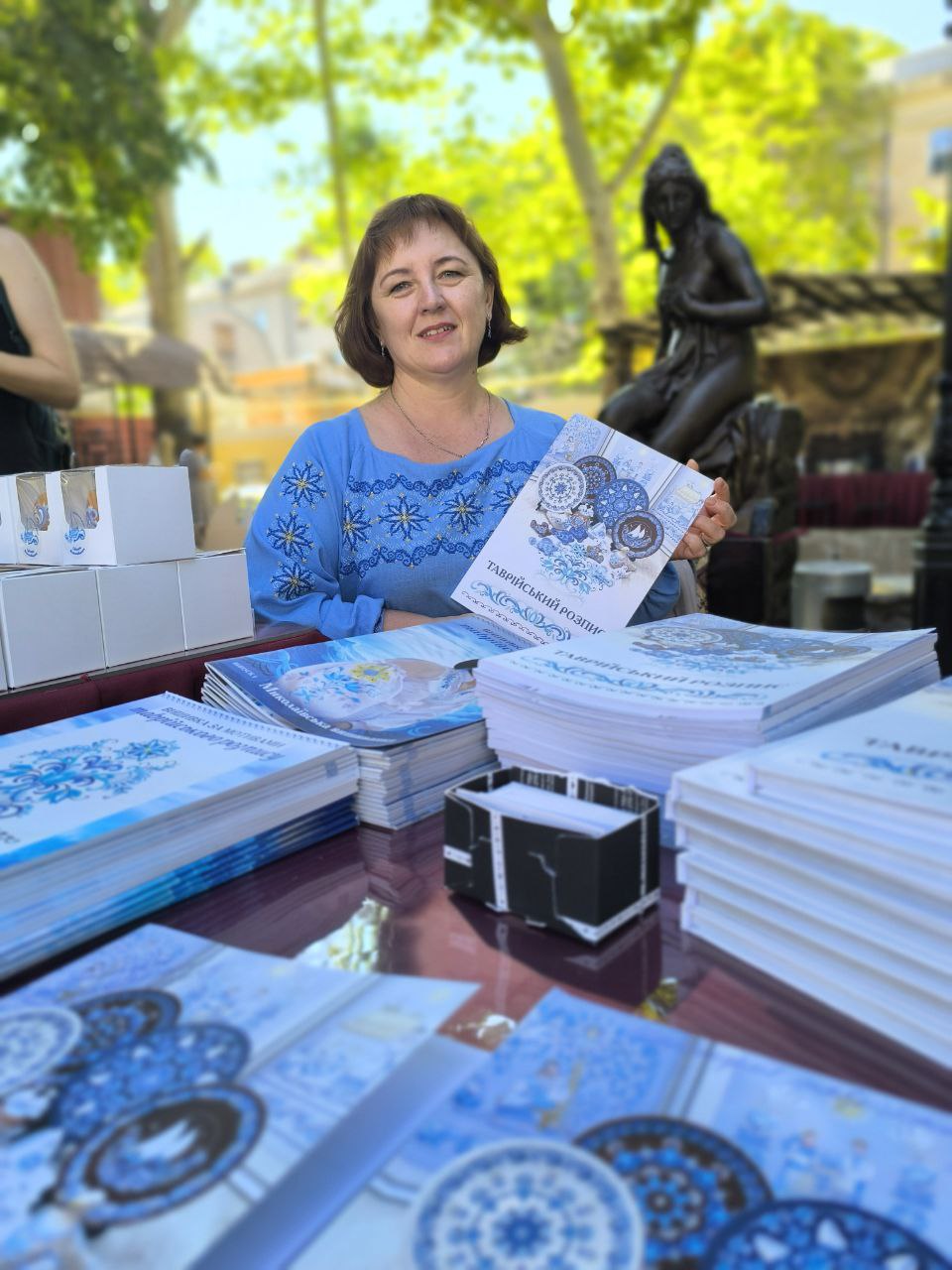
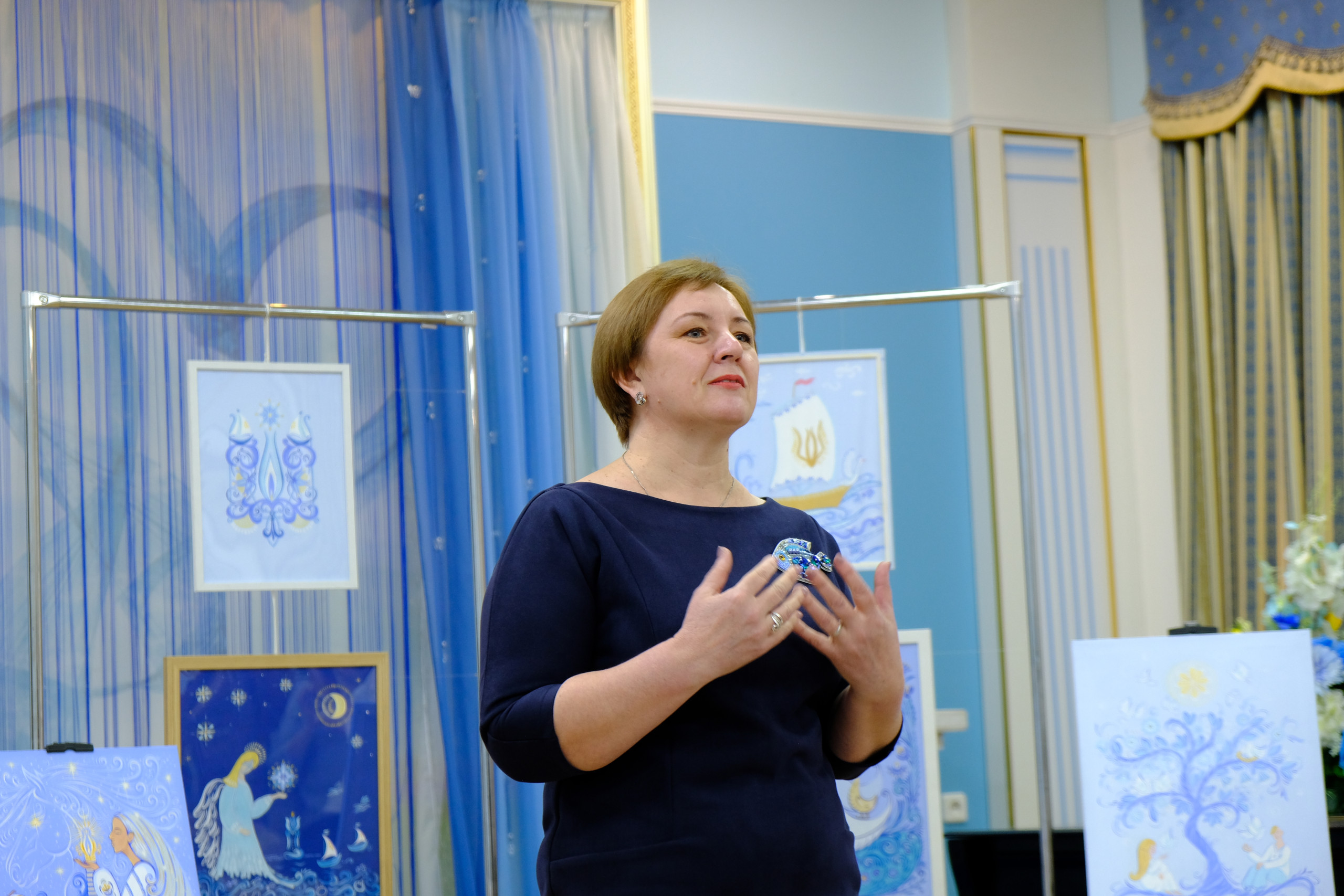
The keeping of Tavrian painting as a unique intangible inheritance of the Mykolaiv Region is the result of the pedagogical talent, artistic gift and inspiration of Liubov Paraniuk. It was she who was able to present its essence and philosophy in a thorough way, to design a methodology of study and to carry its value to society.
Art can exist only in development, and this concerns folk art first of all. For with the passing of time a transformation takes place in society: new ideas appear, industry develops, new materials are made, and all of this substantially affects the work of artists.
So it was with Tavrian painting, which is in essence a wall painting. In order for it to be kept, it had to be carried from the large plane of a house onto the far smaller plane of a picture. This happened thanks to the timely intervention of Yevhenia Bondarenko, who discerned the artistic value of the painting. She managed to take from the mazalnytsi and to draw the principal elements of the ornaments, to record the colour range and to create a series of narrative pictures, using the knowledge and skills she had gained. In this way the artist became a bearer of Tavrian painting. She could not, however, go further, for the profession of a philologist did not give her the means to systematise the painting fully, to work it through methodologically and to enrich it.
This Liubov Paraniuk was able to do — a teacher, a leading master of Tavrian painting, a certified master of the Mykolaiv branch of the National Union of Masters of Folk Art of Ukraine (1995), a member of the creative association of folk masters and amateur artists “Prybuzhzhia” of the Mykolaiv Regional Centre of Folk Art and Cultural and Educational Work (2019–2024), and of the Cultural and Artistic Association “Art-Temptation” (from 2022 to the present). A person who, with particular warmth and sincere wonder, keeps the remarkable art of Tavrian painting.
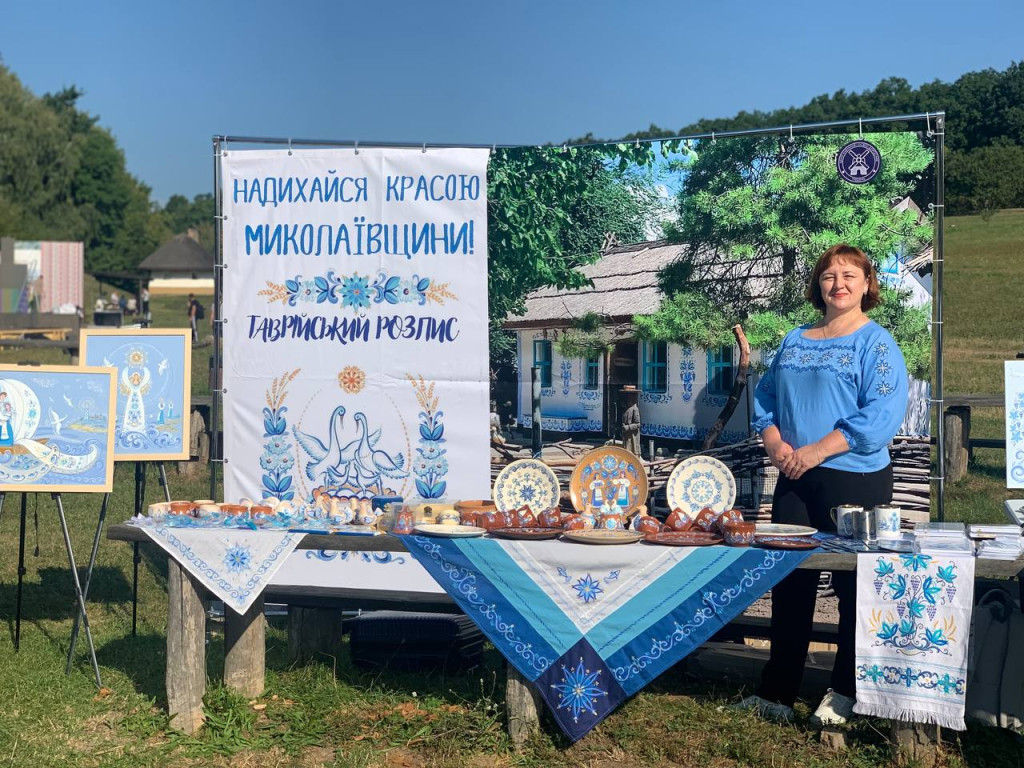
Liubov Paraniuk was born in 1978 in the village of Smodna, Kosiv district, Ivano-Frankivsk Region. In early childhood she moved with her parents to the Mykolaiv Region, to the picturesque village of Kozyrka in Ochakiv district, on the shore of the Buh Lyman. In 1987, as an adolescent studying at the Kutsurub branch of the Ochakiv Children’s Art School, she began to study folk paintings: Petrykivka, Kosiv, Yavoriv. Then came Mykolaiv Vocational School No. 13, where the future master received the professions of executor of artistic design work, painter on wood and carver in wood. The young master was interested in work with different kinds of materials, so she did not stop there, but went to study at the School of Folk Mastery attached to the Mykolaiv Regional branch of the National Union of Masters of Folk Art of Ukraine. There she received skills in work with straw. She received her higher education in the Department of Fine and Decorative-Applied Art at the Mykolaiv branch of the Kyiv National University of Culture in 2010.
She began to work in her profession at the Ochakiv Children’s Art School in 1996. Already then Liubov Paraniuk wondered why in the southern region, so rich in traditions, there were no kinds of folk craft of its own, belonging to it alone. Later, during her studies at the university, on the advice of her teacher, Honoured Figure of Culture of Ukraine Inna Cherkesova, she became acquainted with the books and pictures of Yevhenia Bondarenko. It was then that the gifted student was enchanted by Tavrian painting and began to analyse and research the artistic traditions of the Ochakiv region, seeking out the elements that Bondarenko described in articles and books.
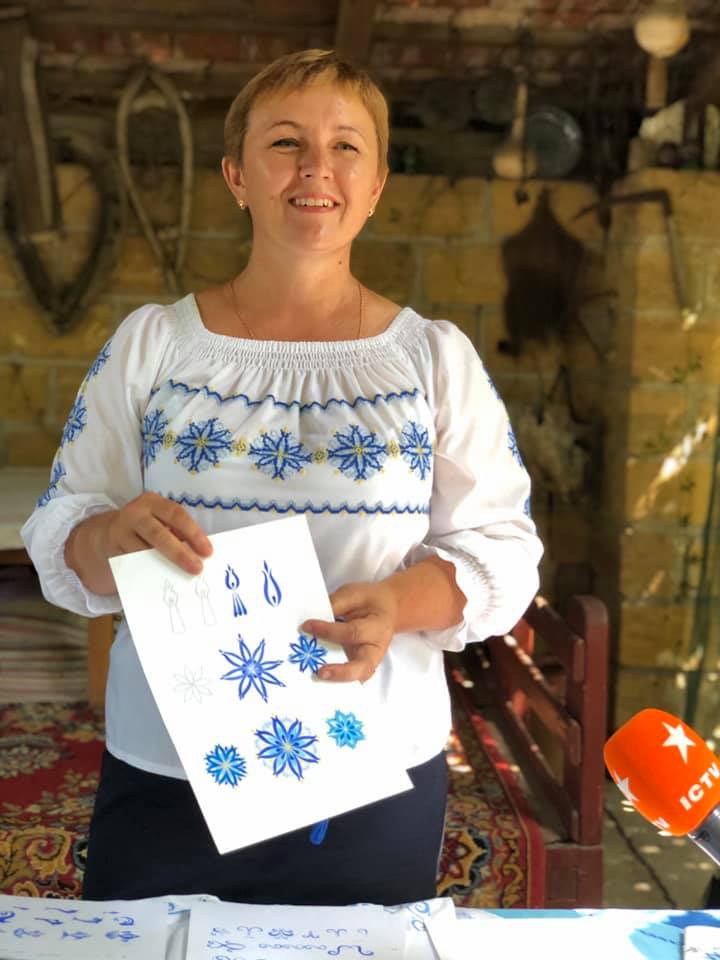
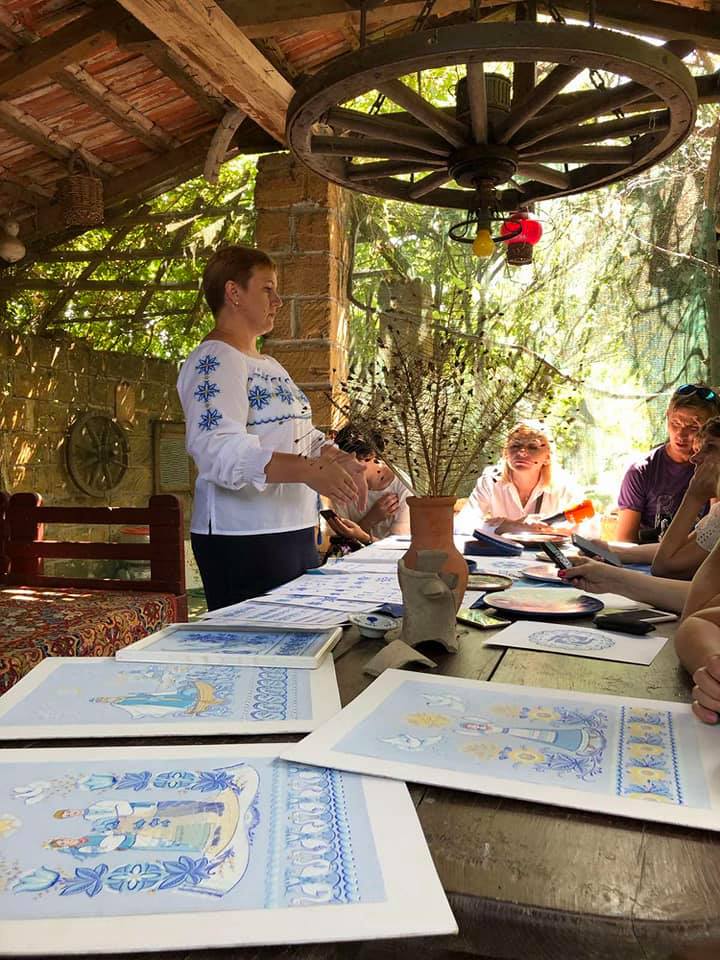
The impulse for a more thorough study of the painting, for its understanding and transformation, was a meeting with the preschool teachers of Mykolaiv City Council Institutions No. 29 and No. 141, Olena Borozdina and Aryna Yakovleva, who in their educational and upbringing work rest on the folklore and artistic traditions of the local painting. They proposed that the artist create narrative pictures to illustrate a wall calendar. In order to understand the painting more deeply, to research it and to speak with descendants of the mazalnytsi, Liubov Paraniuk set out for the Kinburn Spit — the place where Tavrian painting was born and lived.
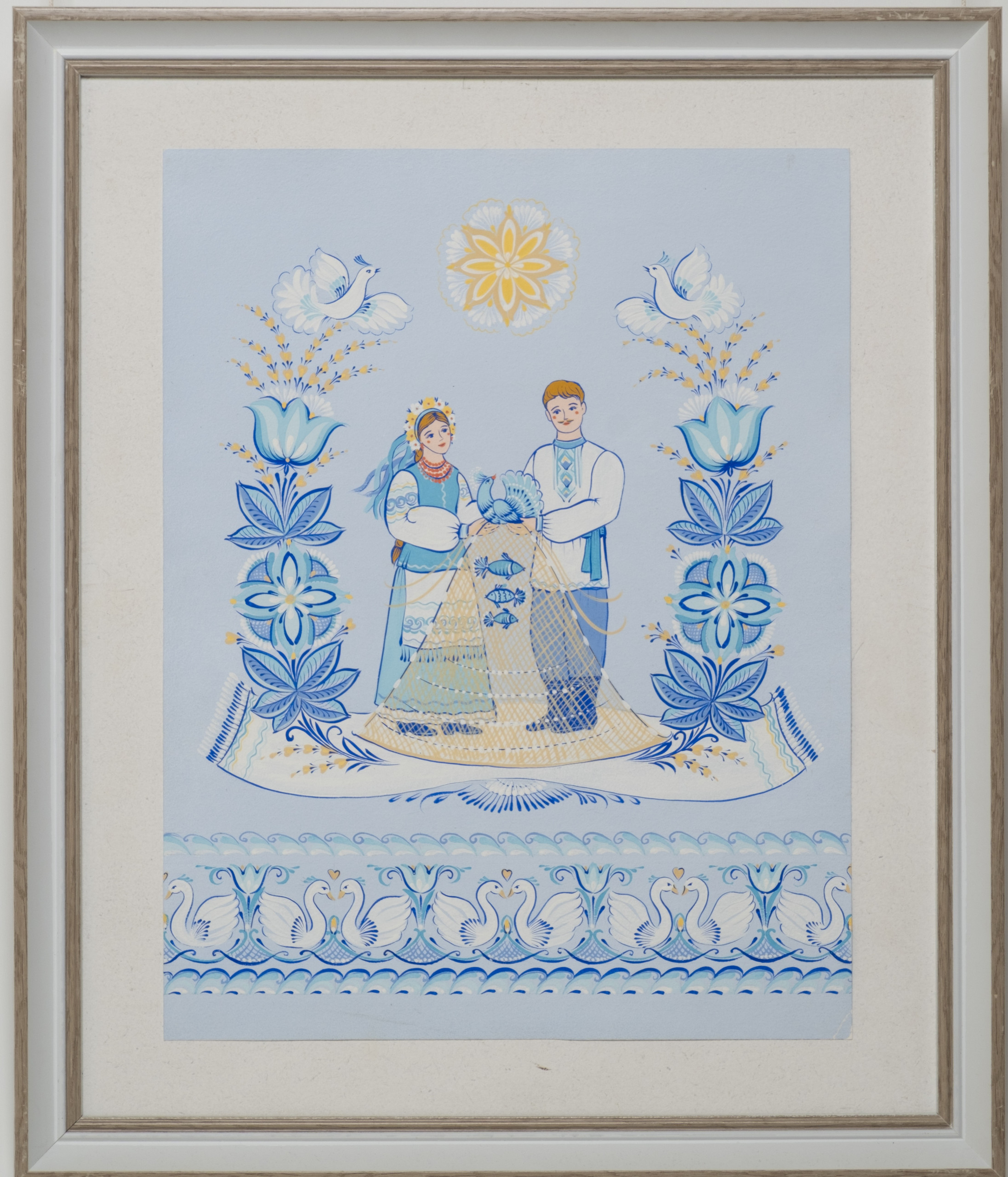
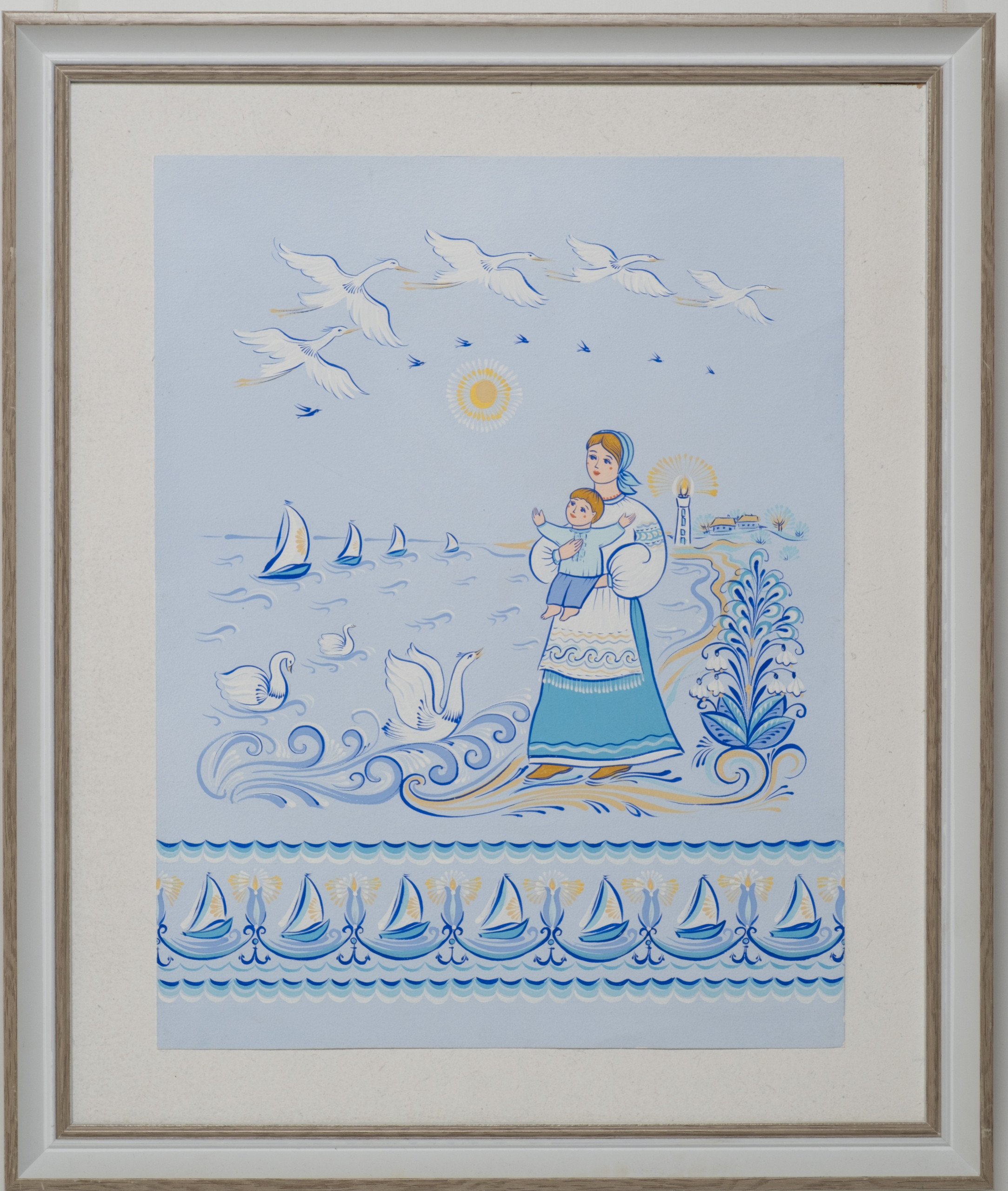
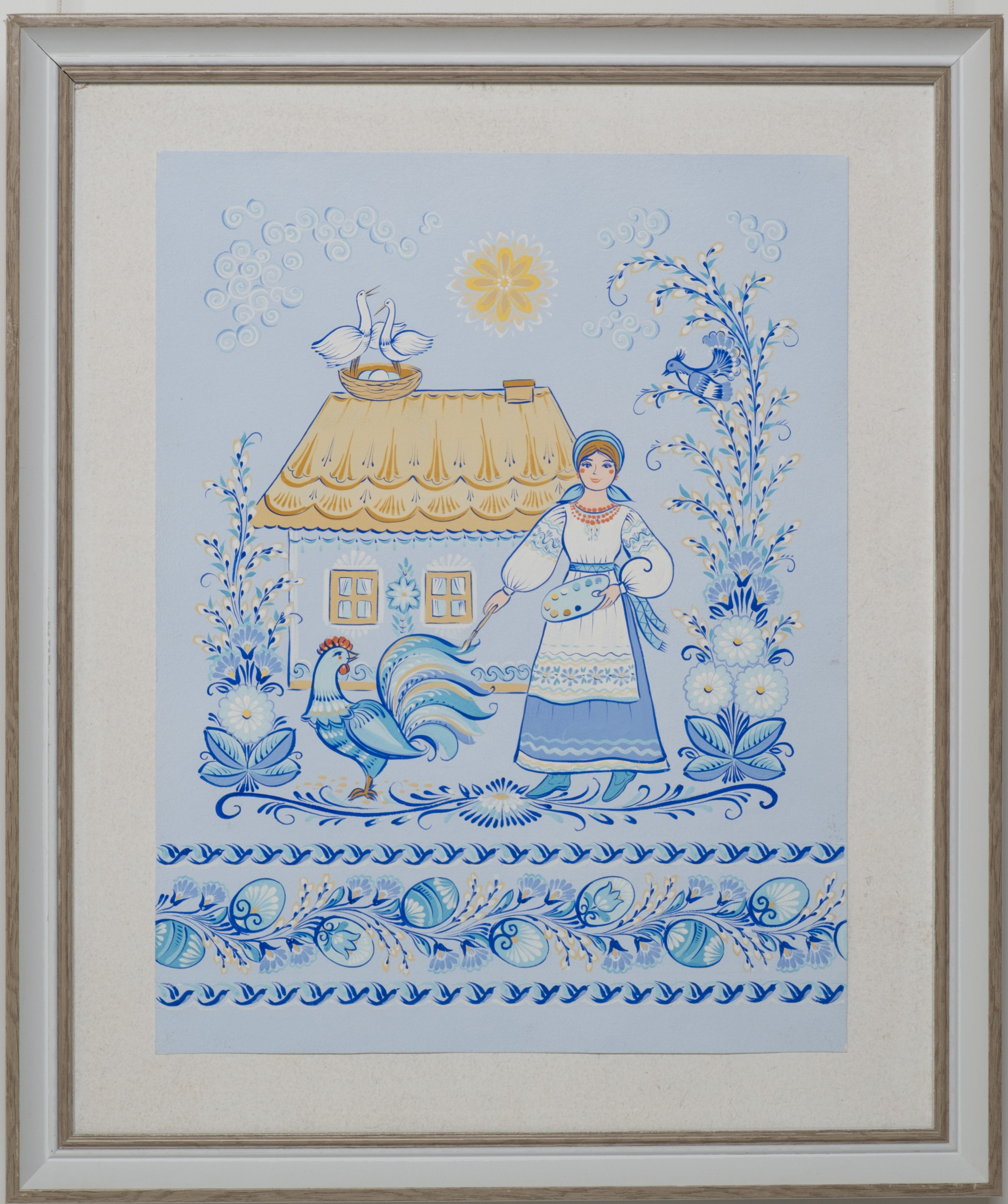
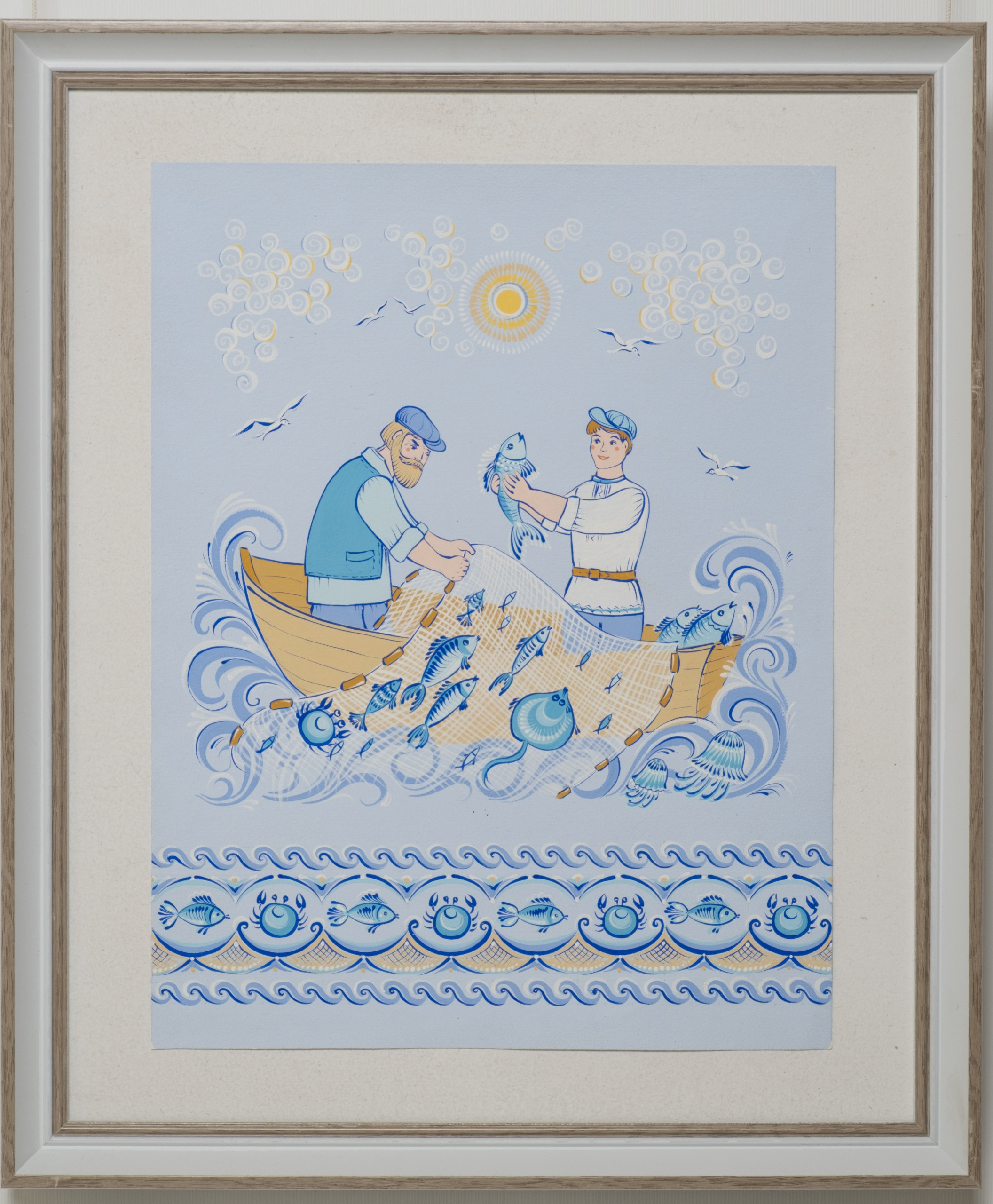
Works from the series Calendar, 2018–2019
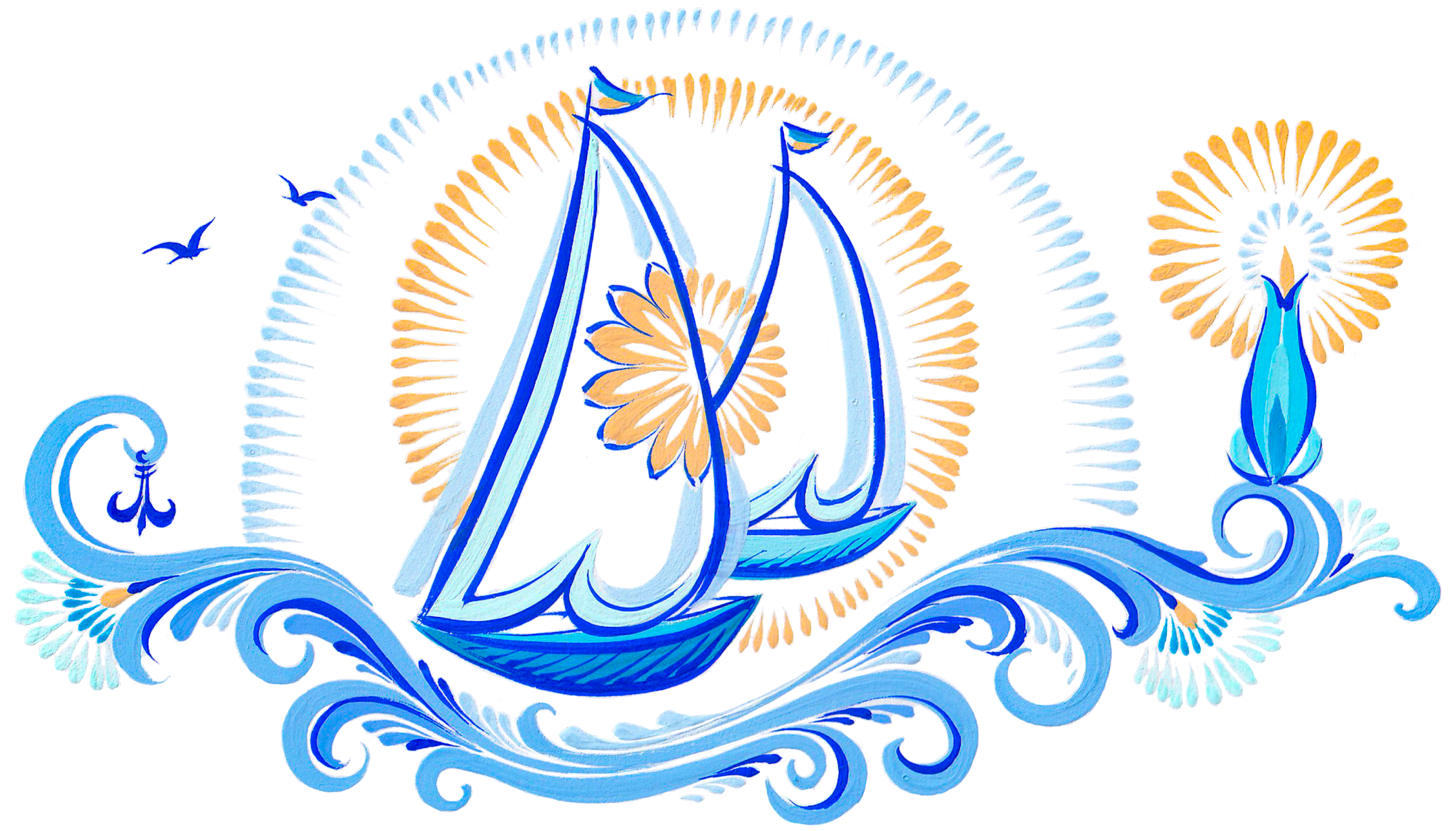
As an experienced teacher, in whose arsenal there was already work with different materials and techniques of Ukrainian folk painting, the artist understood that the basic strokes and motifs recorded by Yevhenia Bondarenko were not enough for the creation of full artistic compositions. She analyses deeply the creative legacy of the first researcher of the painting and adds to them the principal strokes “hands of Berehynia” and “matula,” and also the secondary ones — “dots,” “dashes,” “lines” — and the motifs, images and symbols made with their help: “lighthouse,” “rose of the winds,” “sailing boat,” “flowers” and others. This made it possible to draw ornaments more freely and to build compositions.
Besides this, Liubov Paraniuk works through the question of the colour range. It was necessary to set apart a number of paints most often used by the mazalnytsi for the decoration of houses. The artist settles on certain — the most widespread — colours and their shades, which were quite common and best characterise the Mykolaiv Region: a land of steppe, rivers and lymans. “I understood that more material was needed in order to share this painting, to teach children and adults,” the master said. “I went to the Kinburn Spit: I spoke with native inhabitants, learned what was new… I decided to add Greek motifs. For Greeks lived on our territory and left their cultural contribution. So amphorae, grapes and new colour shades appeared in the painting. It was necessary to find as many elements as possible, in order to compose them in works and to give more space for making.”
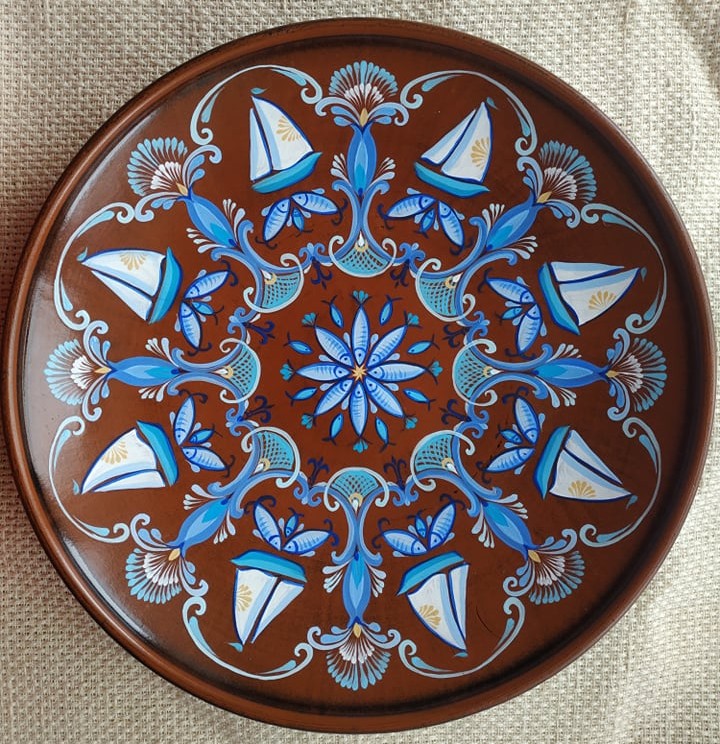
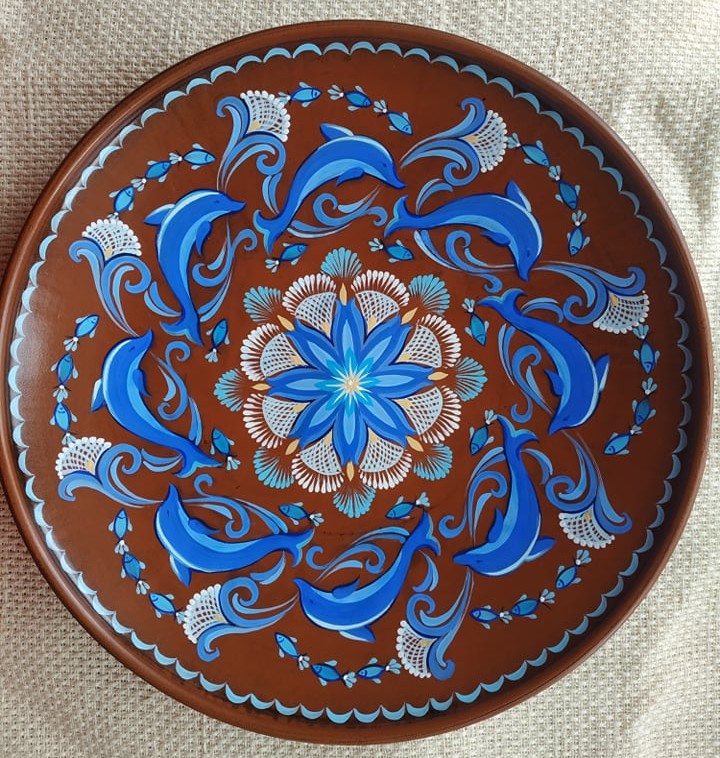
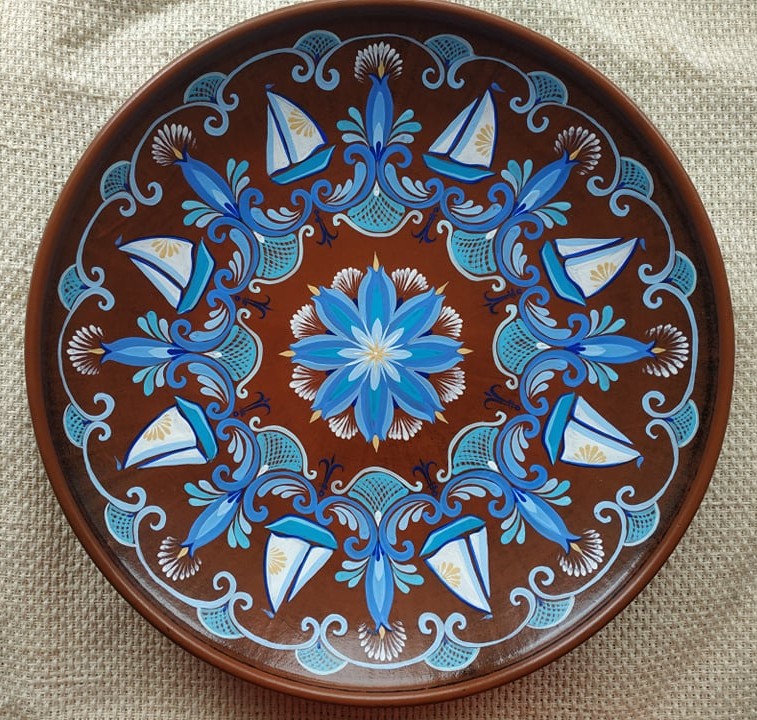
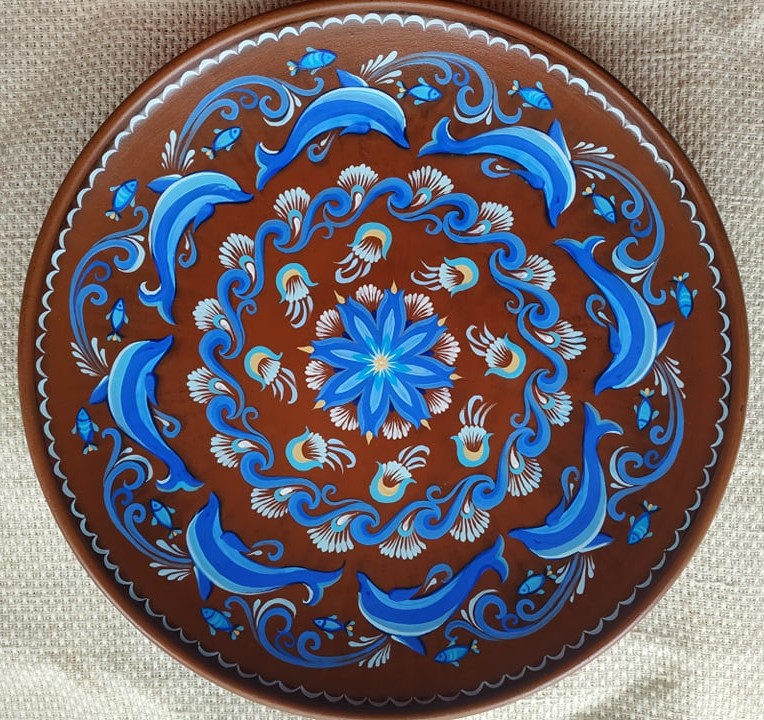
While teaching fine and decorative-applied art in the art department of the school of arts of Kutsurub Village Council (2017–2022), the artist systematises the theoretical and practical foundations of Tavrian painting and designs a methodology of teaching it. In 2019 she presents her work at the review-competition “Ethno-Traditions of the Mykolaiv Region,” held by the Mykolaiv Regional Centre of Folk Art and Cultural and Educational Work. The aim of the event was the search for, recording and keeping of elements of authentic intangible culture. The expert commission on the forming of a list of objects of intangible cultural heritage of the region considered the element “Tavrian Painting,” presented by the Kutsurub community, and on 10 December of the same year it was entered in the regional register.
“Tavrian painting has features of its own by which it is easily recognised. First of all this is the colour range — it is maritime, light, airy. Plus steppe and sunny shades. Tavrian painting actively uses blue and azure, and images of waves, fishing gear, boats, lighthouses and sea creatures are dominant. In no other painting is the maritime and protective theme so present. There are also nuances in the building of compositions… These are the principal features, and further — the technical strokes characteristic of any painting,” the artist notes.
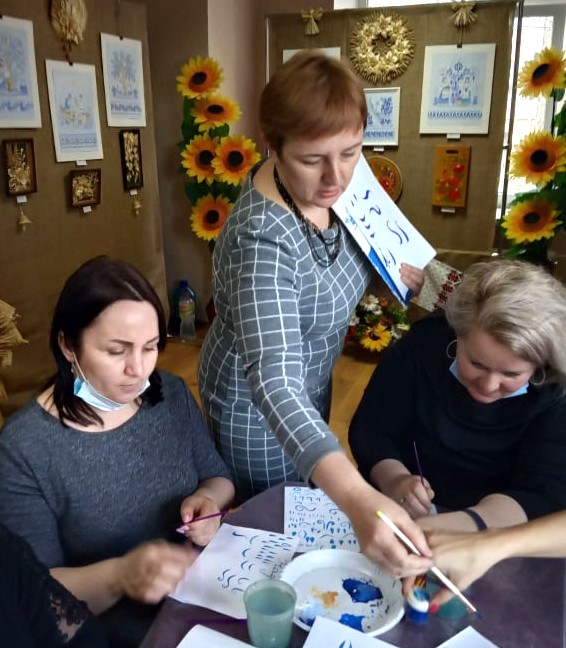
In order to keep the knowledge gathered, together with Hanna Bozhkova, methodologist of the Mykolaiv Regional Centre of Folk Art and Cultural and Educational Work and Candidate of Historical Sciences, the first handbook of Tavrian painting is issued. It served folk-art masters, teachers, leaders of clubs and local historians who had become interested in the local painting. For outstanding achievements and a significant contribution to the development of the art of the land, in 2020 Liubov Paraniuk, as a member of the authors’ collective, was awarded the Mykola Arkas Regional Prize in the nomination “Traditional Folk Creativity and Amateur Art.”
A decisive moment in the life of the master, and of Tavrian painting as a whole, was a meeting with Ruslana Sikalenko, then methodologist of the project “Mykolaiv: a City that Learns and Teaches,” a representative of the Public Organisation “Adult Learning and Education Center ‘South’” (headed by Viktor Sikalenko, 2011–2025), which took place in March 2021. The cooperation of two energetic women in love with Tavrian painting grew into a powerful impulse for the development of this kind of art and helped new ideas to appear and to be carried out.
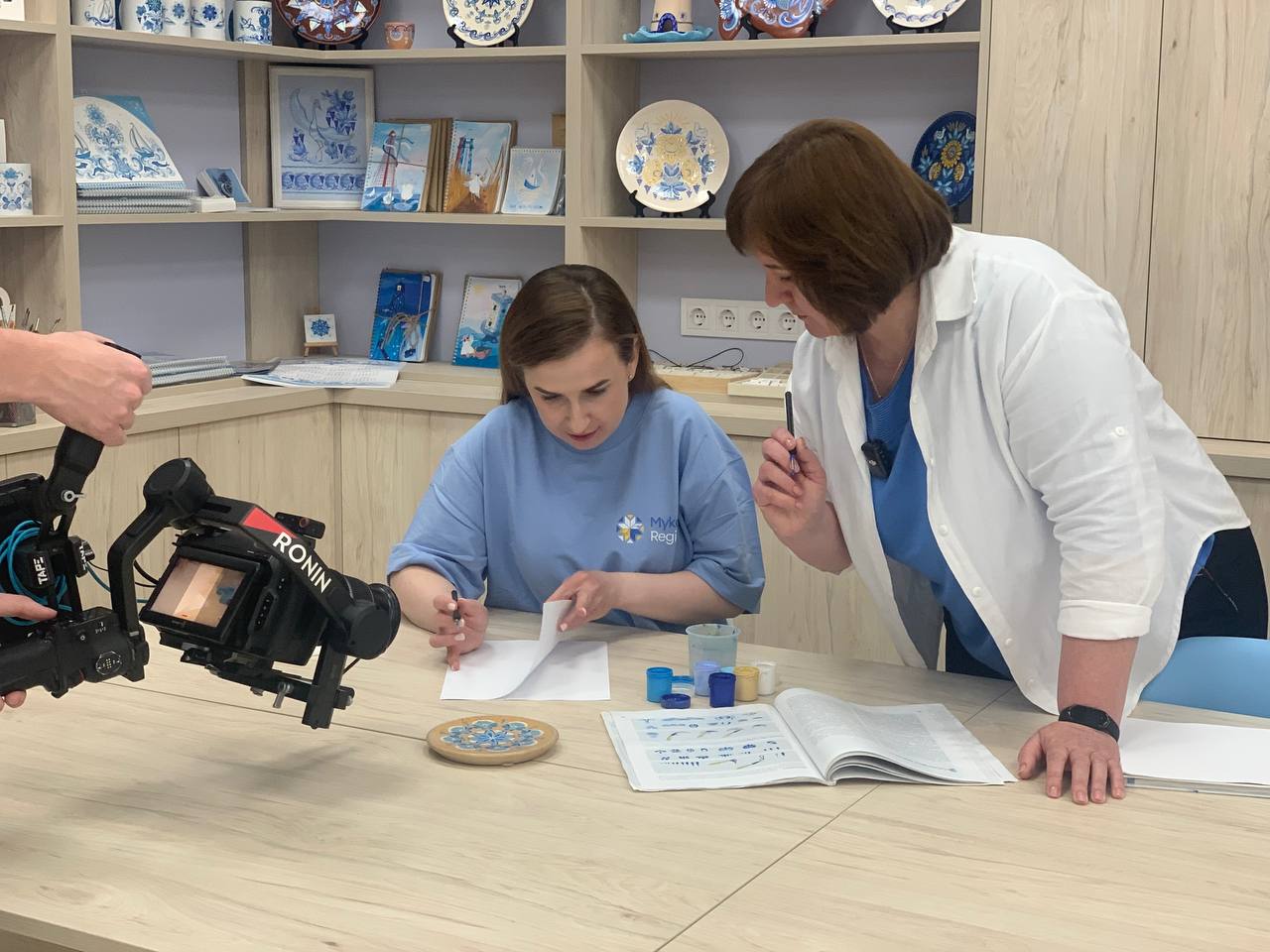
Already in August of the same year, on Ruslana Sikalenko’s initiative, Liubov Paraniuk’s author’s express course “Tavrian Painting: a Triptych of Colour in Contemporary Art,” designed for 50 hours of classes, began. This was the first full training for adults. Later, courses were designed for teachers of preschool institutions (five groups graduated) and of vocational education (one group graduated). Over five years of teaching there have been 17 graduations of representatives of the unique painting. The artist’s pupils have become independent masters who now create new, unique works, take part in exhibitions, present the painting abroad and also give masterclasses. Separate programmes concerning Tavrian painting and its adaptation into other kinds of decorative and applied art were also prepared and successfully carried out.
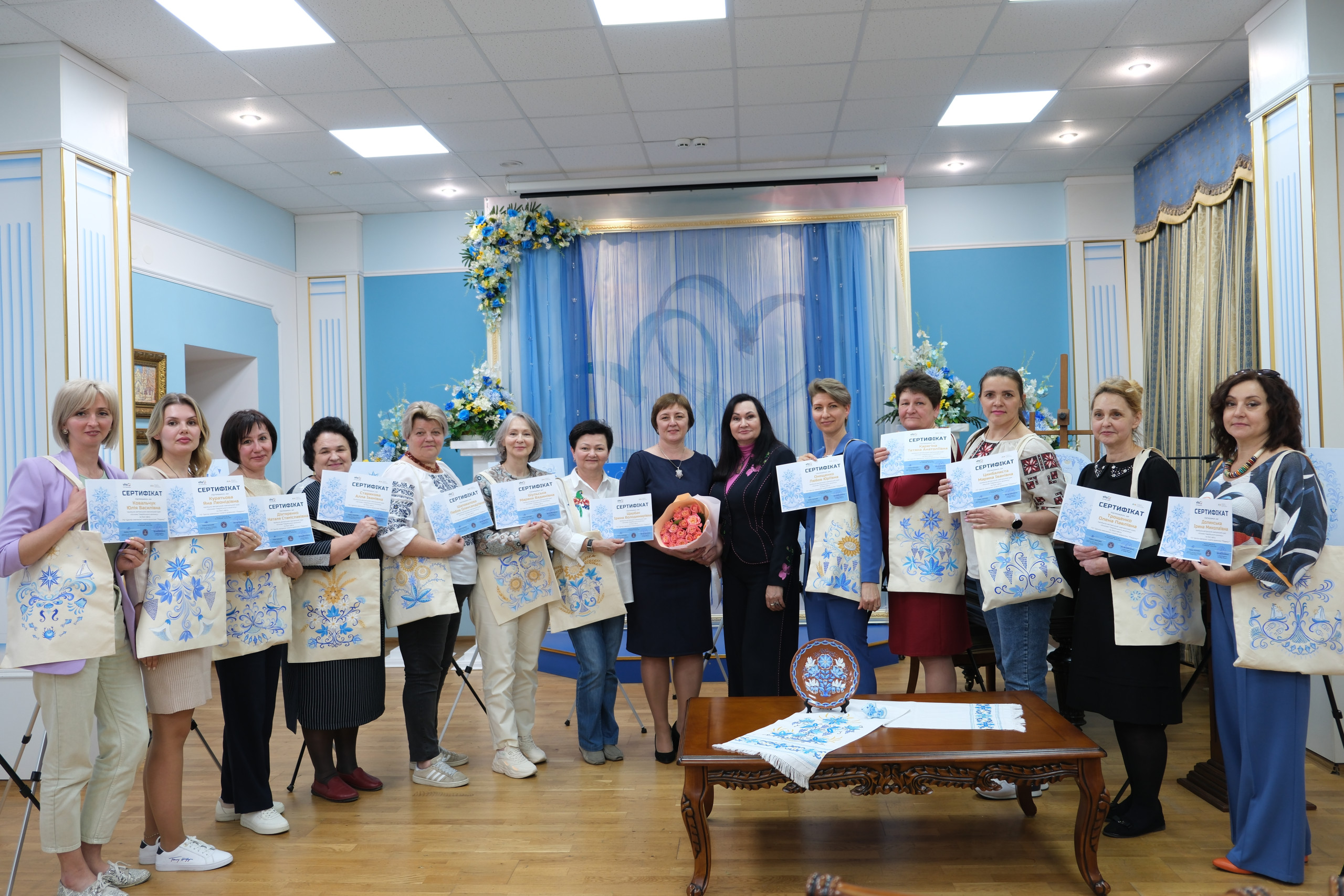
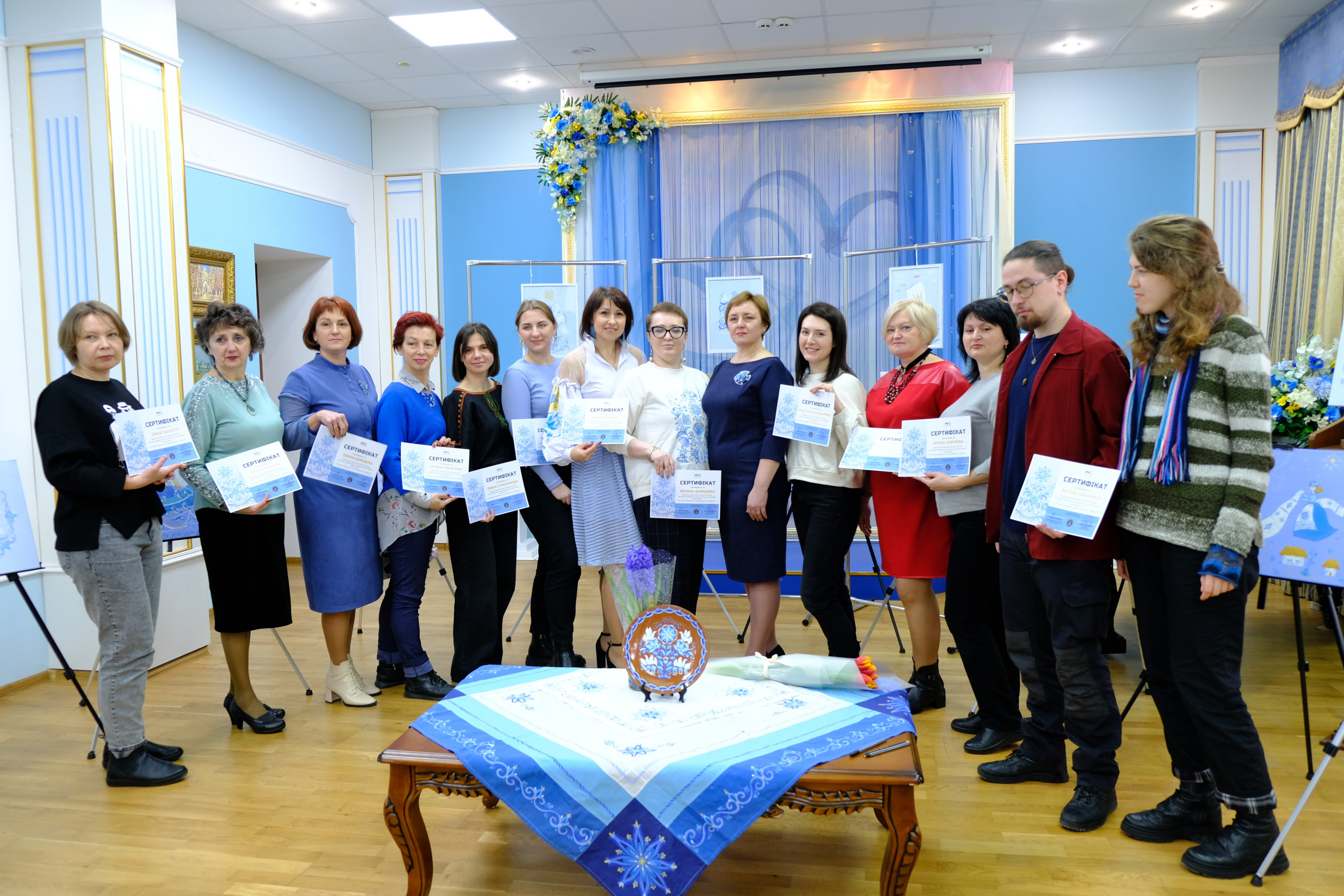
Presentation of certificates upon completion of training courses in Tavrian painting, 2024
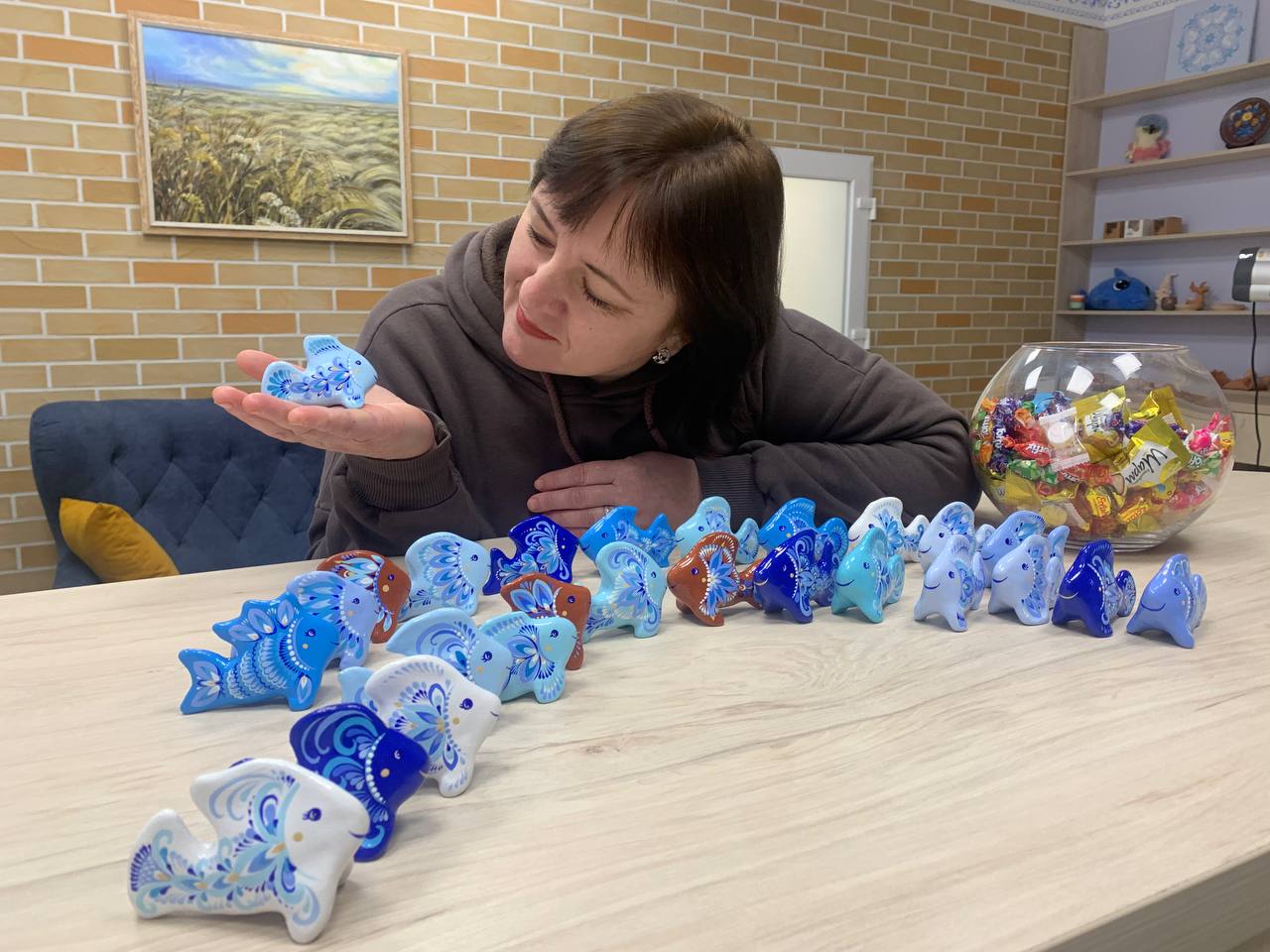
In 2021 the artist completed training in the programme “Pottery: the Preparation of Future Masters.” This opened the possibility of creating souvenirs at her own discretion, of choosing a size and form that answer local traditions. New compositions appear, bound to the round surface of plates. This was a time of active experiments with different clays, glazes and firing temperatures, for it was important to keep the original stroke and colour of “Tavryka.”
In the same year, at the invitation of the Department of Tourism and Resort Development of the Mykolaiv Regional State Administration, the artist paints, in the traditions of the folk painting of the South, one of the offices of the Mykolaiv State Administration. Later the Department, together with PO “ALEC ‘South’,” presents the first souvenirs adorned with local ornaments, and also a teaching handbook of Tavrian painting written by L. Paraniuk and R. Sikalenko. The handbook was in tremendous demand and was republished with additions in 2024 and 2025.
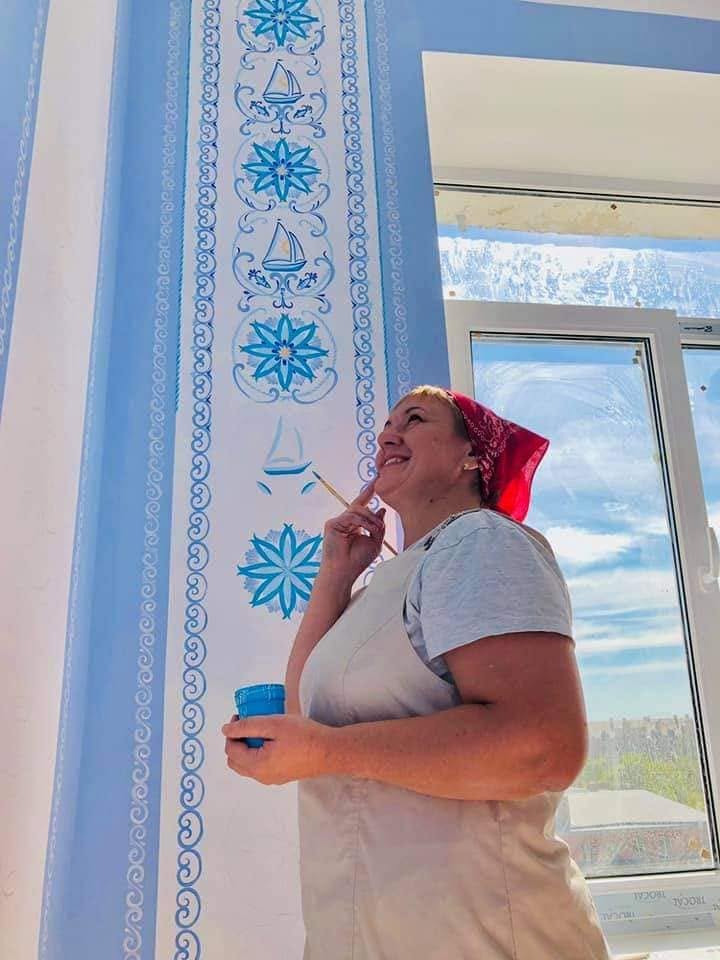
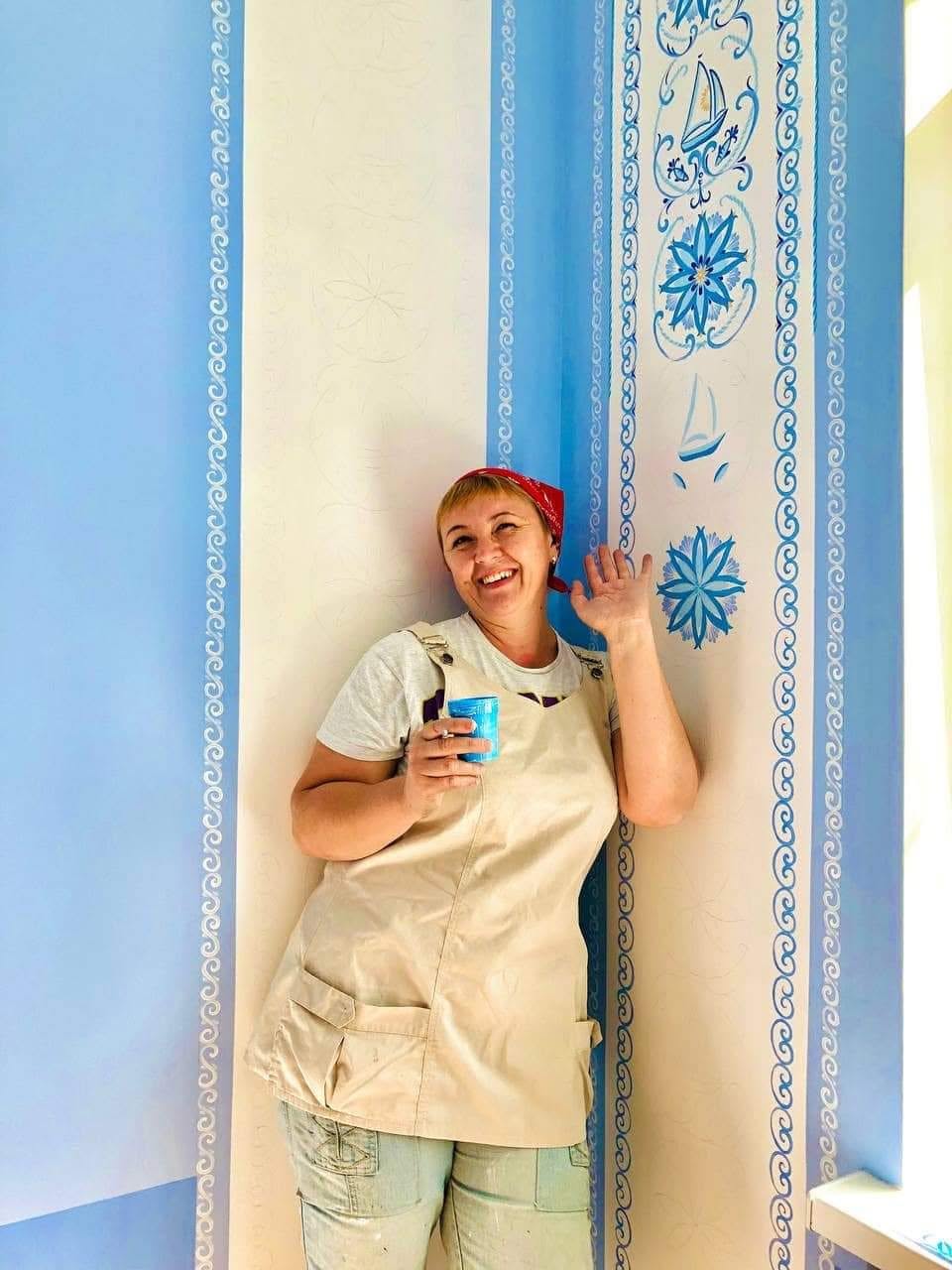
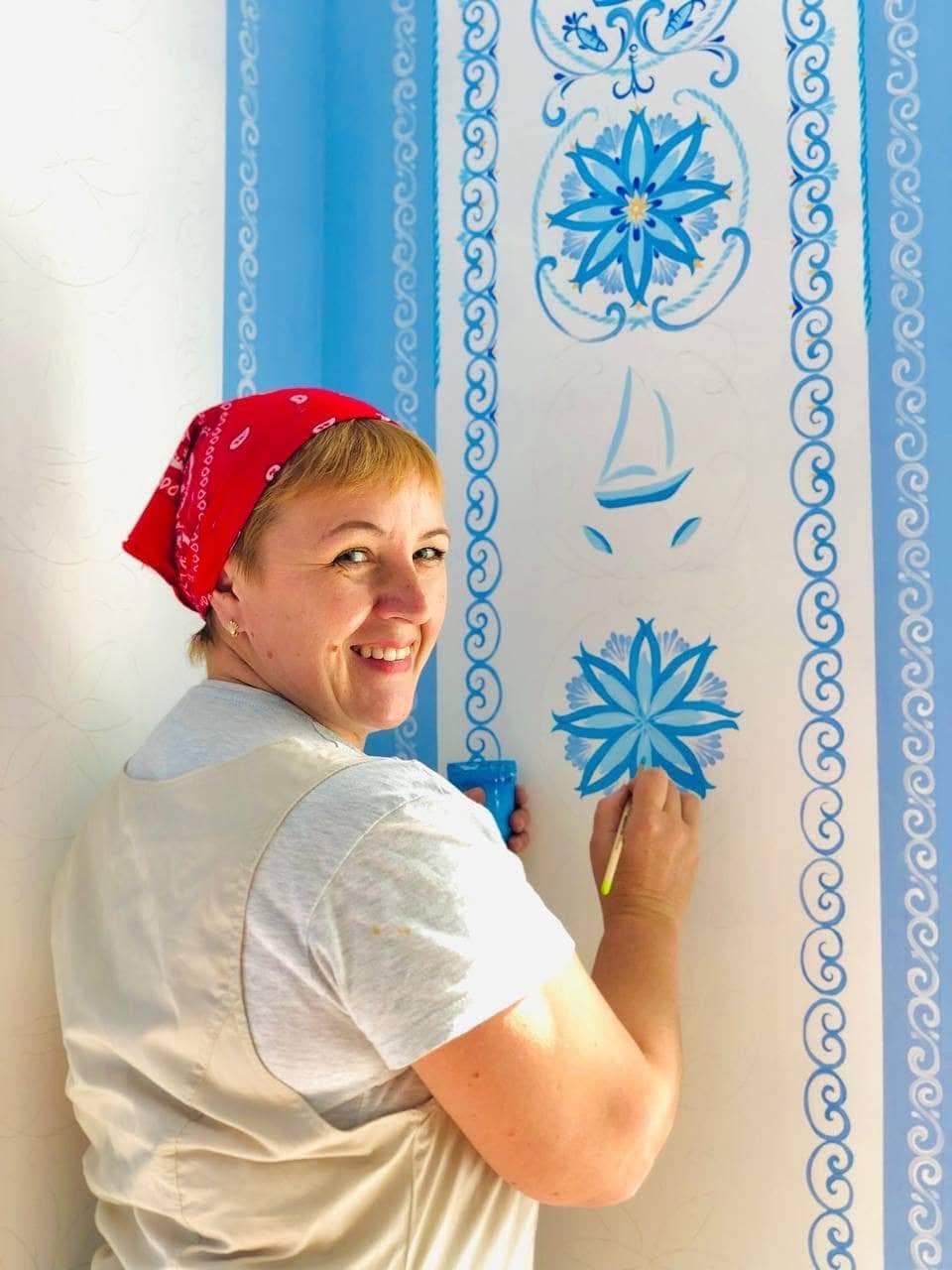
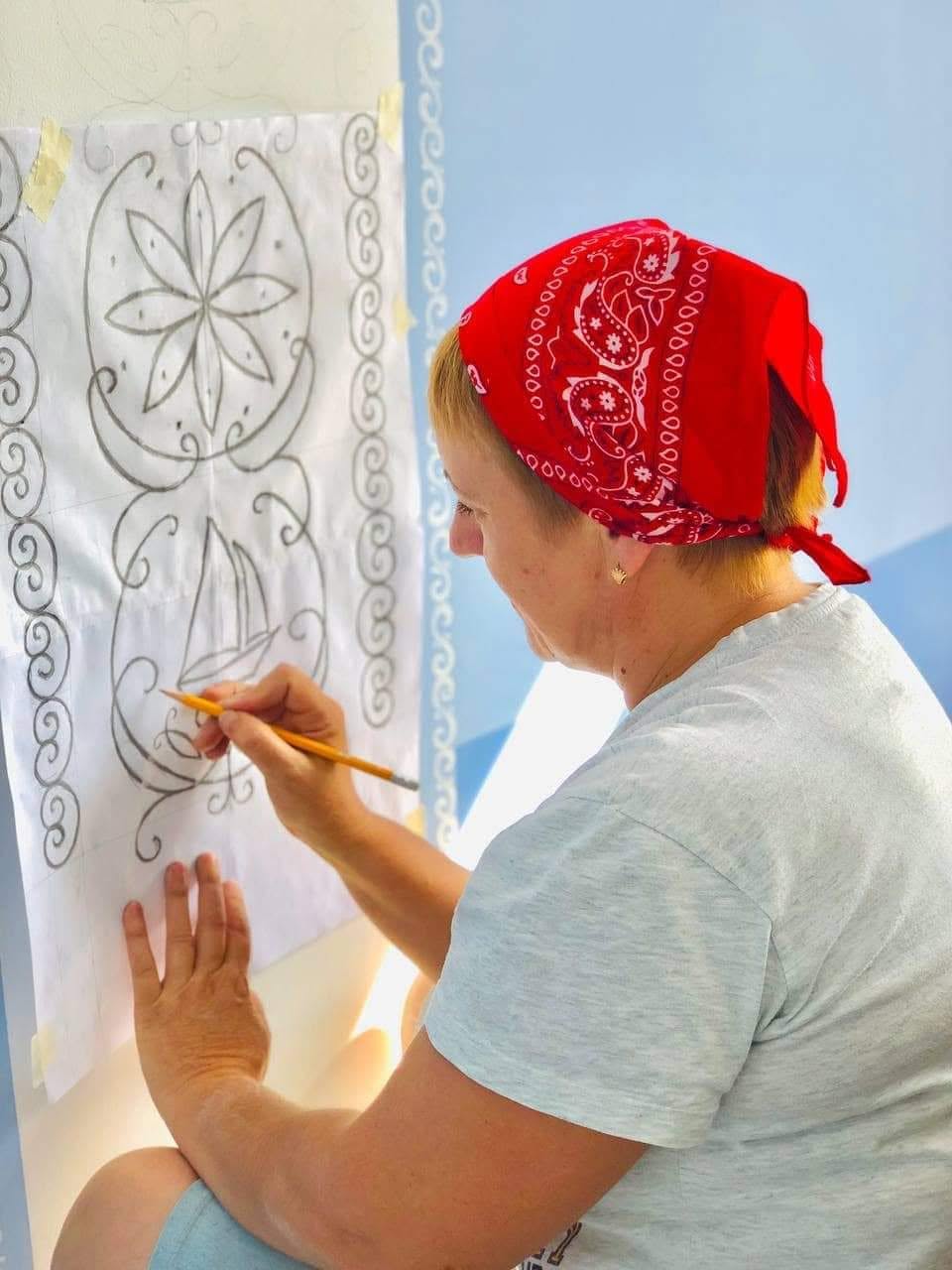
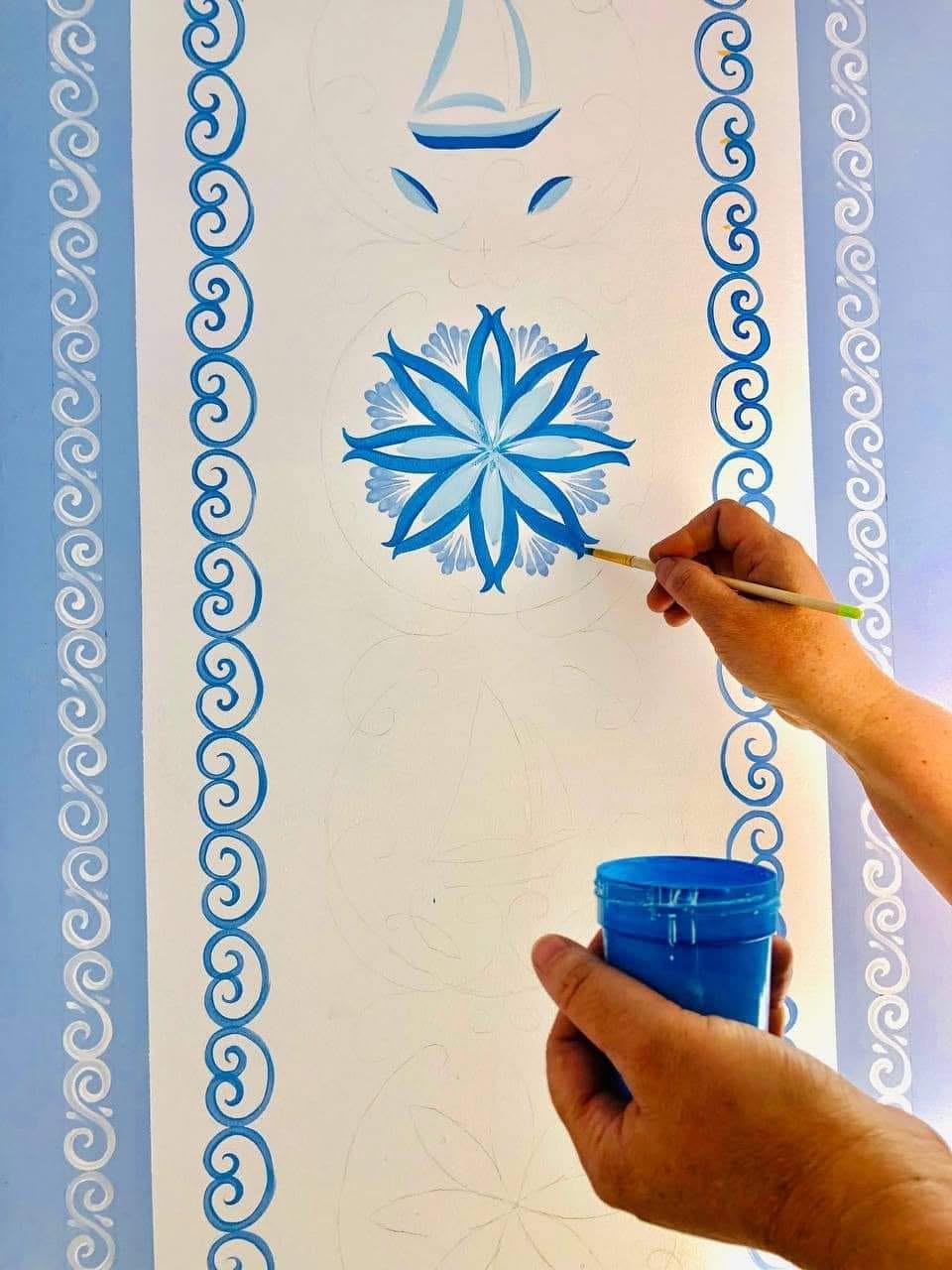
Painting of an office in the premises of the Mykolaiv Regional Military Administration, 2021
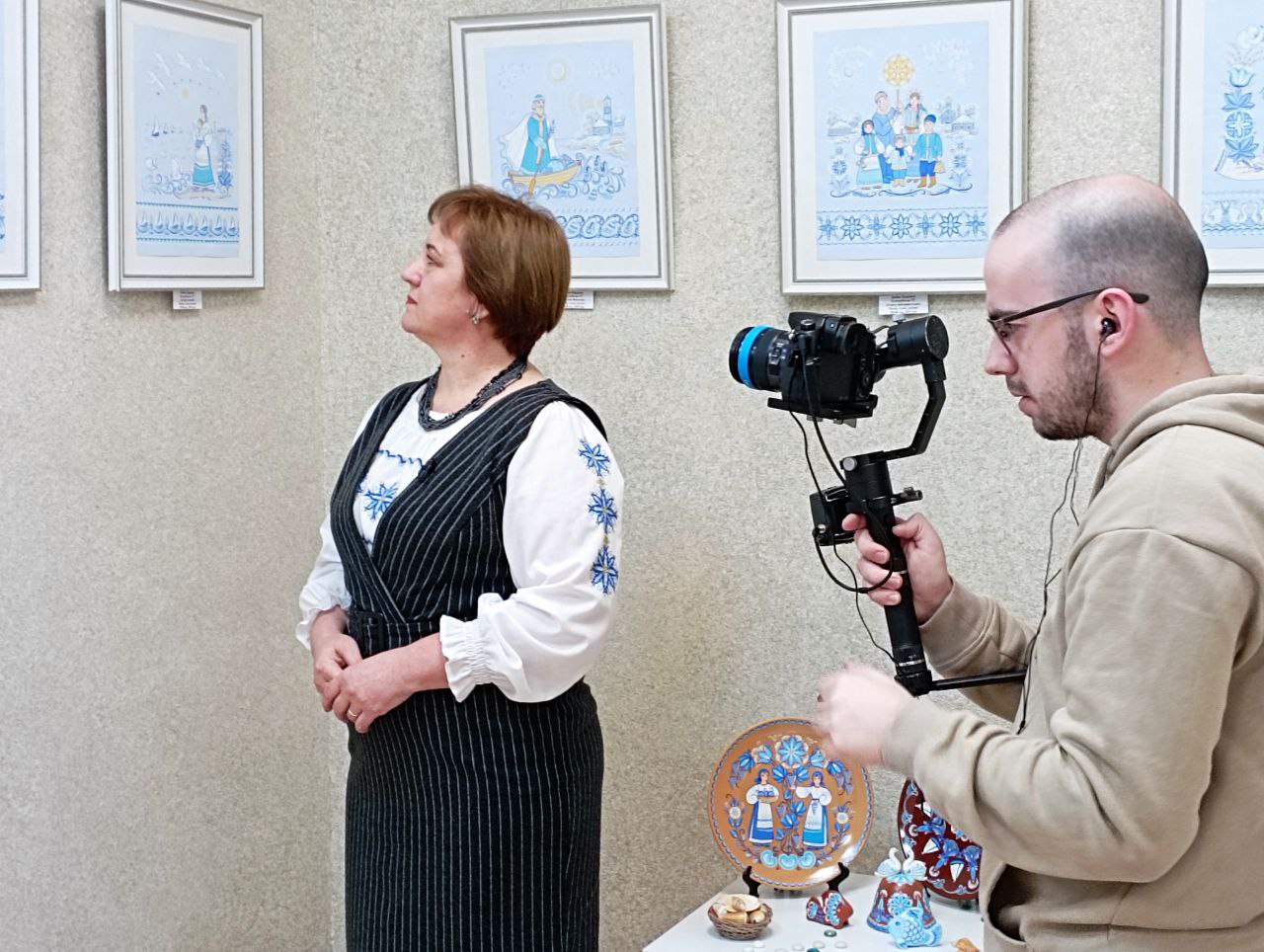
A great emotional influence on the artist was membership in the NGO Cultural and Artistic Association “Art-Temptation” (headed by Valentyna Kryvtsova). In the friendly family of Mykolaiv masters she found like-minded people and creative support, and she took an active part in exhibitions, actions, projects and shared cultural and volunteer work. In 2024 the artist’s solo exhibition Instants of Creation opened at the M. Kropyvnytskyi Central City Library. The following year she invited guests to the Mykolaiv Regional Local History Museum for the exhibition Blue Symphony of Tavrian Painting, where for the first time she presented painted ceramics made from A to Z by her own hand, joining pottery and painting into author’s masterpieces of her own.
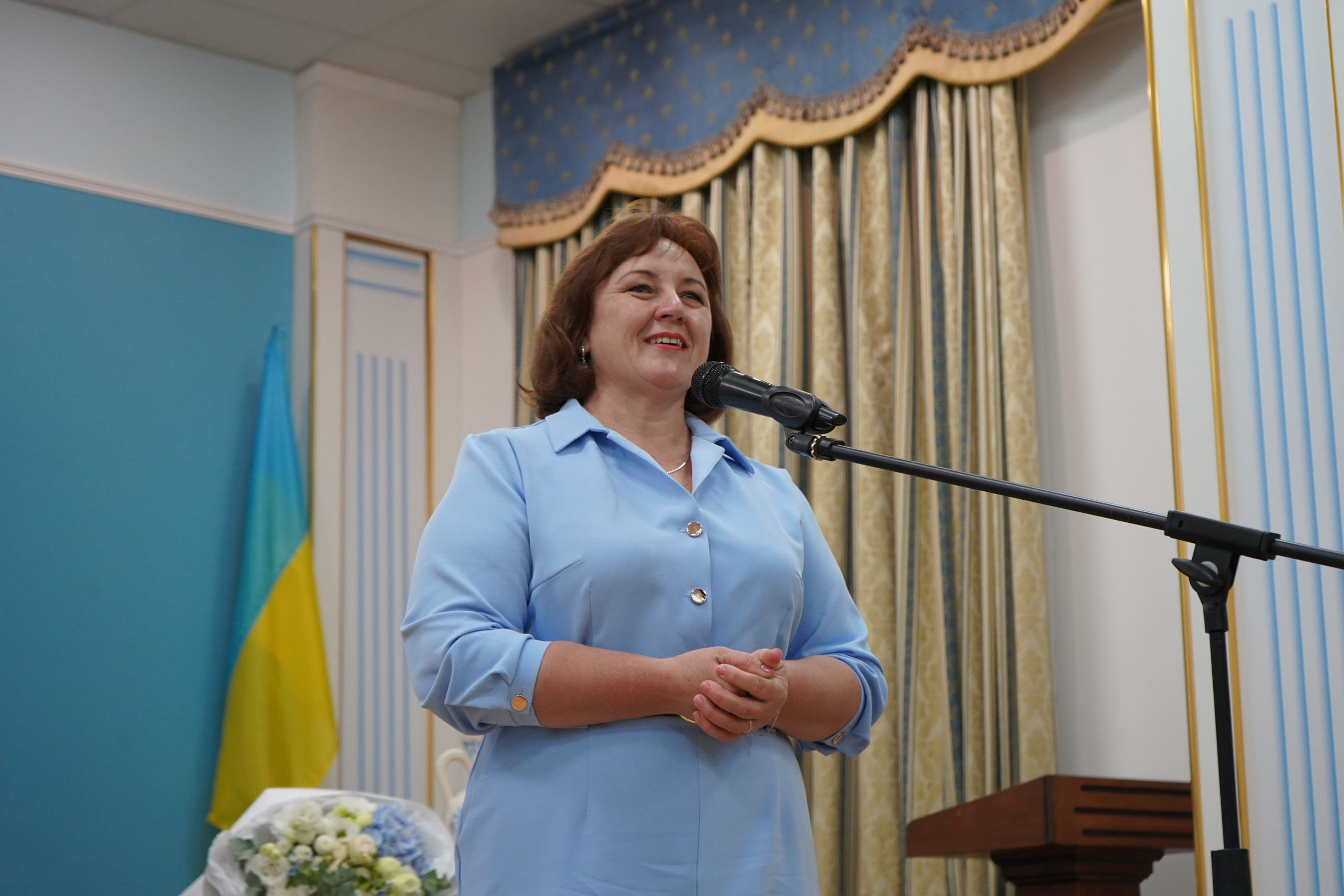
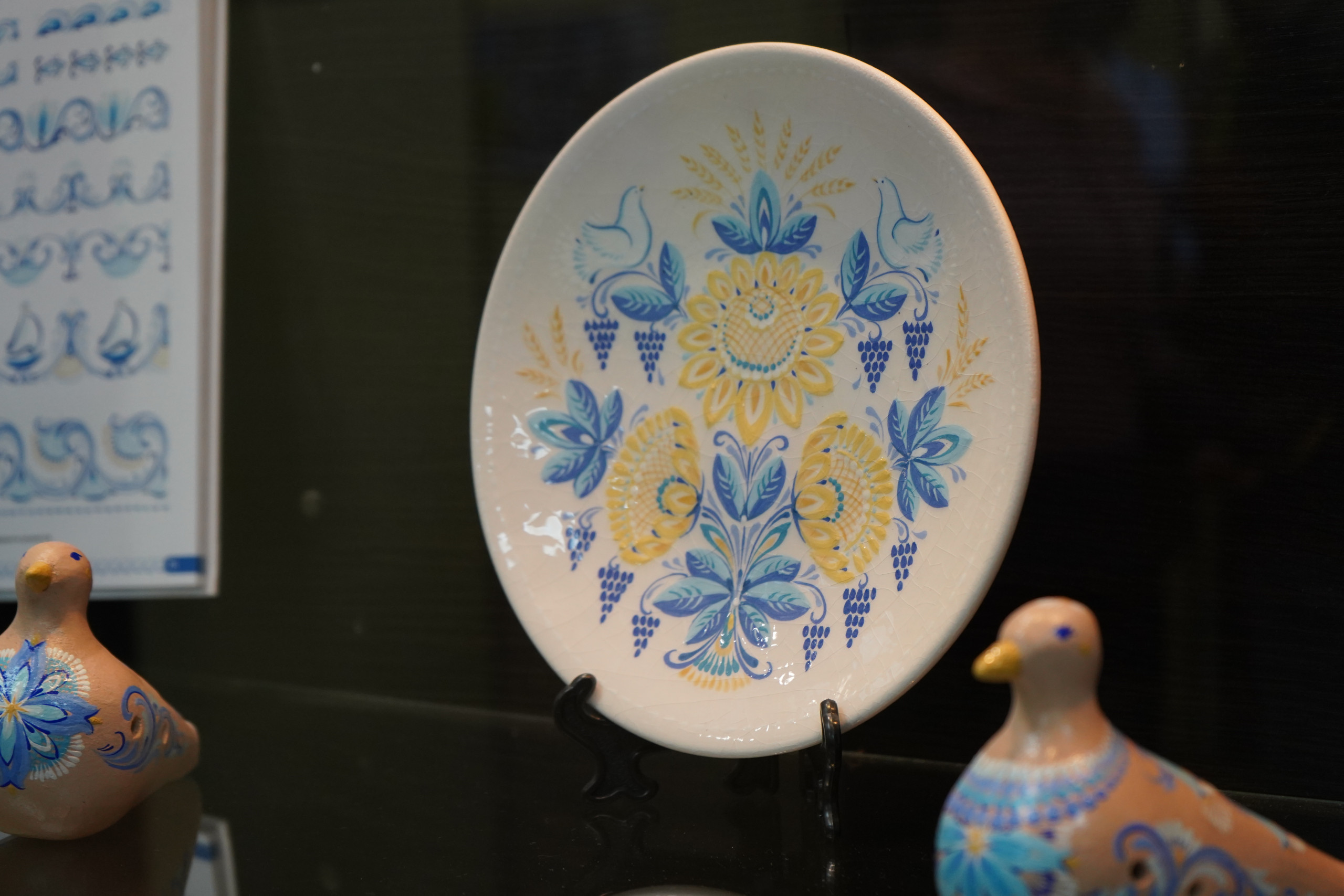
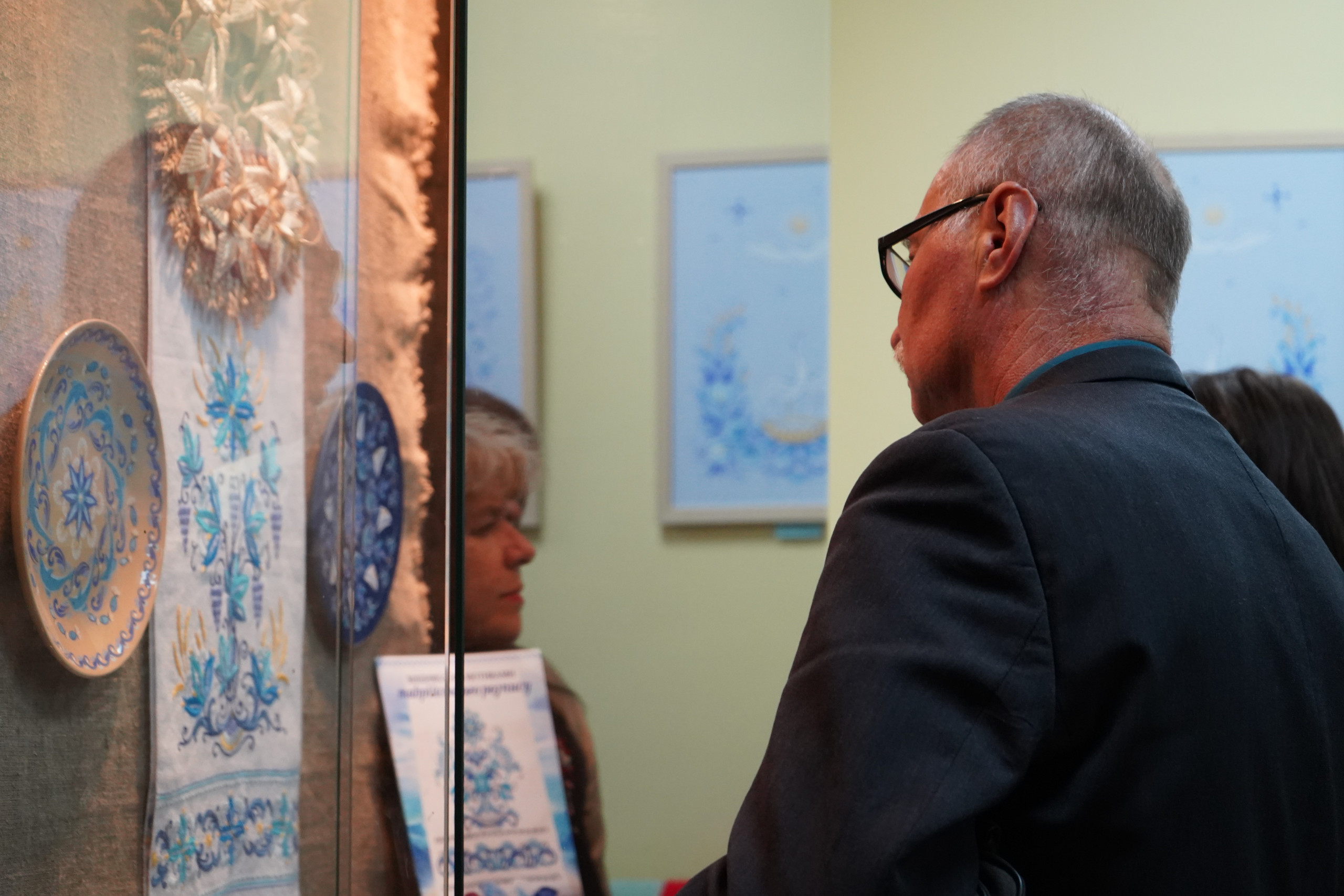
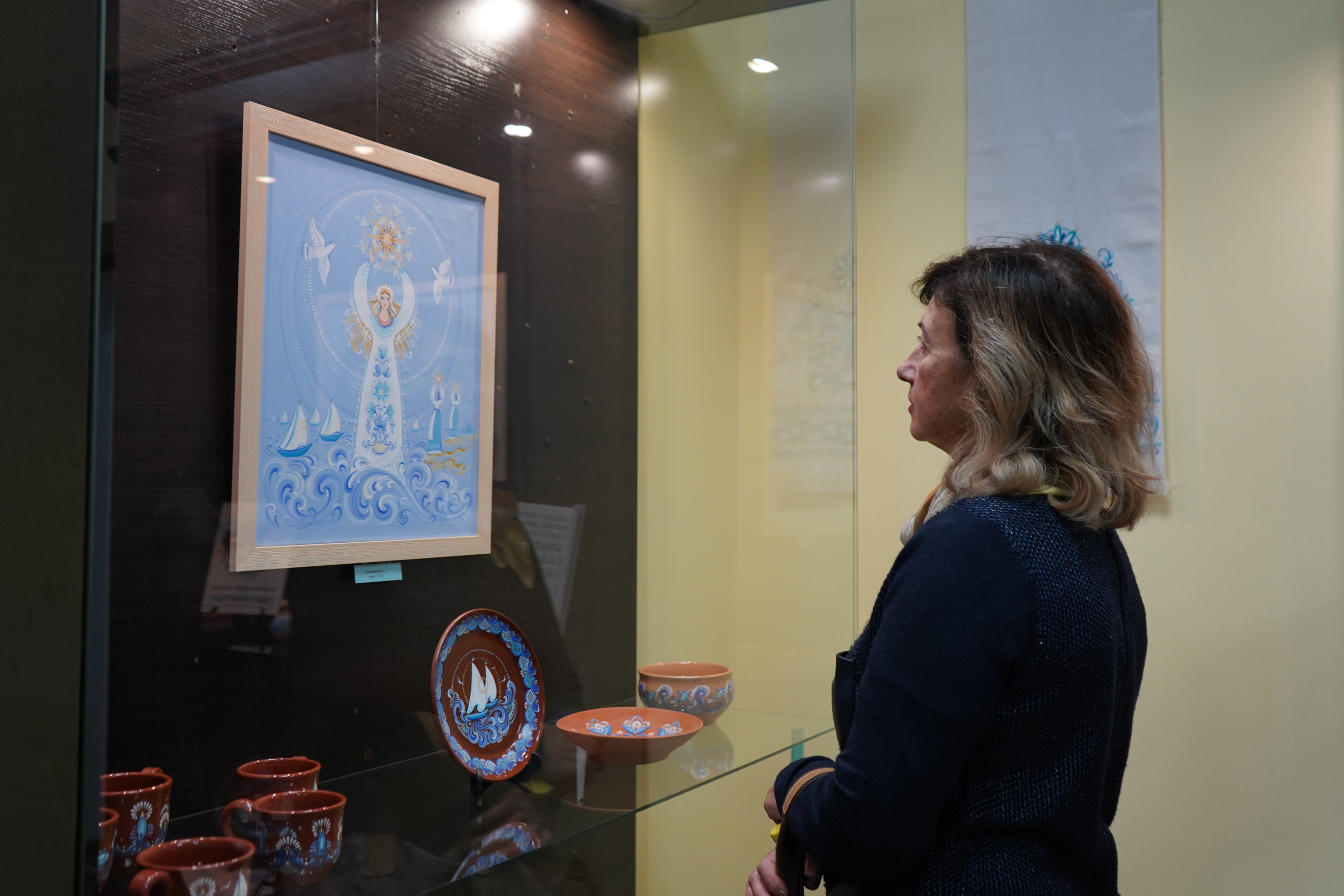
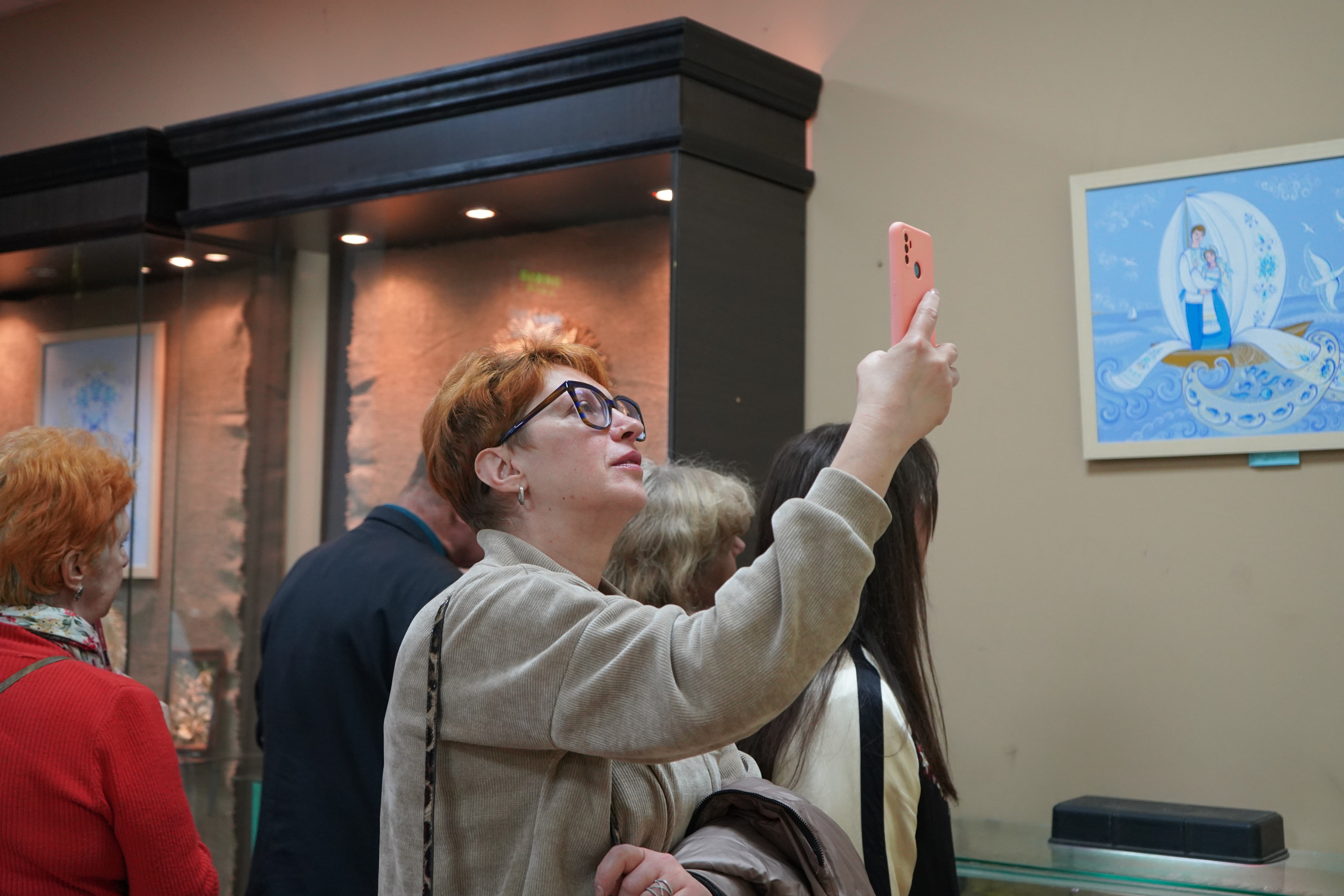
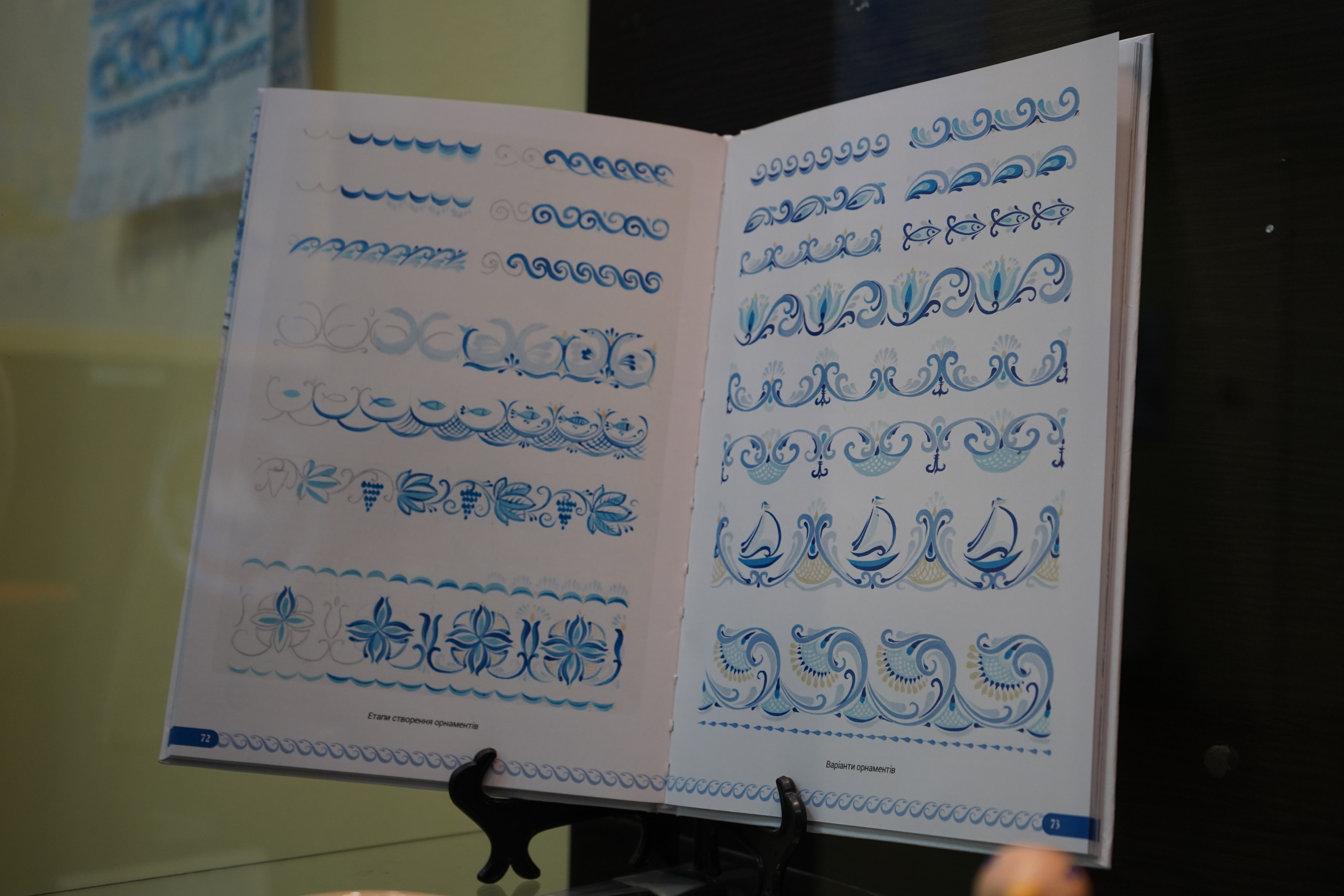
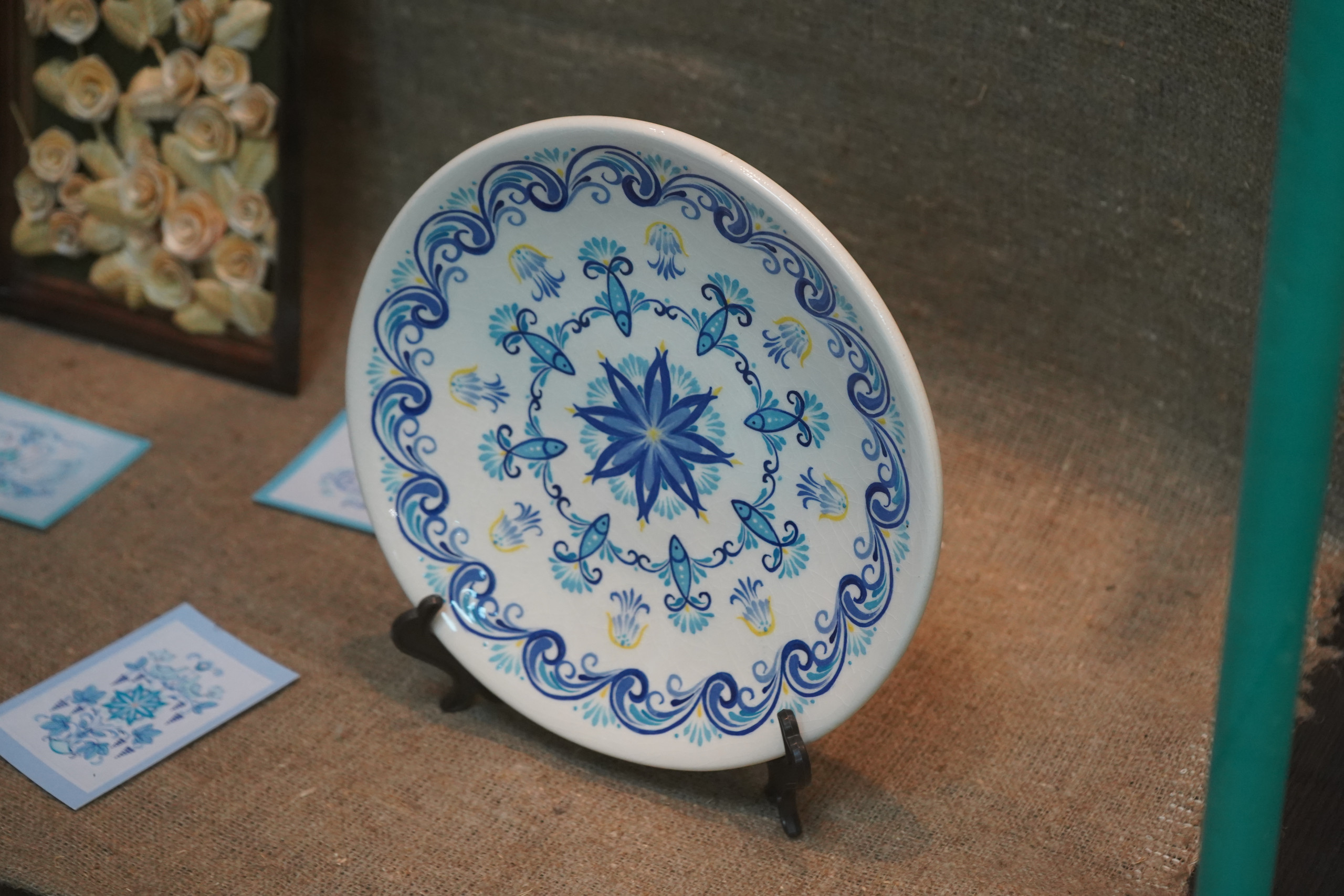
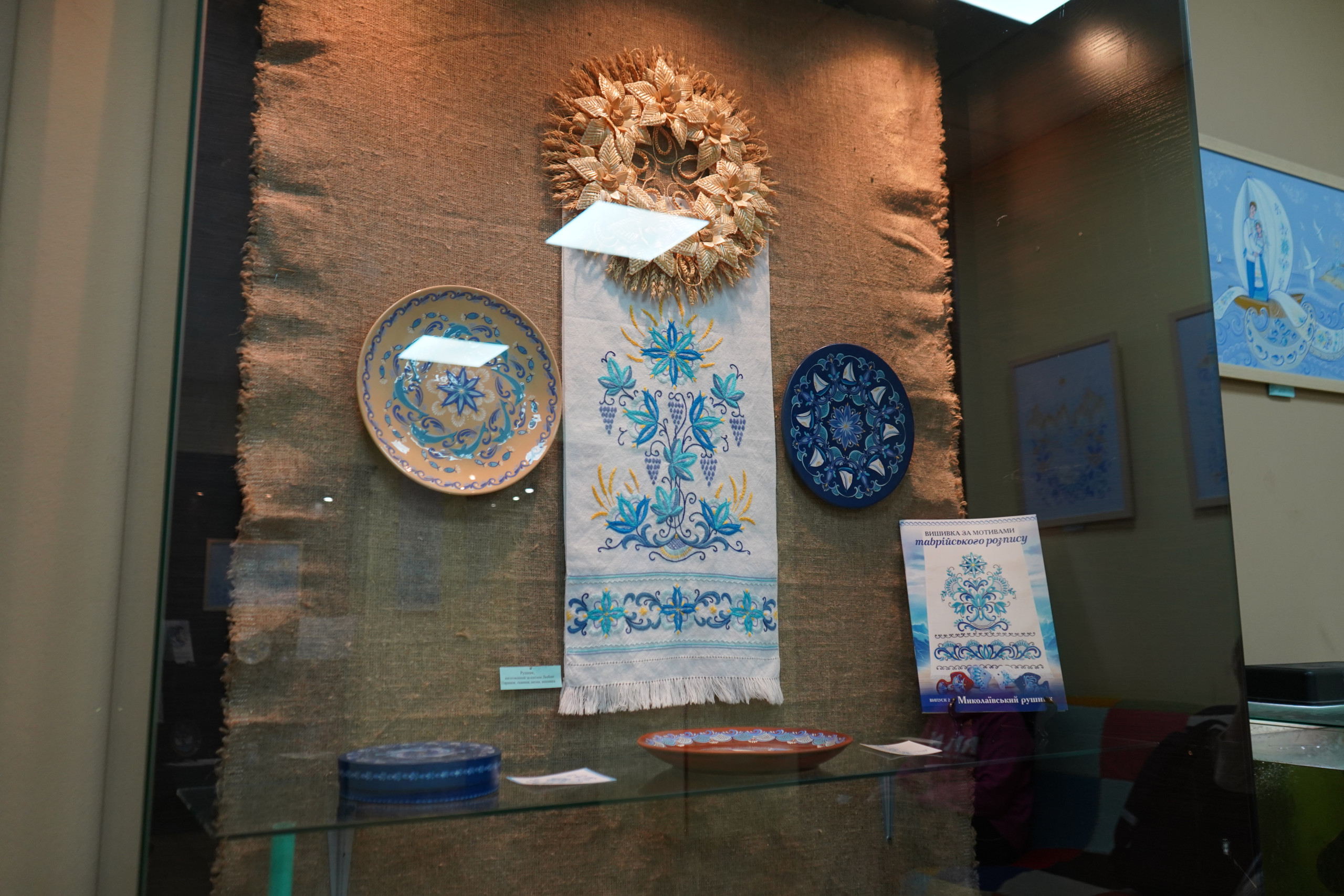
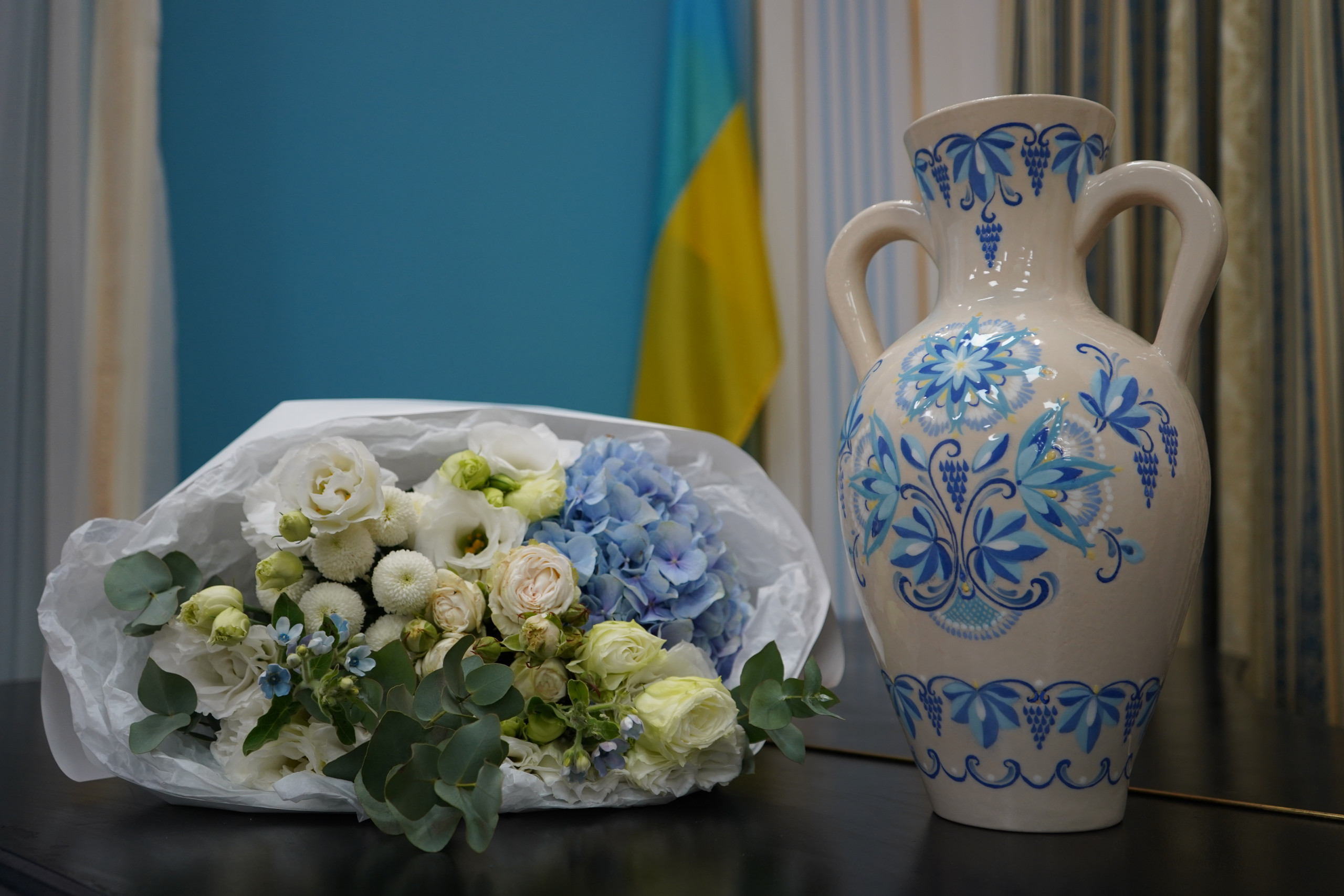
Photo from the exhibition Blue Symphony of Tavrian Painting, 2025
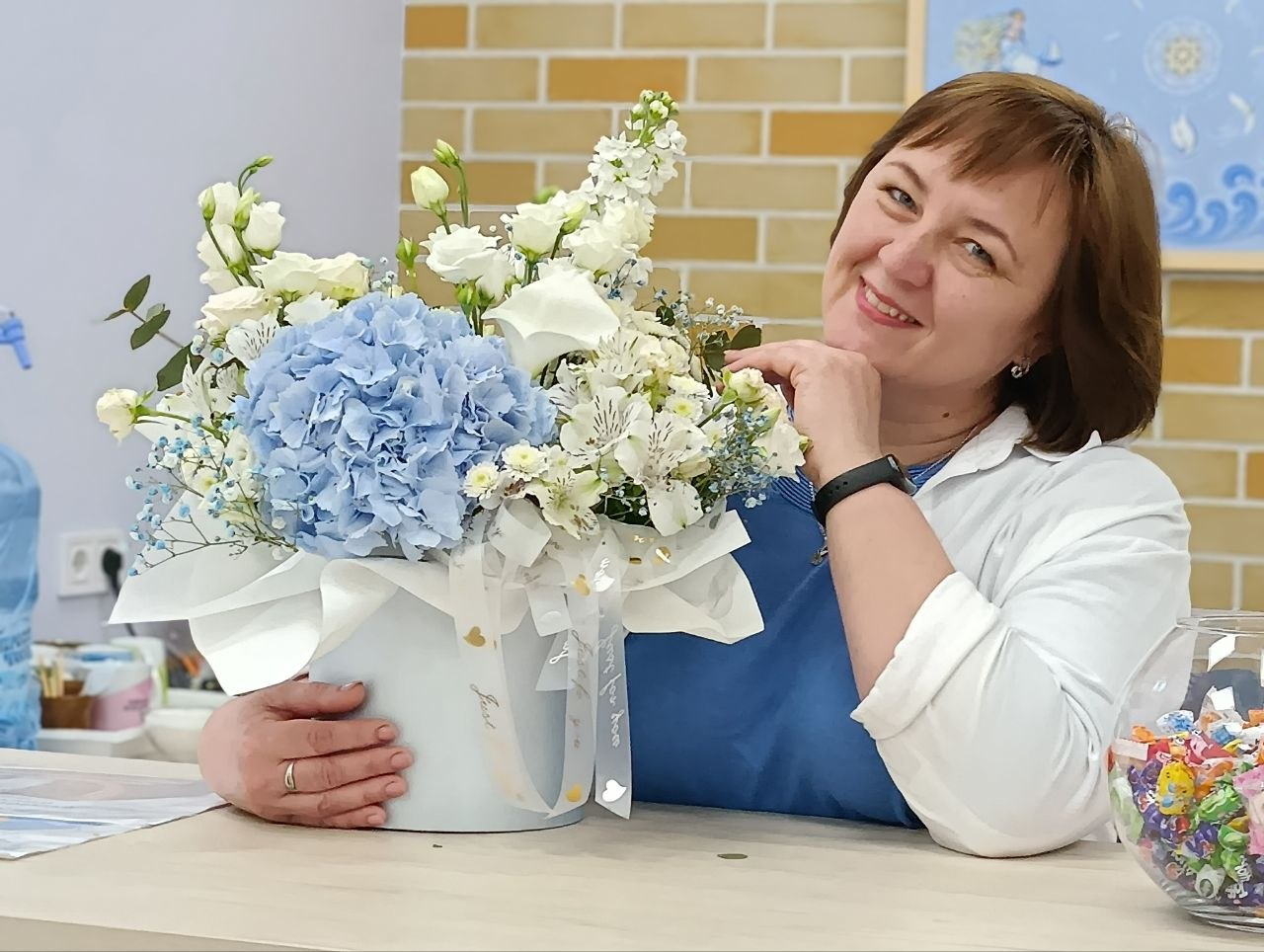
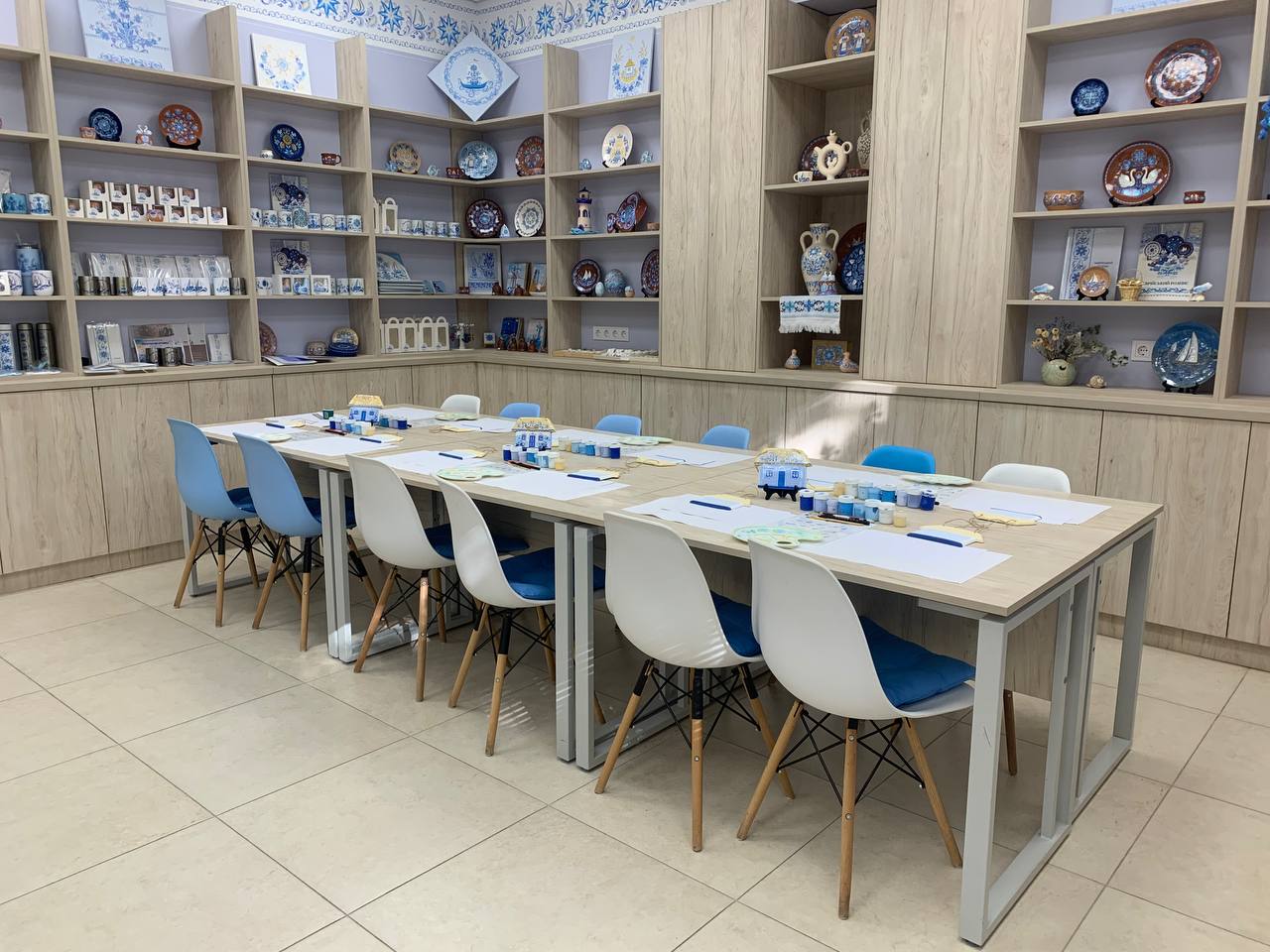
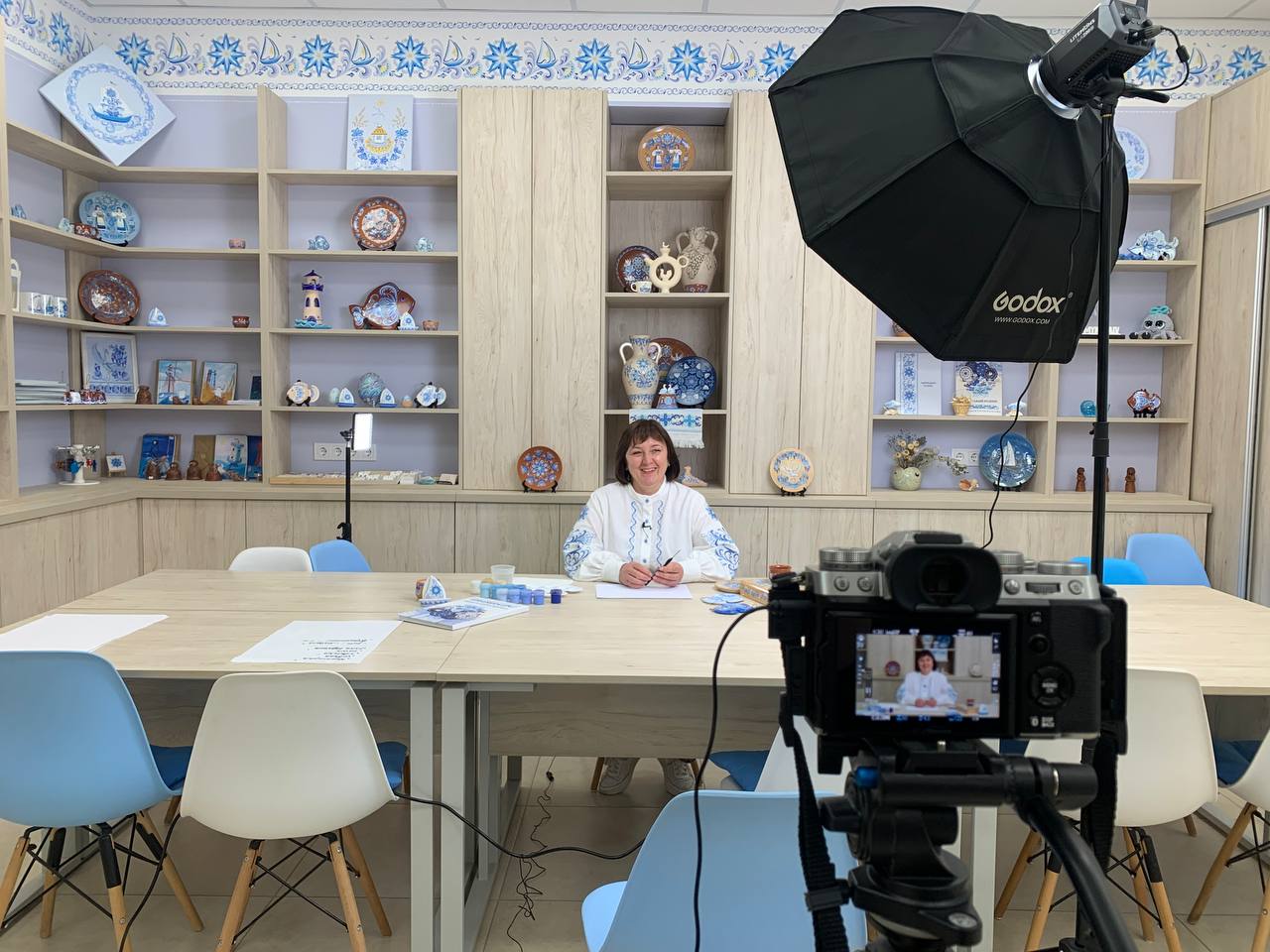
The opening of the Workshop of Tavrian Painting, with a pottery studio attached to it, became a significant city event of 2024. It works as a social enterprise of PO “ALEC ‘South’” and is one of the brightest tourist locations of the city, where one may learn about the painting, take a masterclass and buy unique souvenirs. The workshop is headed by Liubov Paraniuk.
The master also gives great attention to teaching Tavrian painting to colleagues. Over the last five years Liubov Paraniuk has travelled actively through the communities of the Mykolaiv Region and of all Ukraine and has given masterclasses and seminars for all who wish, and has also painted locations of many kinds — libraries, stops, ethno-buildings, stoves, premises of state institutions.
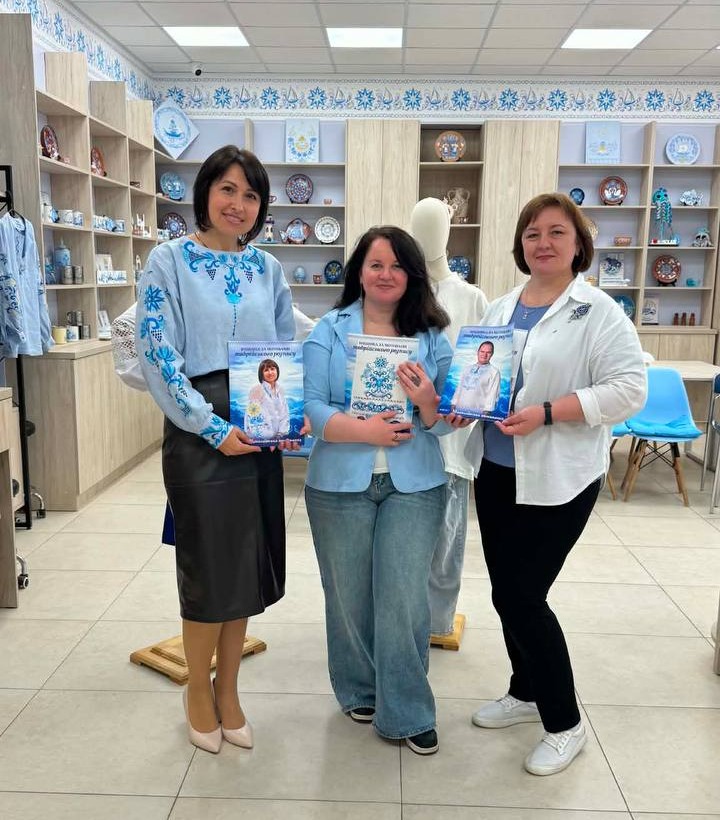
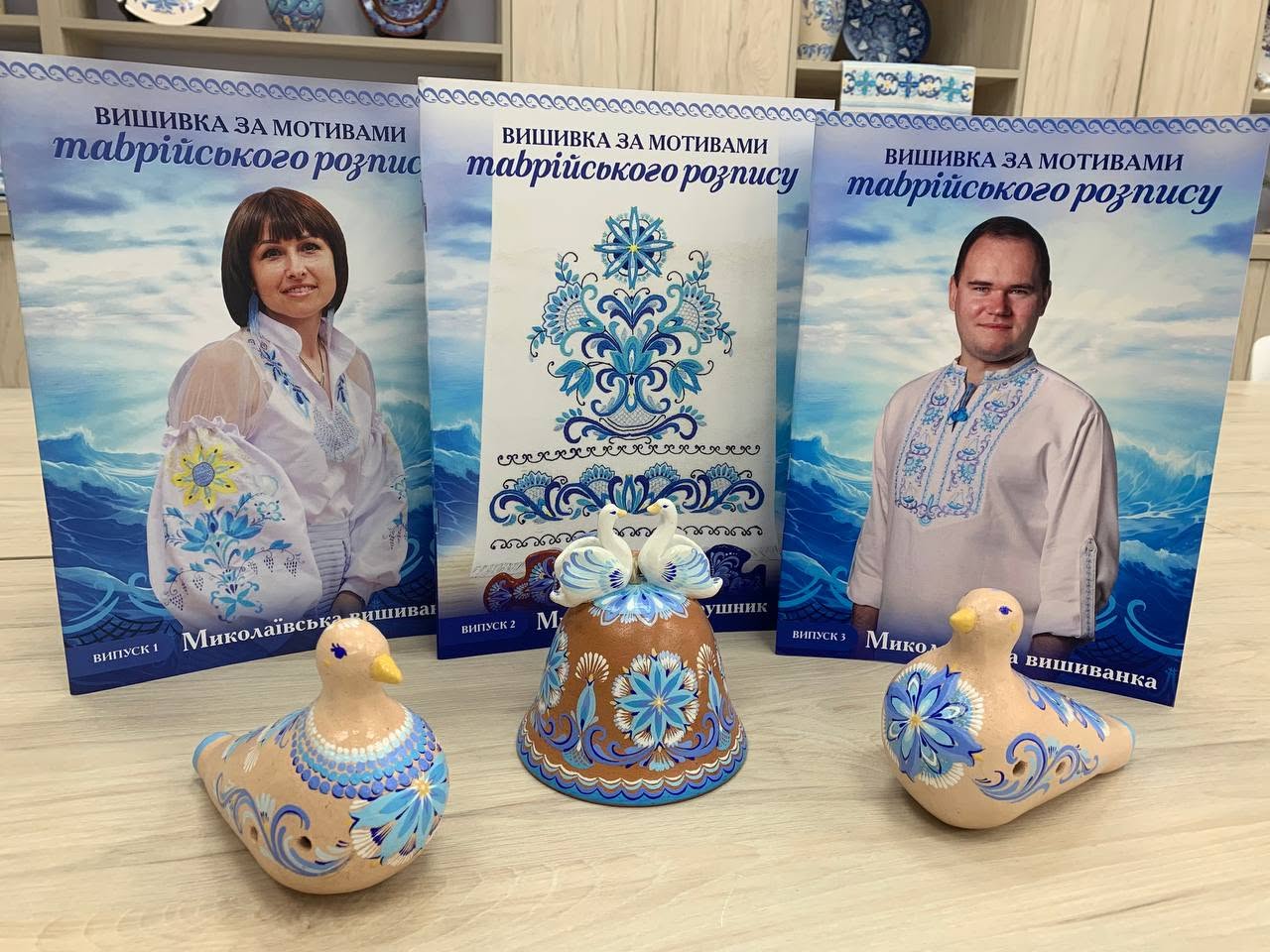
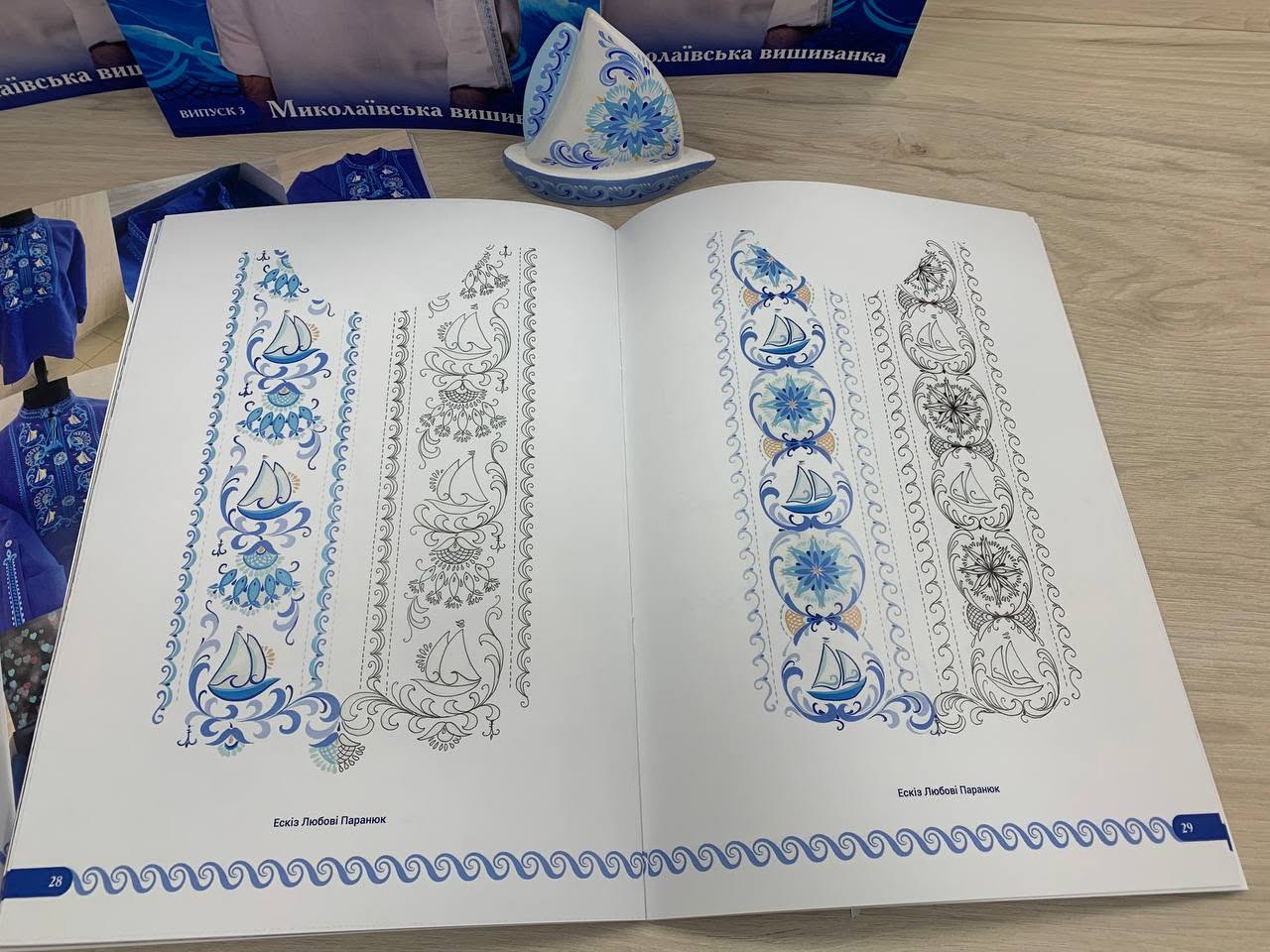
Liubov Paraniuk is also an expert in questions of decorative and applied art and a participant in large regional projects, among which one should single out “Identity of the Mykolaiv Region: Past, Present and Future,” “Lights of the South. People-Lighthouses,” and the regional cultural and artistic project “Berehynia of Ukraine.” She also belongs to teams working on the creation of new brands of the region. Mykolaiv embroidery based on motifs of Tavrian painting is one of them. Twelve of the master’s author’s sketches for vyshyvankas and rushnyky entered three collections of the series The Mykolaiv Vyshyvanka (2024–2025).
From August 2025 she worked on the team as an artist and expert on the design of the coat of arms of the Mykolaiv Region, which also contains elements of the painting.
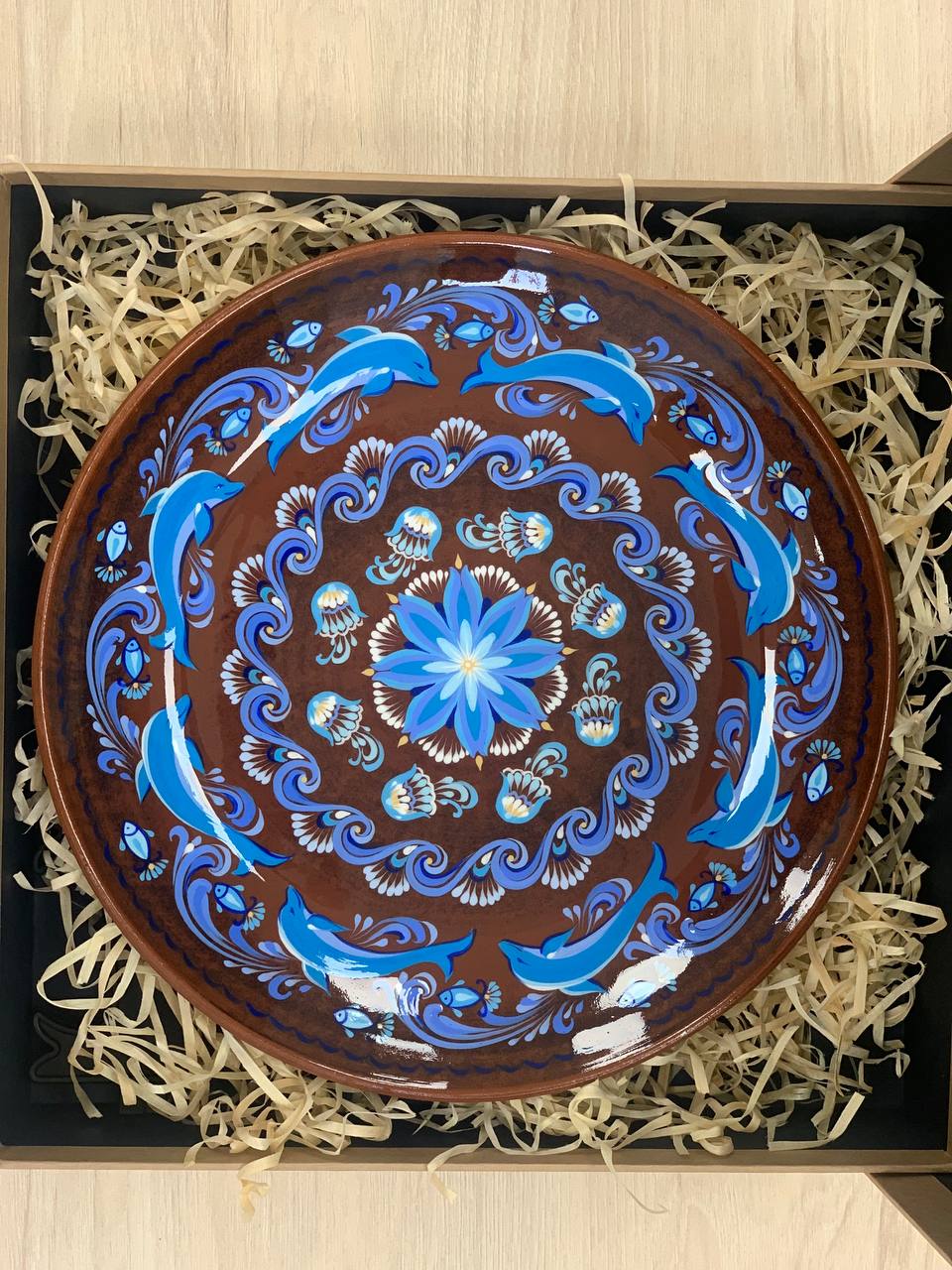
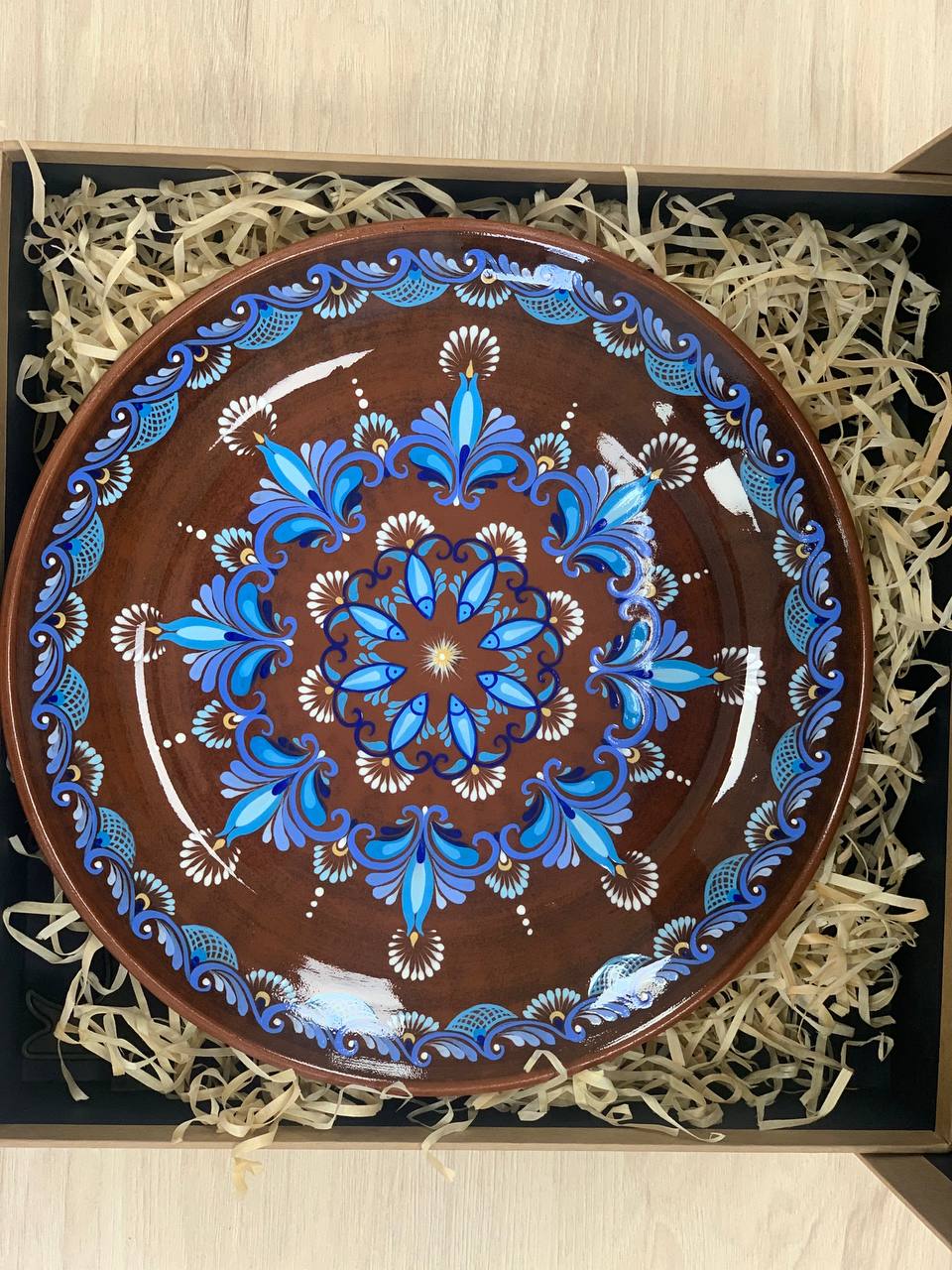
Works by Liubov Paraniuk are often commissioned by representatives of the city and regional councils and of various state institutions as unique gifts for delegates from other countries, for guests, and for official journeys abroad. Plates by Liubov Paraniuk, painted with Tavrian painting (as particular calling cards of the Mykolaiv Region), are in the possession of many well-known people of the world, among them, for example, Nancy Pelosi, Speaker of the United States House of Representatives, and high officials from Japan, Denmark, Lithuania, Poland, America and beyond. All of them were presented at important events and meetings, speaking of the beauty and values of the Mykolaiv Region and drawing attention to the war in the country.
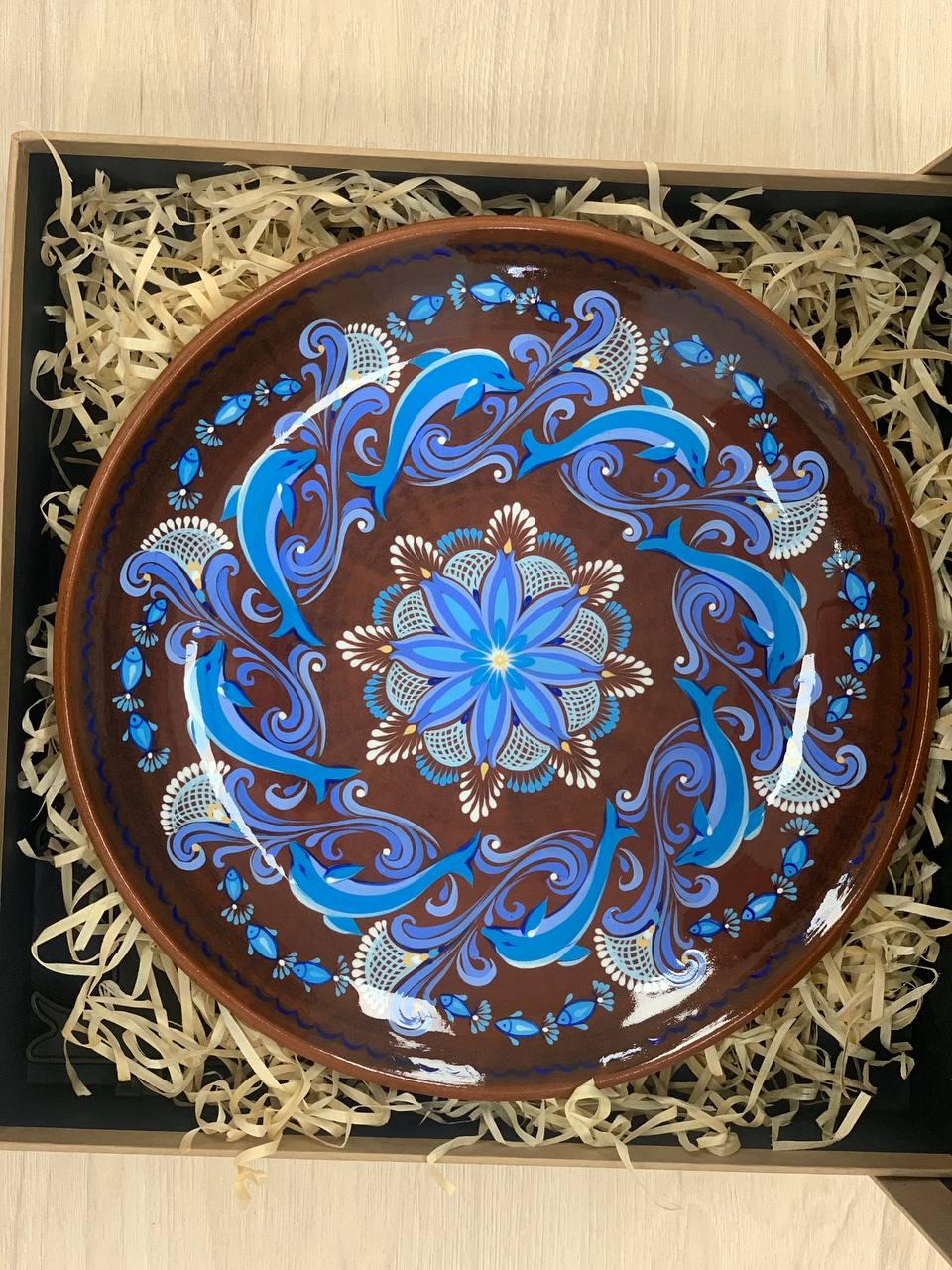
In 2025, as a member of the team, she prepared a packet of documents for the Ministry of Culture of Ukraine and for the expert council in particular, concerning the inclusion of the tradition and practice of spatial and utilitarian decoration in the Mykolaiv Region — Tavrian painting — in the National List of Elements of the Intangible Cultural Heritage of Ukraine. In the context of that work, on 6–7 September Liubov Paraniuk presented the painting at the National Museum of Folk Architecture and Life of Ukraine at the festival “Living Culture — Living World.” As a result, on 12 November of last year the painting received the protection number 116 n.k.s. and became part of the cultural code of the country.
Liubov Paraniuk is the leading master of Tavrian painting, whose creative work is closely bound to love and honour for the native land, for its identity, history and culture — and for the small homeland in particular. She sincerely holds the blue-eyed painting of the Mykolaiv Region to be a symbol of the remarkable beauty of the region, of love of nature, of family values, of hope and faith. Through her works and her educational activity the master touches hearts and awakens a love of the painting in more and more people. Colleagues from all Ukraine take inspiration from her works; she is set as an example, she is followed, she is invited as an expert to events and projects of many kinds. More than twenty years of her life she has given to the study and sharing of folk art and of the intangible cultural heritage of the Mykolaiv Region in particular. Thanks to her unceasing and persistent work, the beauty and meanings of Tavrian painting are now known to the whole of Ukraine and to a great number of countries of the world.
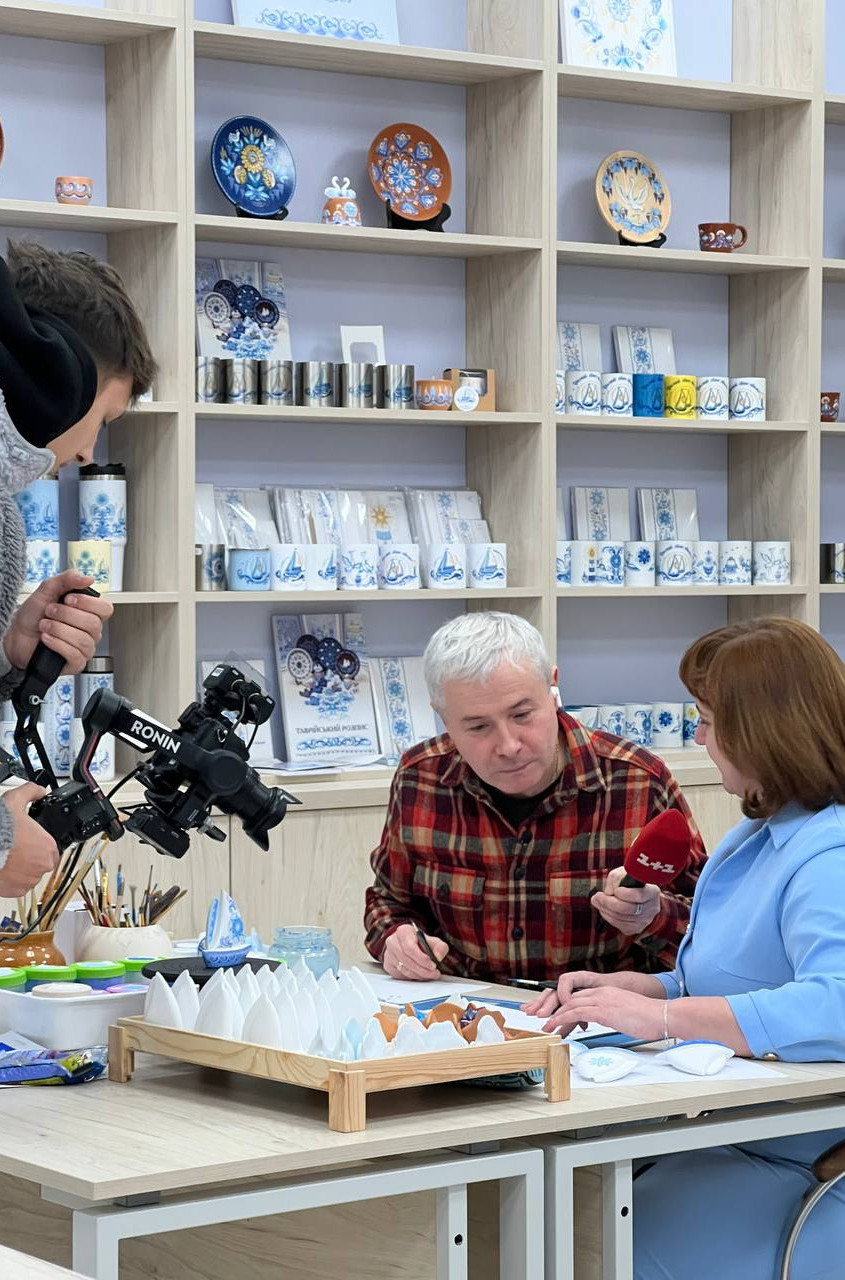
For many years of conscientious labour she has been honoured more than once by leadership at the level of the community and the region. Thus, over the last five years Liubov Paraniuk has become a laureate of the Mykola Arkas Regional Prize (2020), received a distinction of the head of the Regional State Administration — the jubilee badge “30 Years of the Independence of Ukraine” (2021), letters of thanks from the Mykolaiv Regional Military Administration and the Mykolaiv City Council (2024), and from the Department of Culture and Protection of Cultural Heritage of the Mykolaiv City Council (2025) for fruitful cultural and artistic work, for the revival of Ukrainian culture and of the culture of the native land in particular, and for the popularisation of Tavrian painting and of non-formal education.
In August 2026, by Decree of the President of Ukraine No. 755/2026, Liubov Paraniuk was awarded the title Honoured Master of Folk Art of Ukraine.