Gallery
The Collection of Works by Yevhenia Bondarenko: of Boundless Love for the Native Land and Its Philosophy
In the collection of the Mykolaiv Regional Local History Museum there are 55 pictures by Yevhenia Bondarenko. They form part of the Museum Fund of Ukraine and are protected by the state. Today some of them are in evacuation, and so their photographs are absent from the gallery. This is the largest gathering that remained after the artist’s death. Several of the master’s works may also be seen in Preschool Education Institutions No. 29 and No. 141, which carry out projects for the revival of traditions and for patriotic upbringing on the basis of Tavrian painting.
The pictures began to enter the museum collections in 2000. The earliest are dated 1993; the later ones, 2010. Some were created together with her daughter Oksana, who also completed courses at the School of Mastery of the Mykolaiv branch of the National Union of Masters of Folk Art of Ukraine.
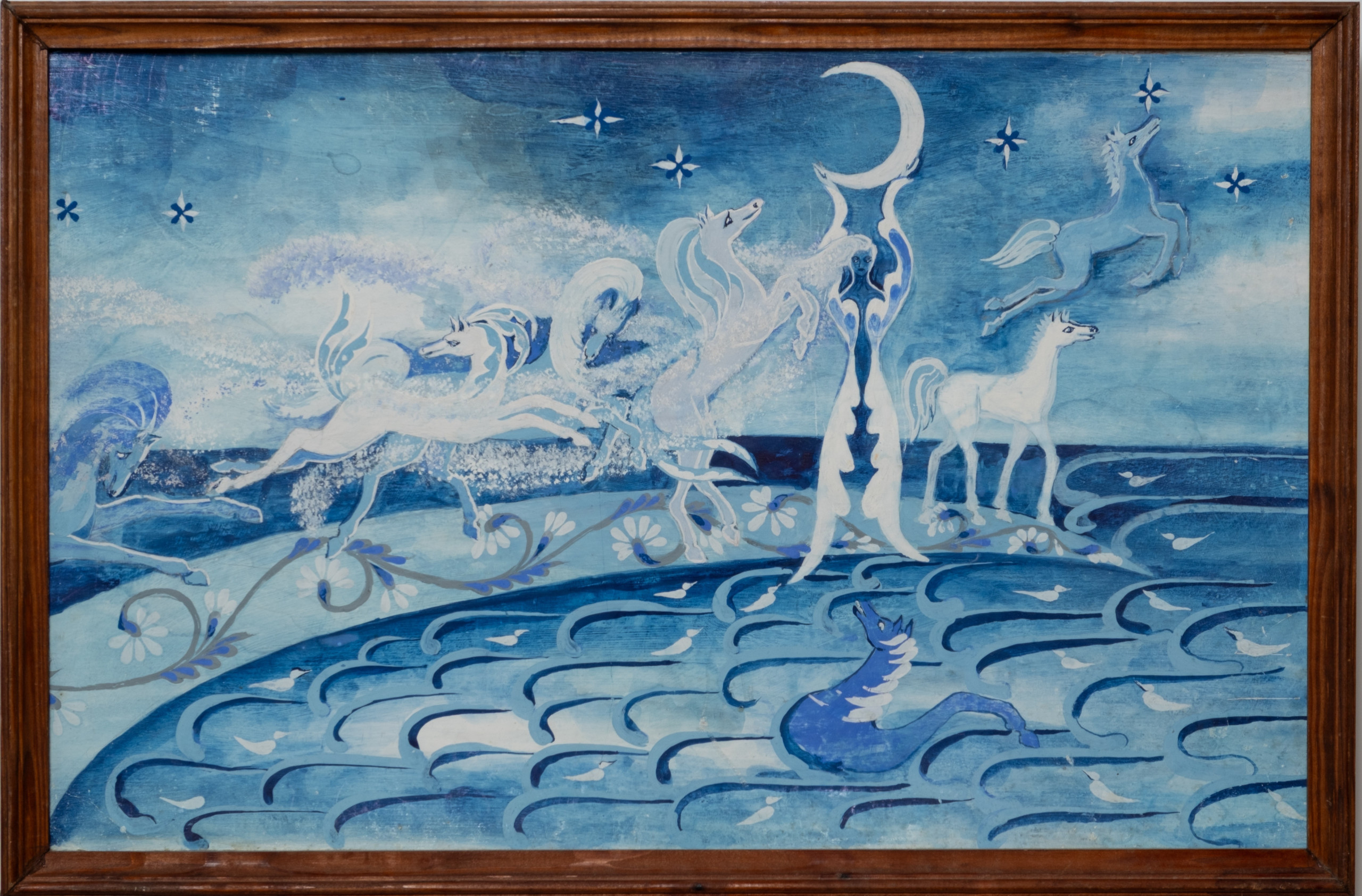
Analysing documents, articles and mentions in the novellas, one may count more than 130 works created by the artist. Most of them are bound to folklore themes and reflect the traditions, rites, feasts and tales of the people of the Mykolaiv Region. This does not mean, however, that the master was unmoved by the problems of her own day. She wrote of contemporary events with heat.
Like most folk masters, Yevhenia Bondarenko worked with materials that were to hand: hardboard, canvas, cardboard or even paper. She experimented actively with paints and with forgotten techniques. The frames she made simple, from ordinary slats and skirting boards, or used ready-made ones. Sometimes they were larger than the picture, and so the master additionally “dressed” them in a mount.
Yevhenia Bondarenko liked to work in series, as if telling stories in sequence. Each picture opens new details, emotions or sides of the idea. Examples are the diptych The Forgotten Lighthouse, the quadriptych Fishermen Live on Kinburn, Birds of Tavria and others.
That the artist worked long over her pictures, reworked and refined them, is shown by two versions of Easter in Tavria. They have the same subject, but in the details they differ greatly.
Bondarenko worked in the genre of folk (naïve) painting, with the features proper to it: flatness, simplification of images, a decorative quality, a fairy-tale air. Her figures often receive human traits. Houses, for example, have human faces and headdresses (Tramontane); branches of trees turn into hands (The Trees Died Standing); a lighthouse becomes a woman’s figure or a grieving Cossack (Mayakivna Goes to Be Married, The Forgotten Lighthouse). Yet there are works that are almost academic, for in her time Yevhenia Bondarenko completed courses at the regional scientific and methodological centre led by Honoured Artist of Ukraine Mykhailo Riasnianskyi. These are mostly landscapes: The Stake Net, There Is Fish! — I’m Going, Kinburn. Salt Lakes.
It should be said that Yevhenia Bondarenko had not a single work in the classical style of the painting, for she always laid the elements of “Tavryka” upon a painterly canvas. She was not a professional artist, and so it was quite hard for her to convey the full beauty of the painting. What remains priceless, however, is the folklore material she gathered and her artistic seeing of the beauty of the Mykolaiv Region and of the deep philosophy of life of the South.
Yevhenia Bondarenko took inspiration from the nature of her native land, from its refined plants, tender birds and ringing air, and sought to use motifs, compositions and subjects characteristic of the Mykolaiv Region. For she understood clearly that Tavrian painting is not simply a well-painted ornament or subject, but a complex philosophical and ethical system of relations with the world, worked out by different generations of the people of the Northern Black Sea coast.
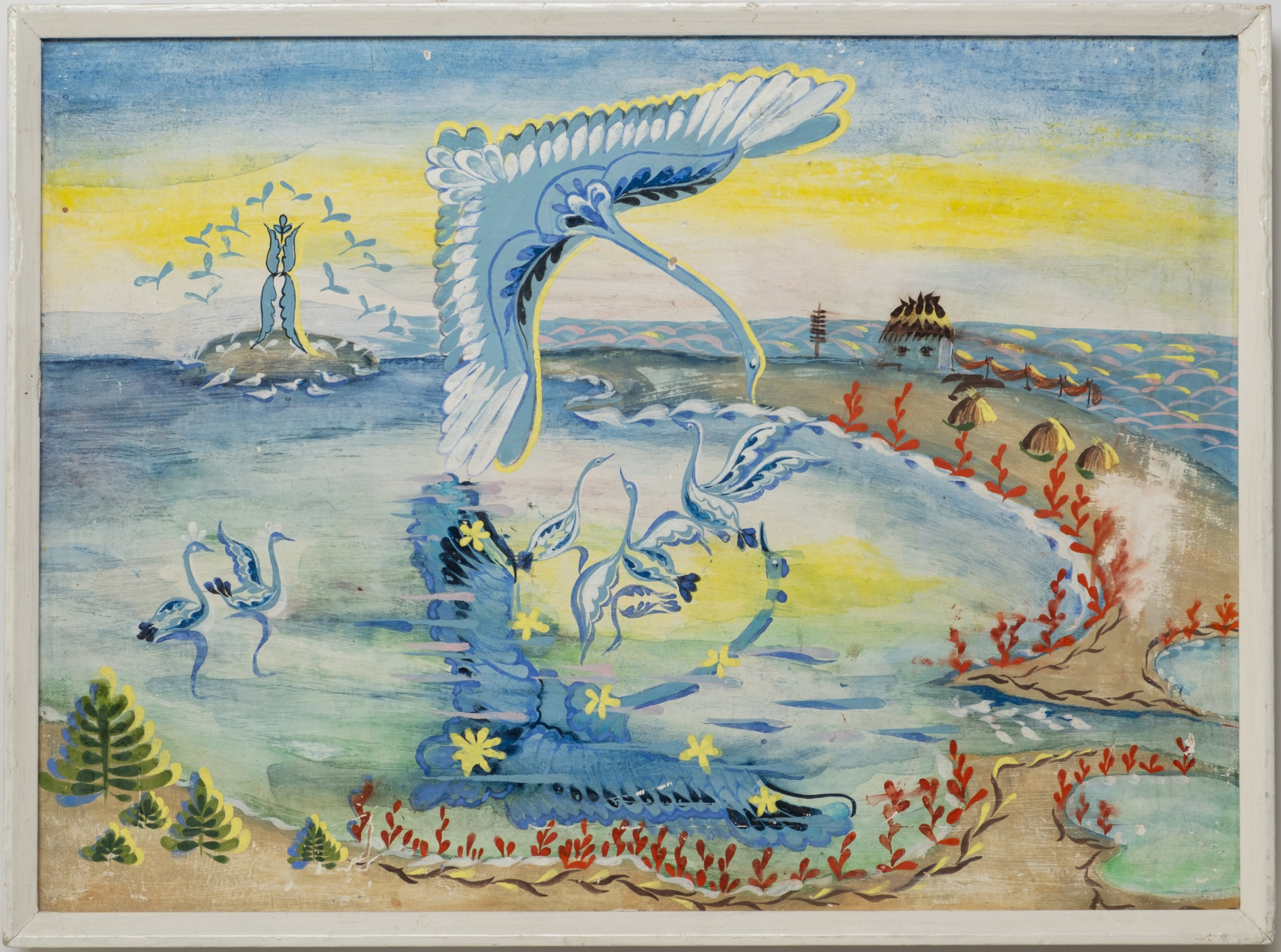
Bondarenko Yevhenia, Bondarenko Oksana. Yahorlyk — a Swan Cradle (from the series Wings over the Lyman), 1999–2001. Cardboard, gouache. 37 × 50 cm. MRLHM
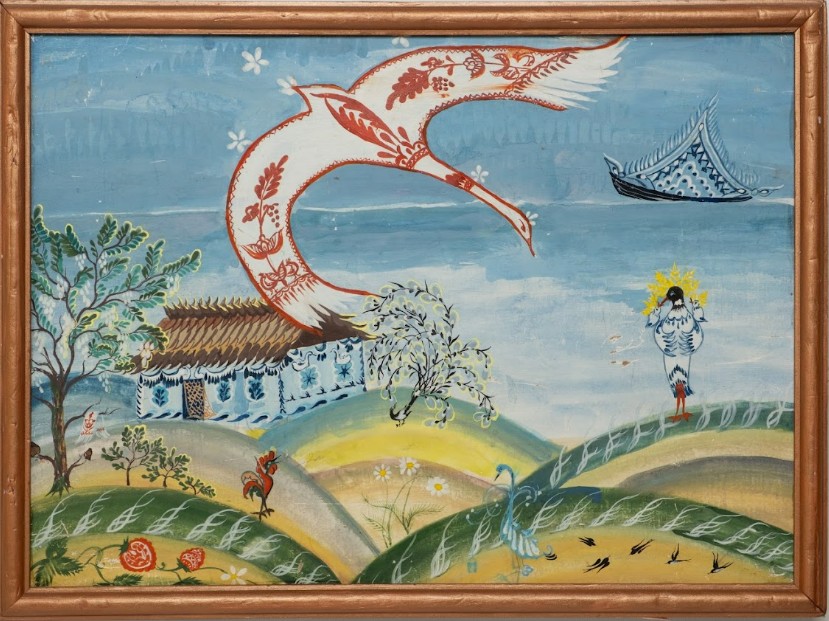
Bondarenko Yevhenia, Bondarenko Oksana. A Swan over Grandmother’s House (from the series Birds of Tavria), 1999–2001. Cardboard, gouache. 37 × 50 cm. MRLHM
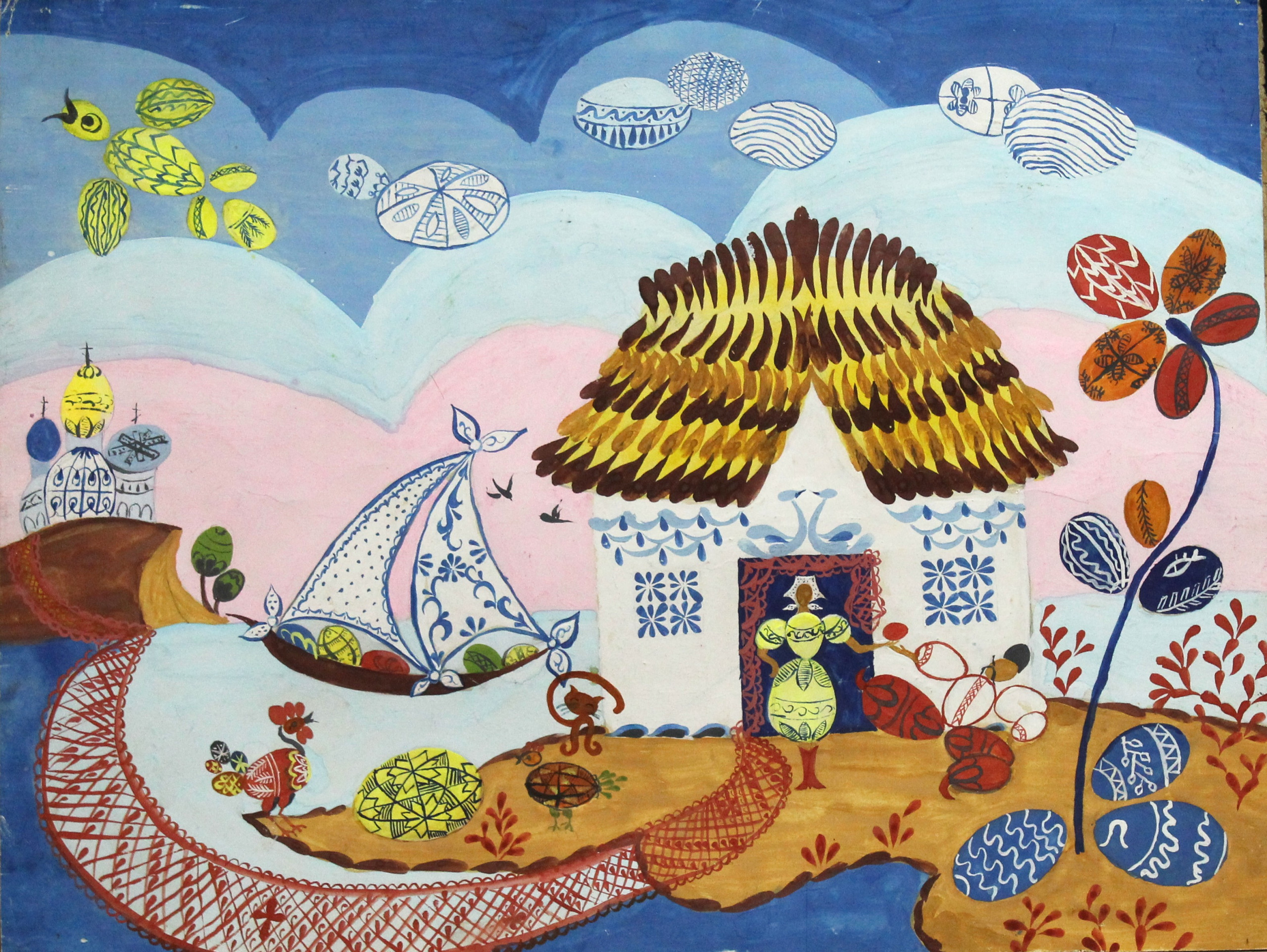
Bondarenko Yevhenia. Easter in Tavria, 1994. 36 × 40 cm. MRLHM
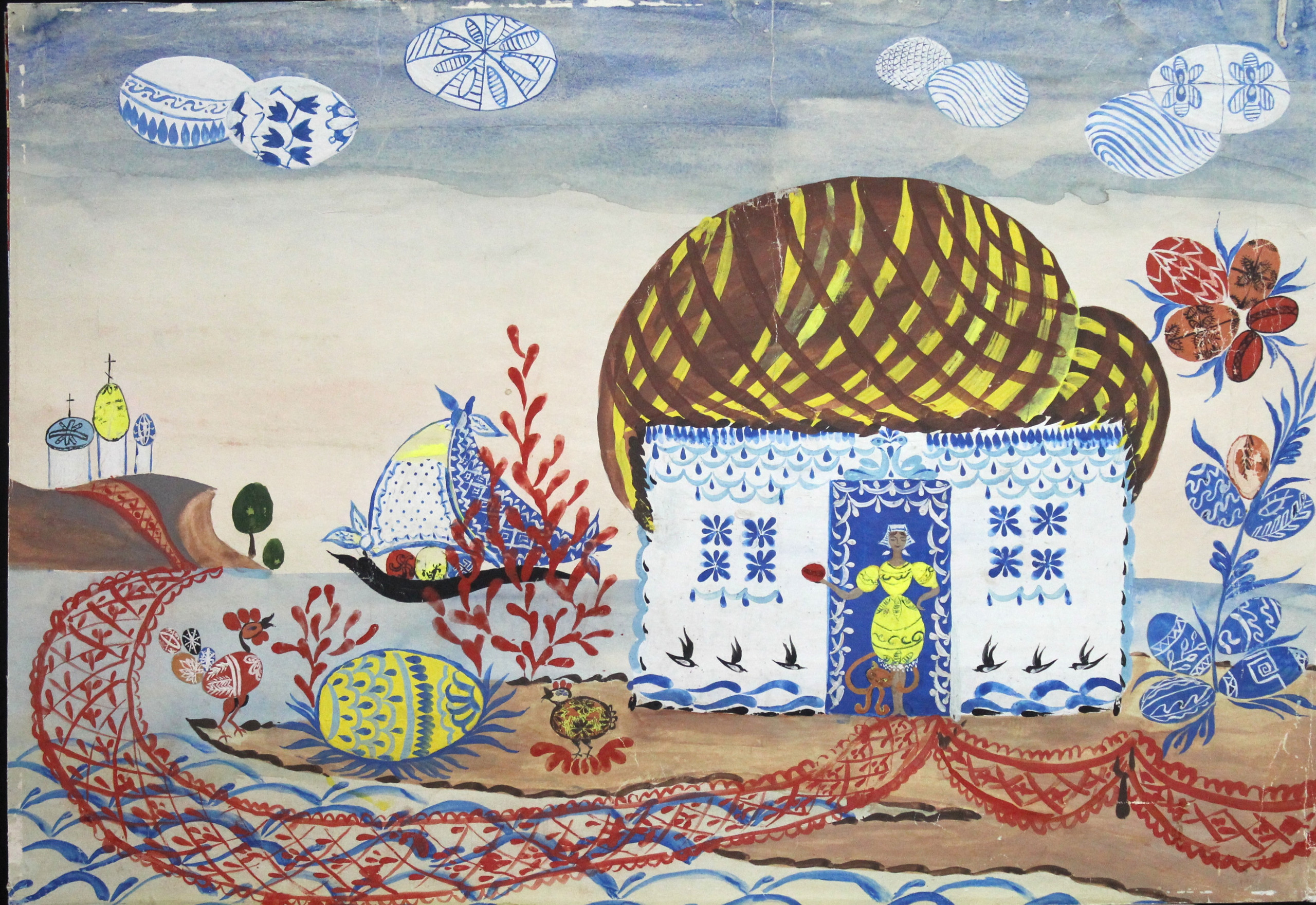
Bondarenko Yevhenia. Easter in Tavria, 2000. 44 × 62 cm. MRLHM
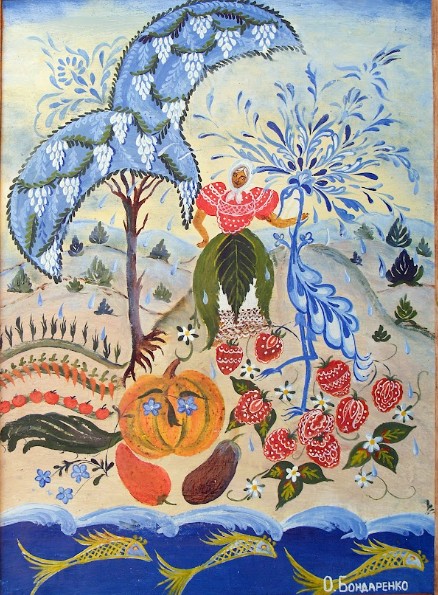
Bondarenko Yevhenia, Bondarenko Oksana. Baba Domna’s Sand-Dune. Triptych Mistresses of the Yahorlyk Shore. 1997–2000. Cardboard, oil. 70 × 50 cm. MRLHM
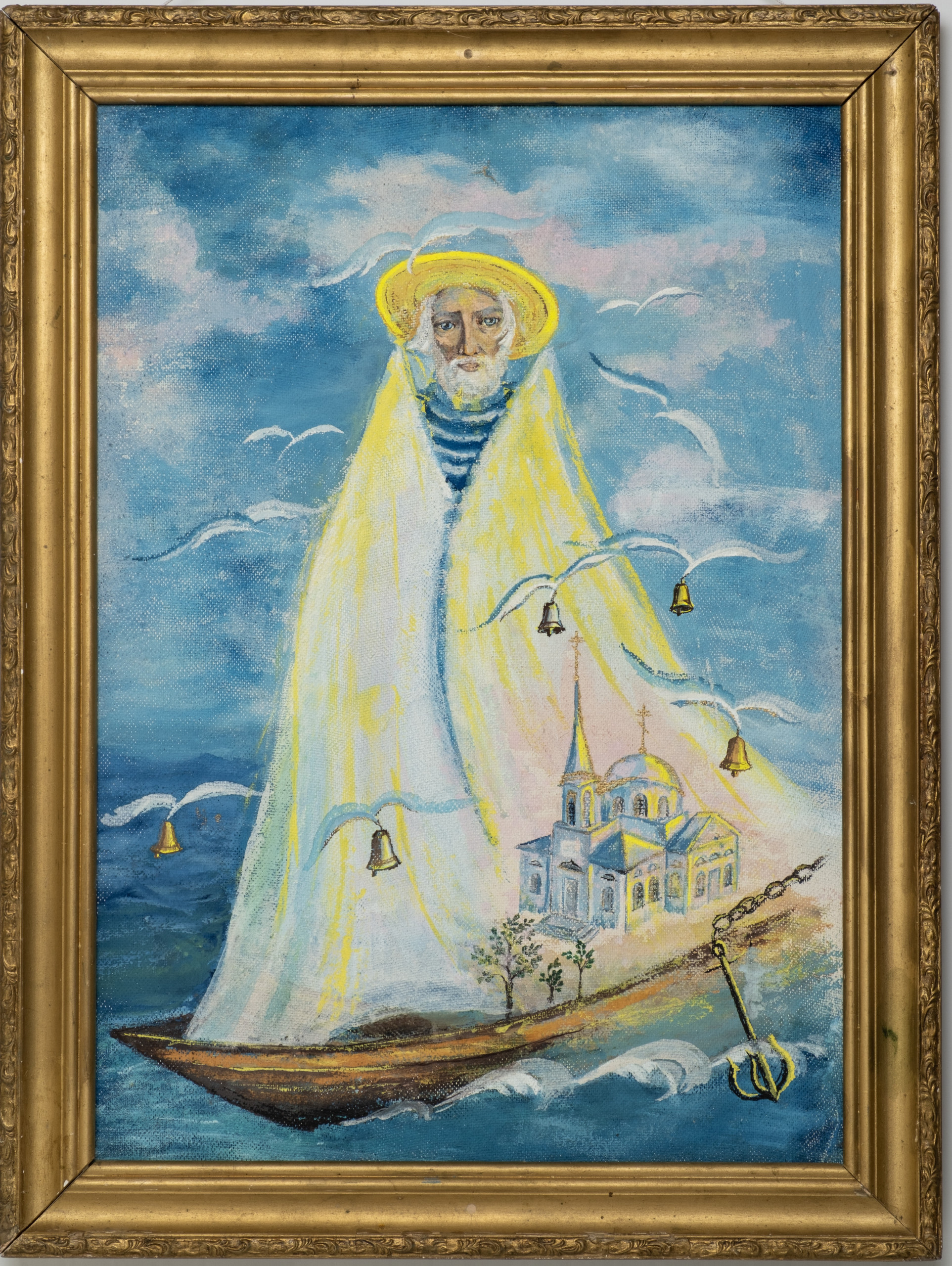
Bondarenko Yevhenia. The Landing-Place of Saint Nicholas, 1998. Hardboard, oil. 80 × 60 cm. MRLHM
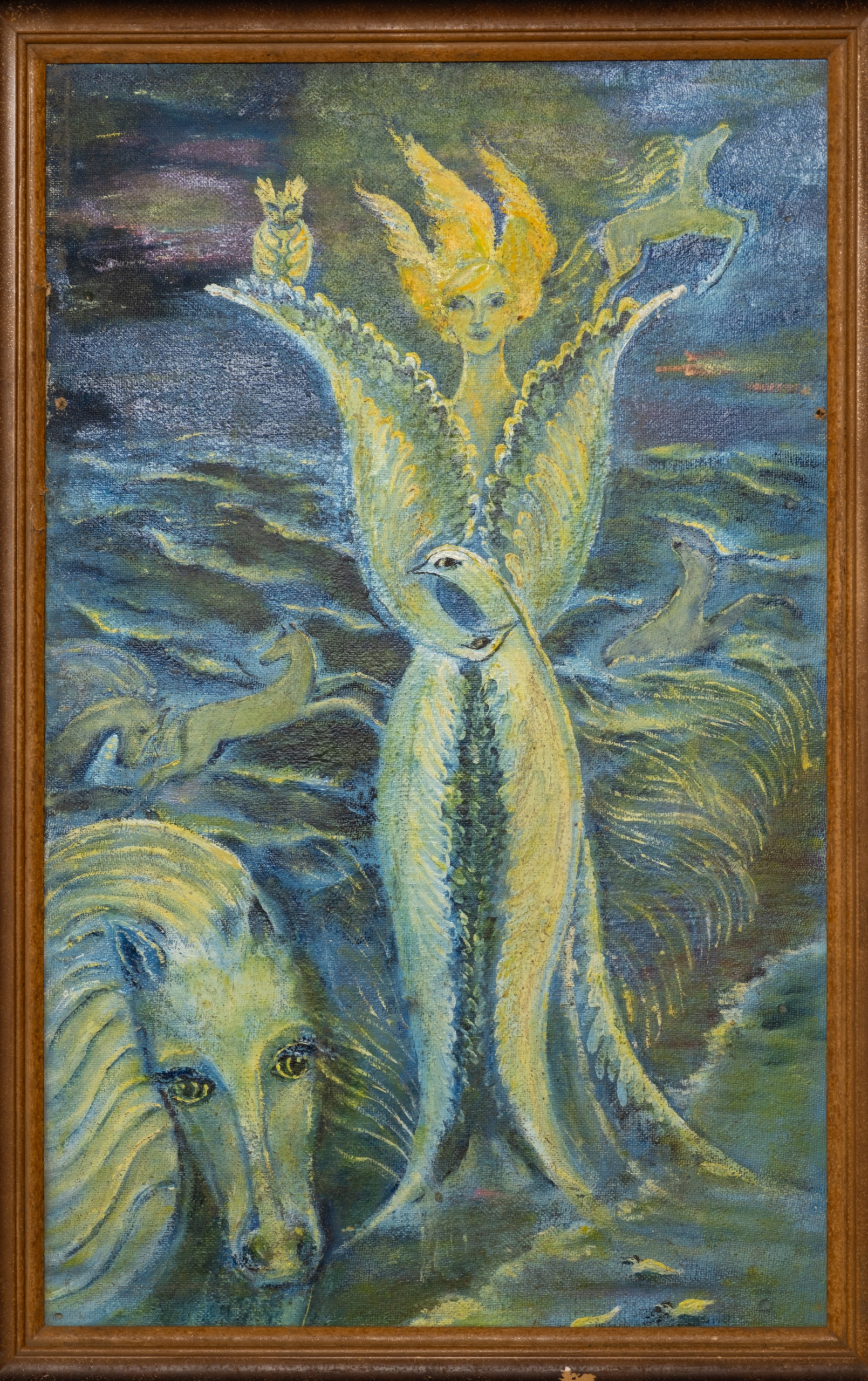
Bondarenko Yevhenia. Berehynia of Tendra, 1999. Hardboard, oil. 80 × 50 cm. MRLHM
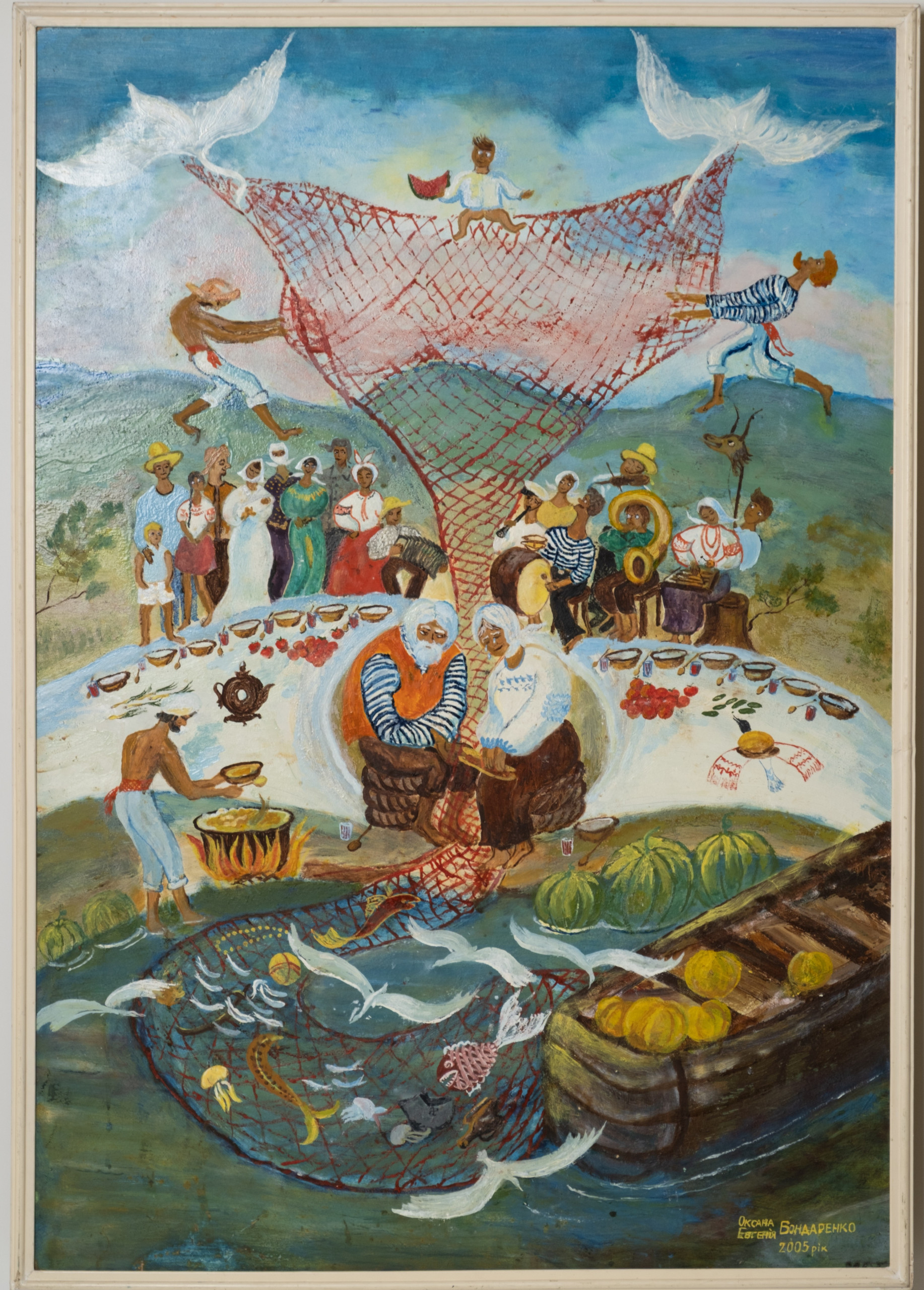
Bondarenko Yevhenia, Bondarenko Oksana. The Helmsman’s Matula, 2007. Hardboard, oil. 99 × 70 cm. MRLHM
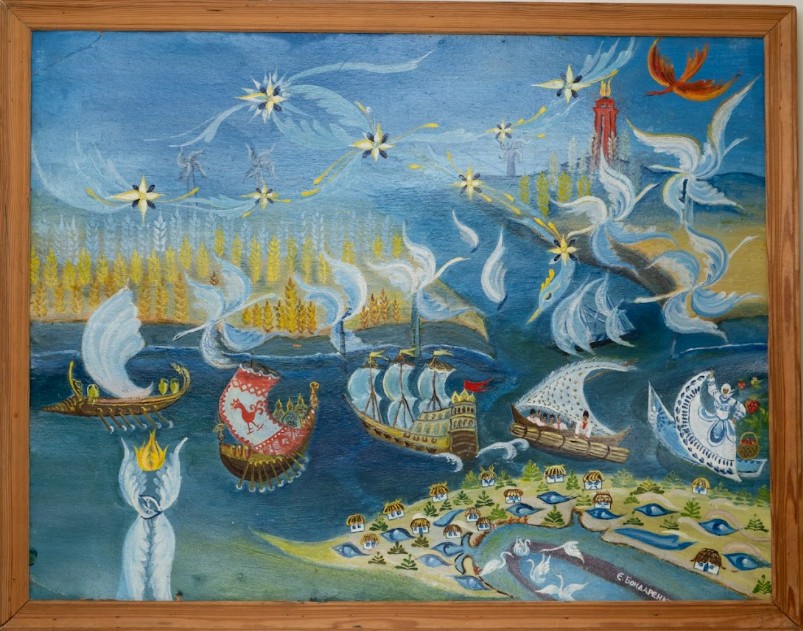
Bondarenko Yevhenia. Wake, Lyman! (The Lyman), 2001. Cardboard, oil. 98 × 78 cm. MRLHM
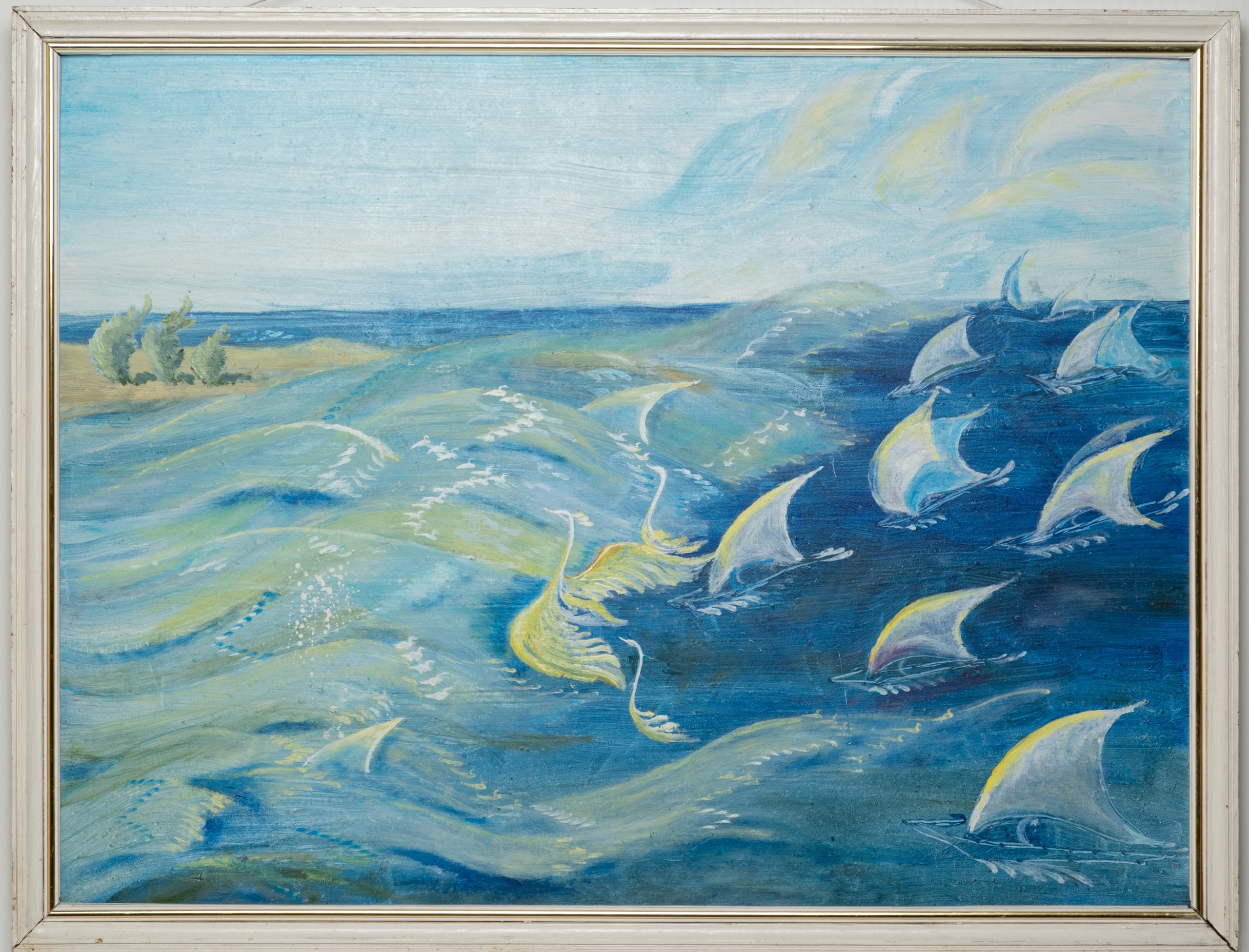
Bondarenko Yevhenia. The Lyman Met the Regatta…, 2000. Hardboard, oil. 65 × 74 cm. MRLHM
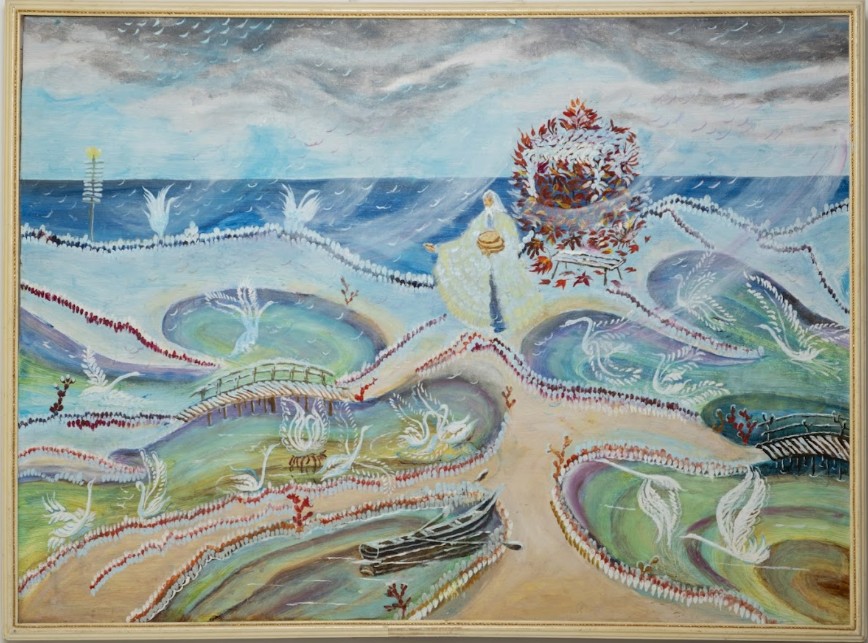
Bondarenko Yevhenia. Scythian Feathers Fly, 2003. Hardboard, oil. 72 × 97 cm. MRLHM
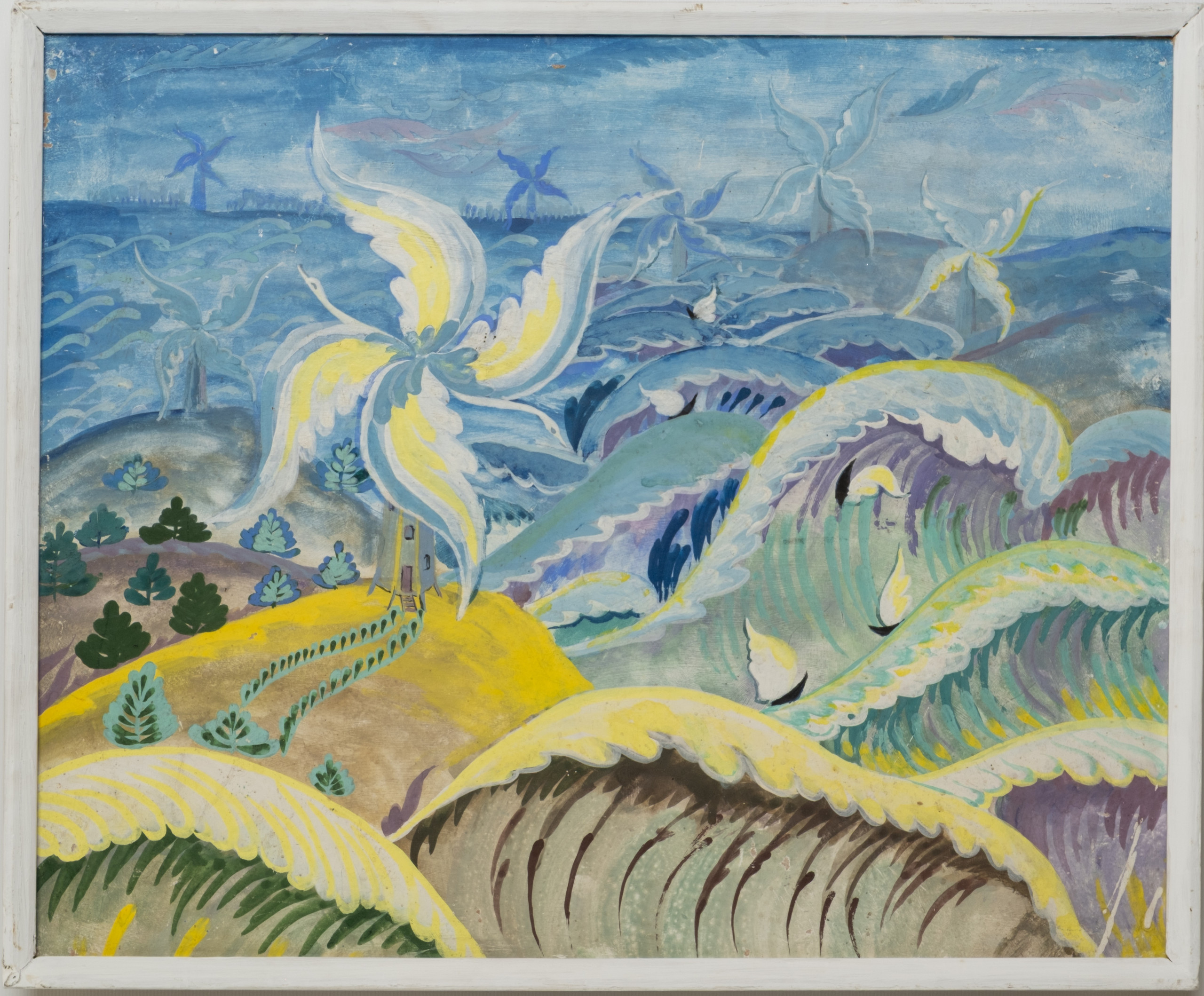
Bondarenko Yevhenia. Memory of a Windmill, 1998. Cardboard, gouache. 41 × 50 cm. MRLHM
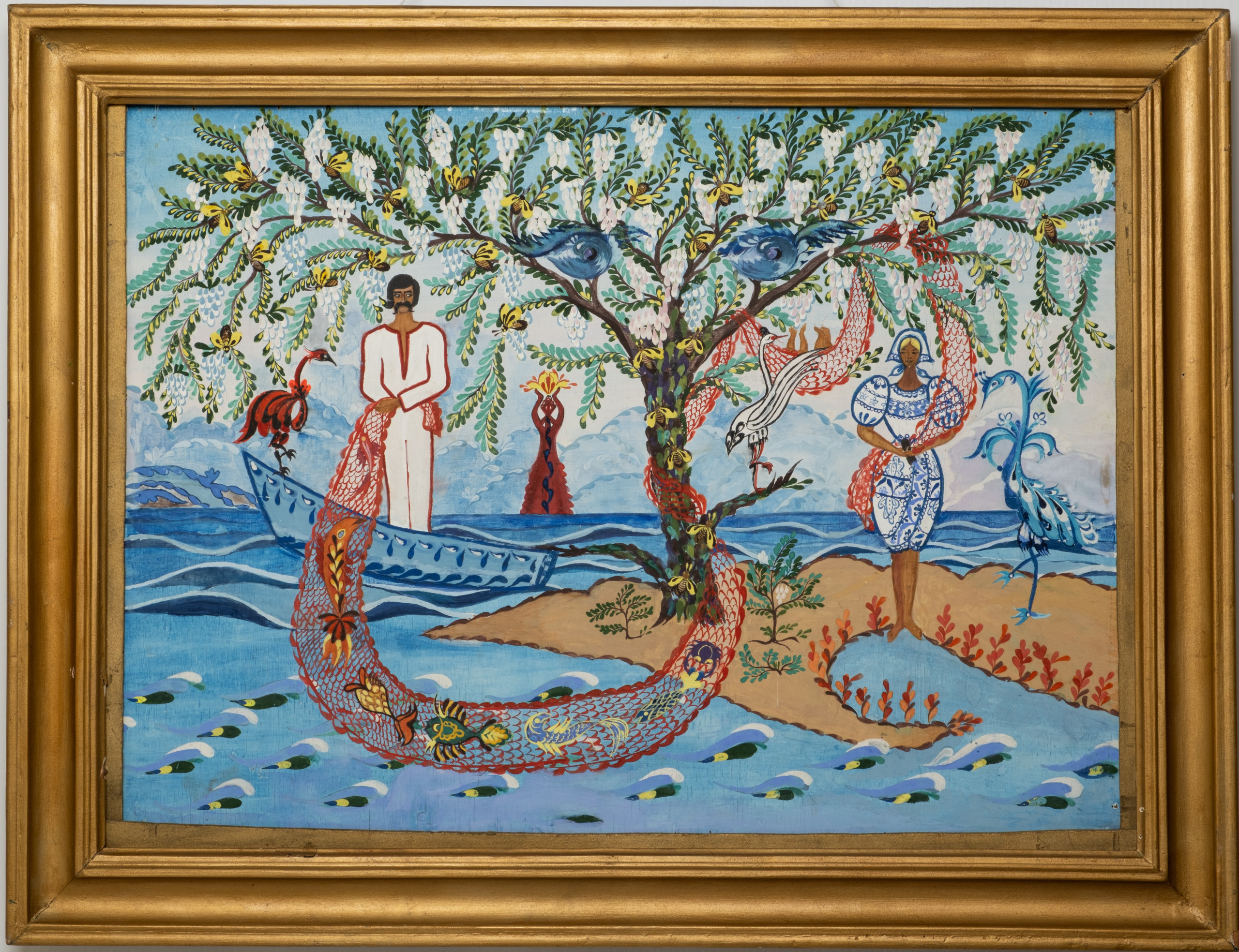
Bondarenko Yevhenia. Mother Acacia, 1995. Plywood, gouache. 50 × 72 cm. MRLHM
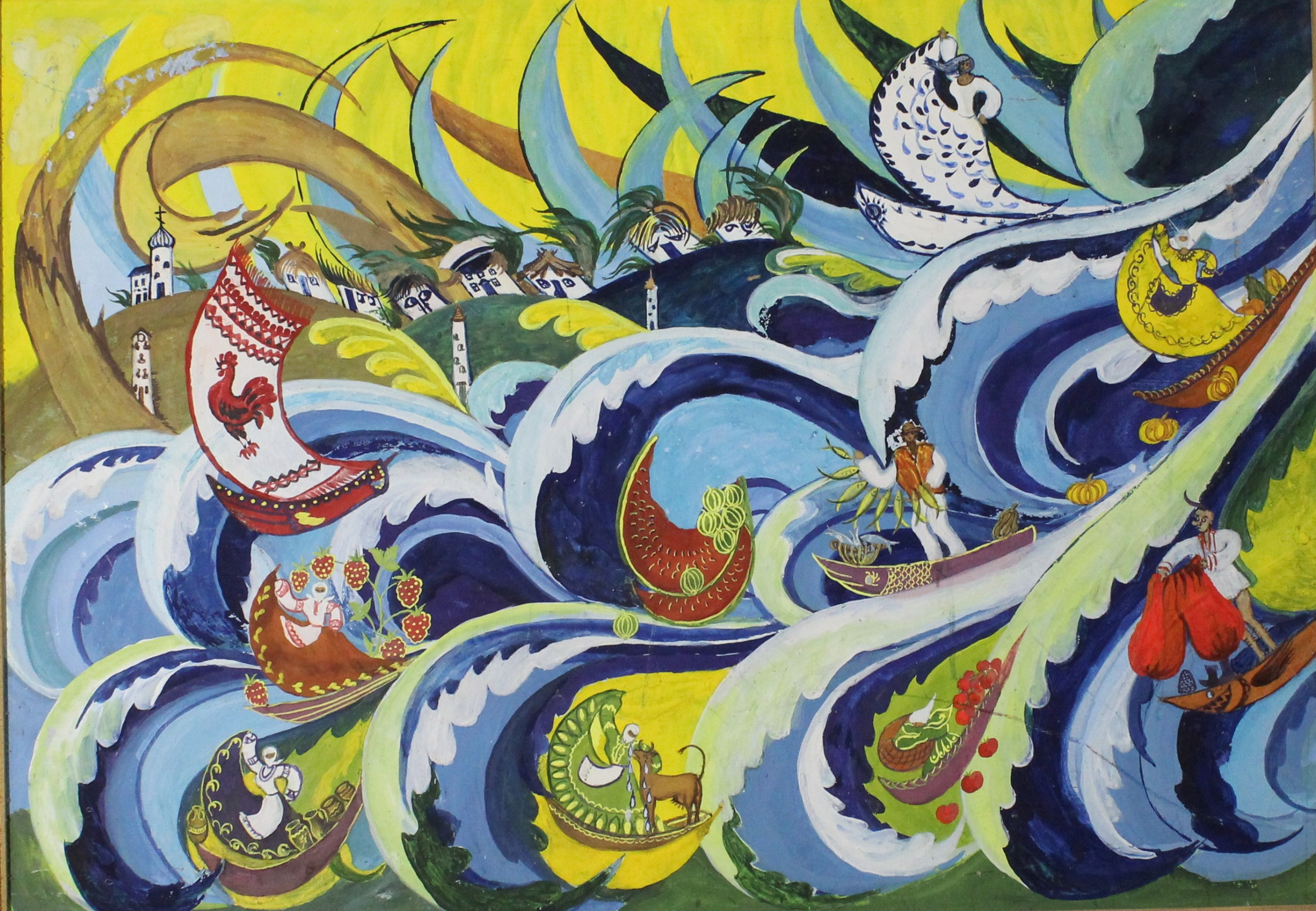
Bondarenko Yevhenia. Tramontane, 1998. Hardboard, gouache. 60 × 84 cm. MRLHM
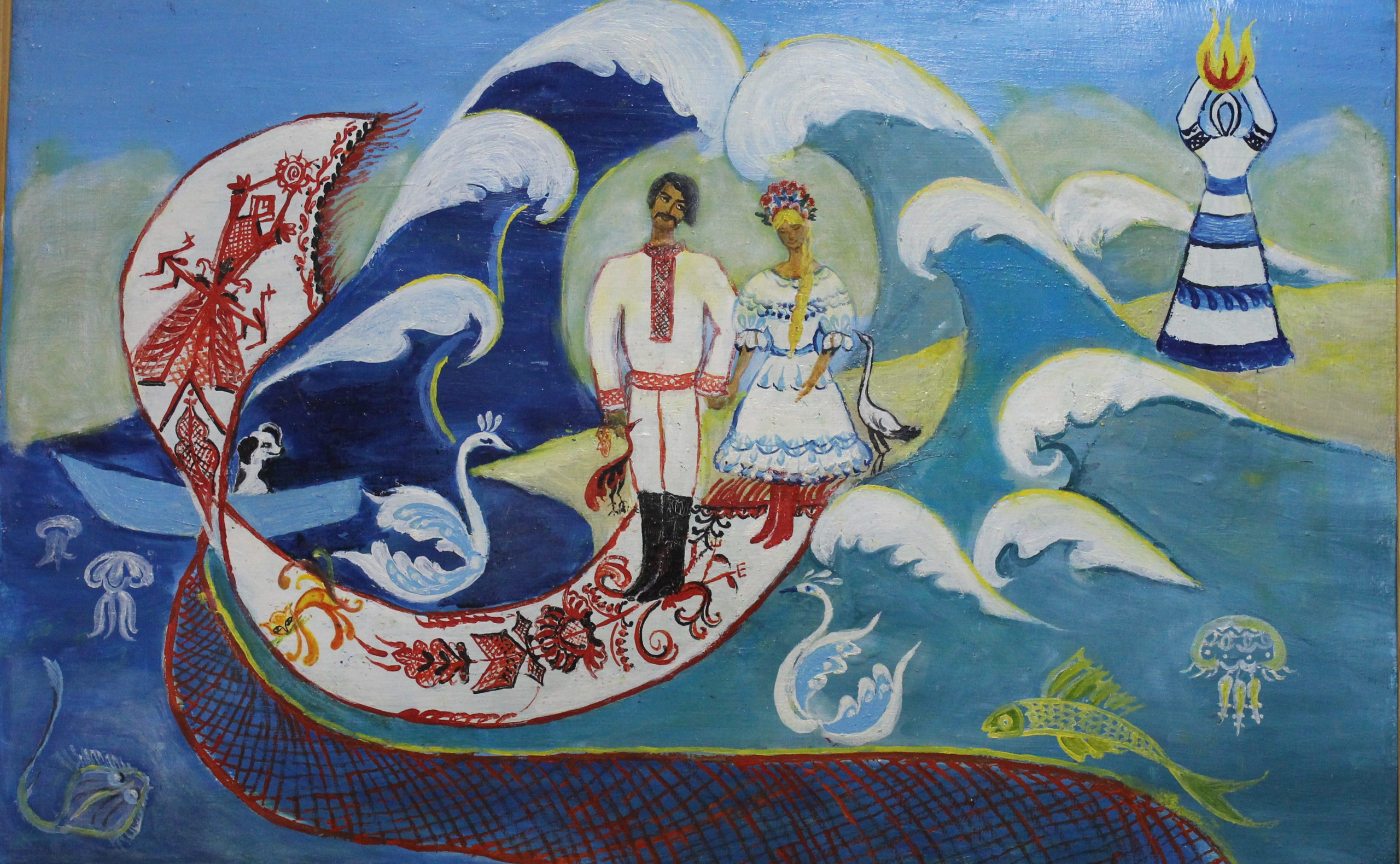
Bondarenko Yevhenia. Mayakivna Goes to Be Married, 2021. Hardboard, oil. 50 × 80 cm. MRLHM
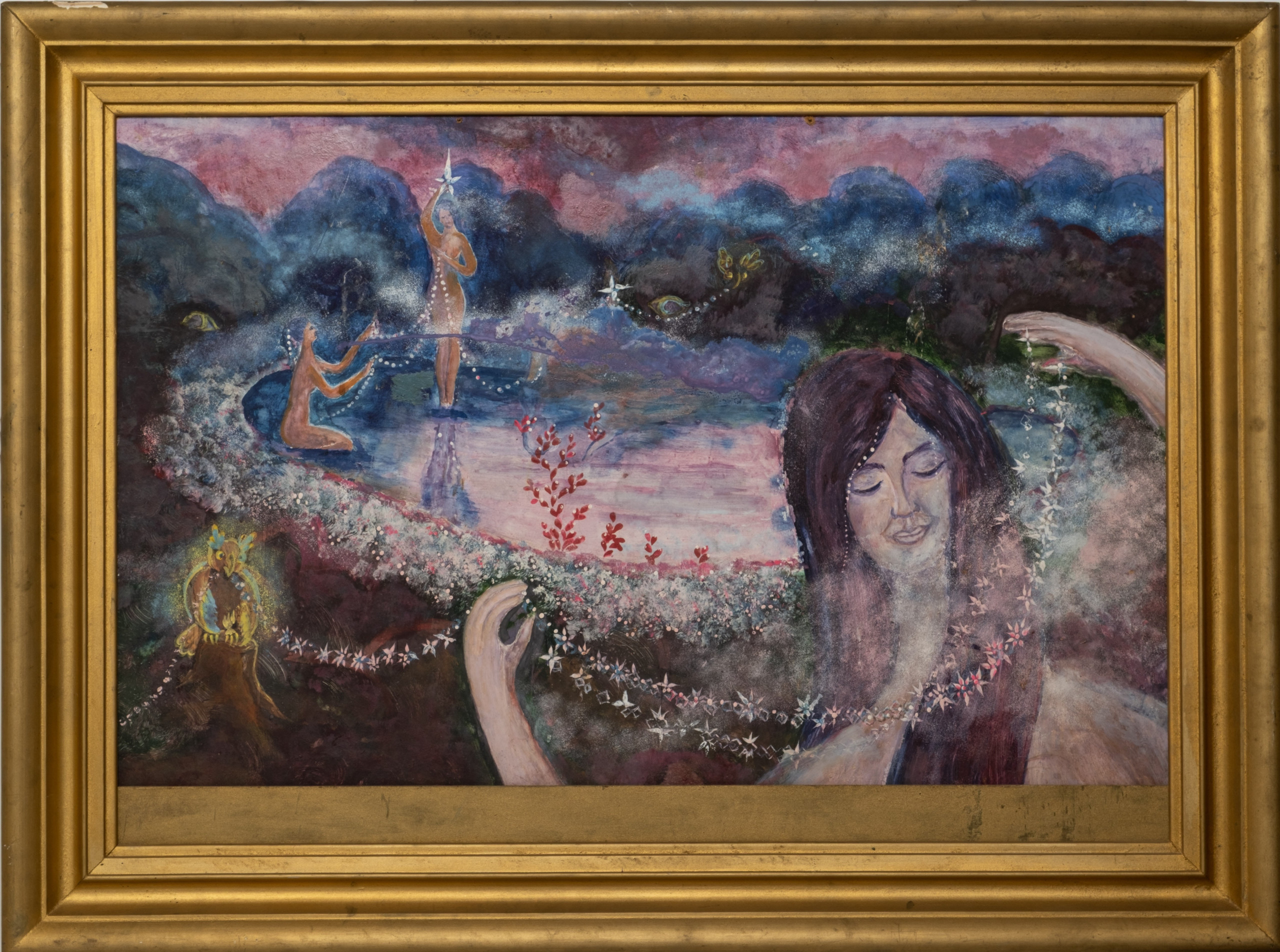
Bondarenko Yevhenia. Divination over the Salt Saga, 1997. Hardboard, gouache. 58 × 80 cm. MRLHM
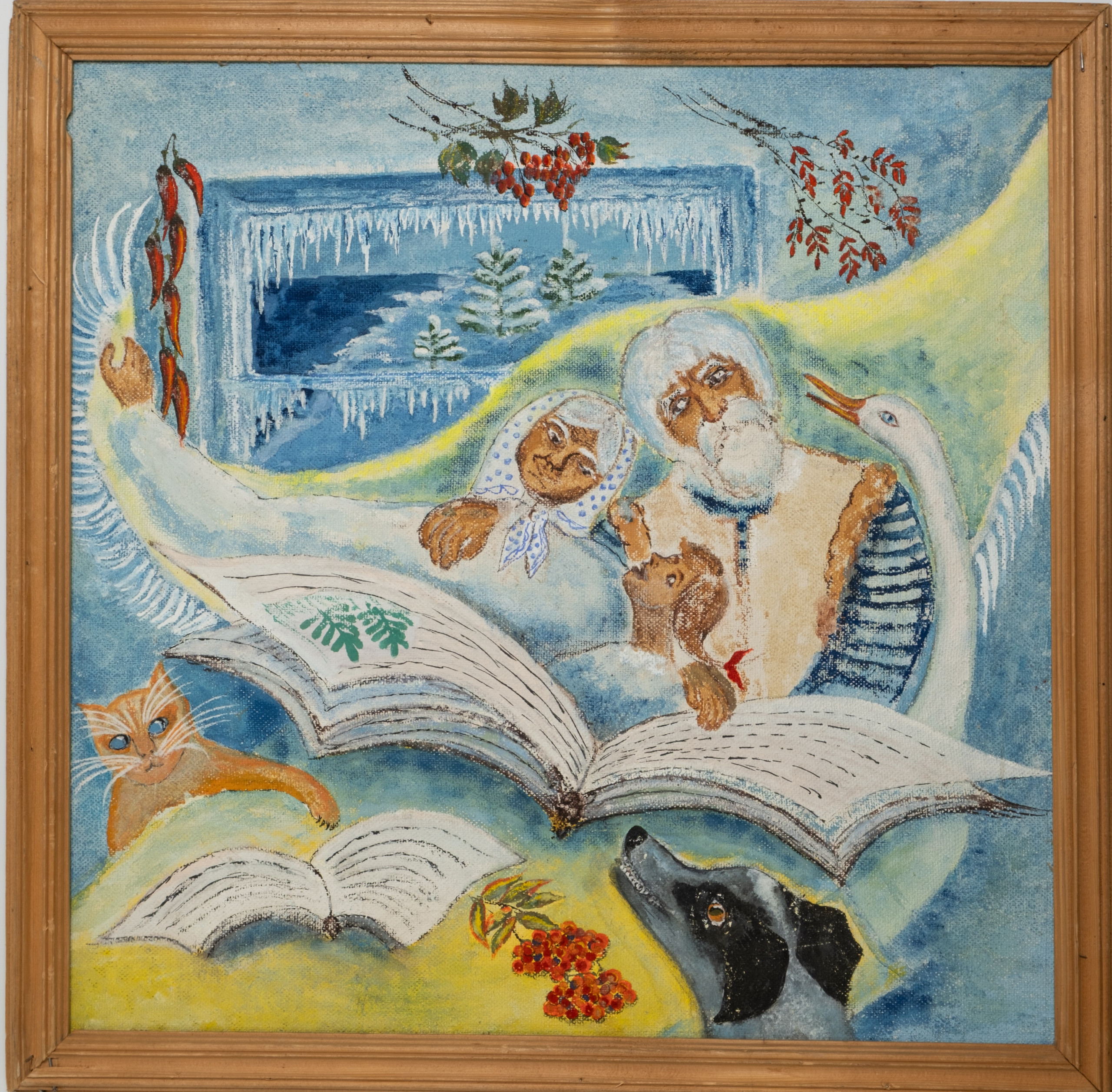
Bondarenko Yevhenia. It Is Not Evening Yet (from the quadriptych Fishermen Live on Kinburn), 1998. Hardboard, gouache. 70 × 70 cm. MRLHM
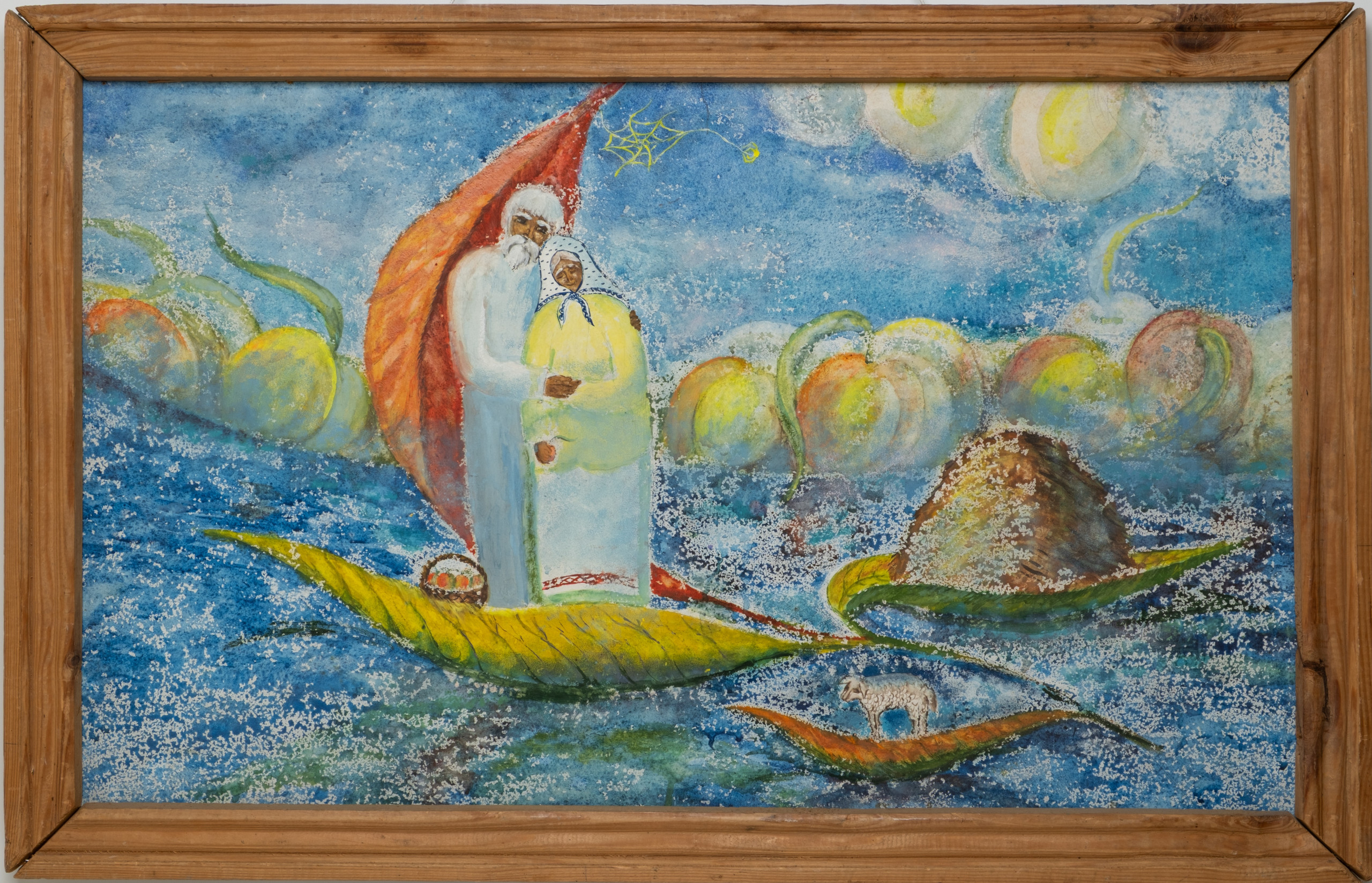
Bondarenko Yevhenia. Autumn Peaches (from the quadriptych Fishermen Live on Kinburn), 1997. Hardboard, gouache, encaustic. 57 × 70 cm. MRLHM
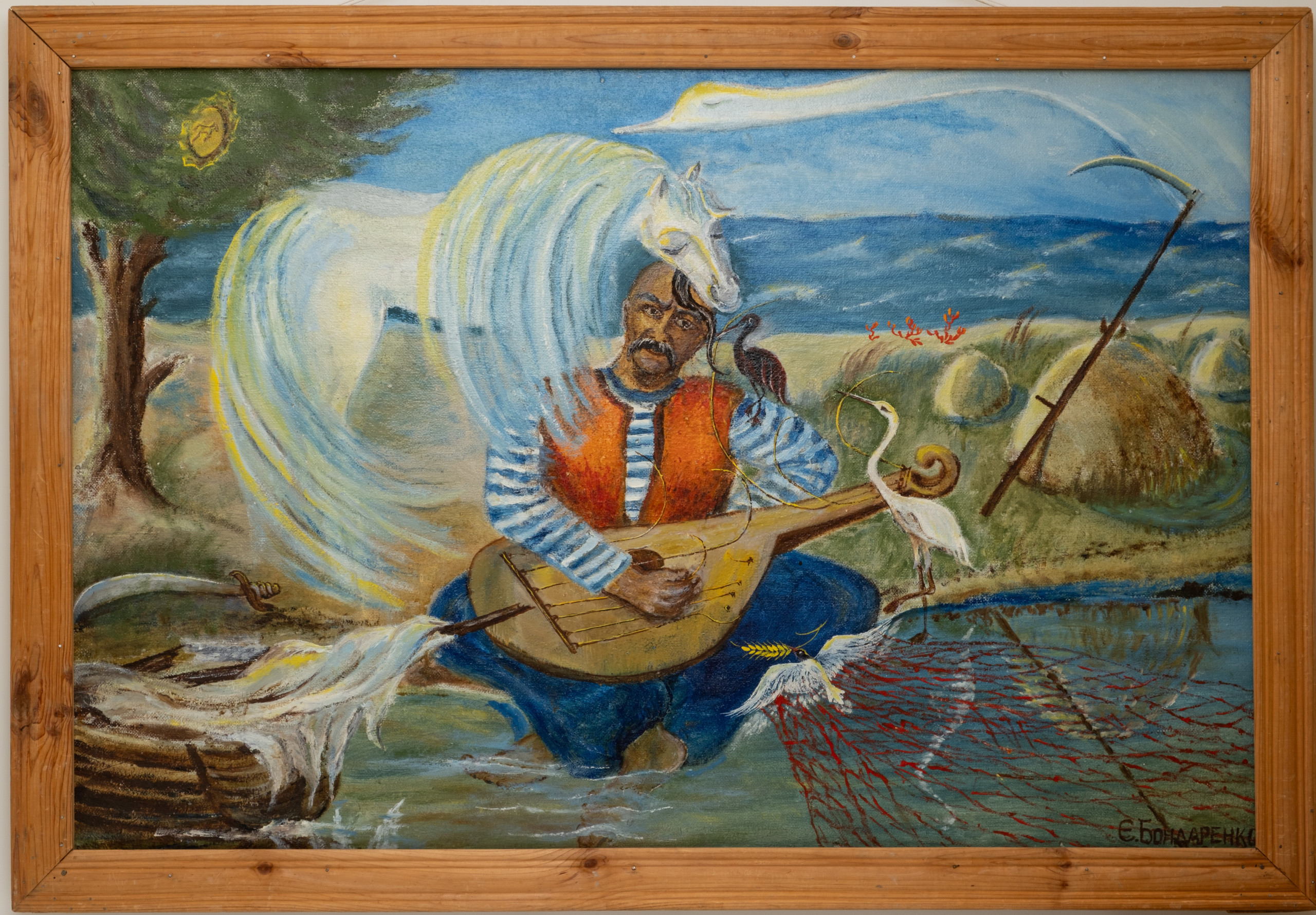
Bondarenko Yevhenia. Cossack Mamai on the Lyman, 2000. Cardboard, gouache. 80 × 115 cm. MRLHM
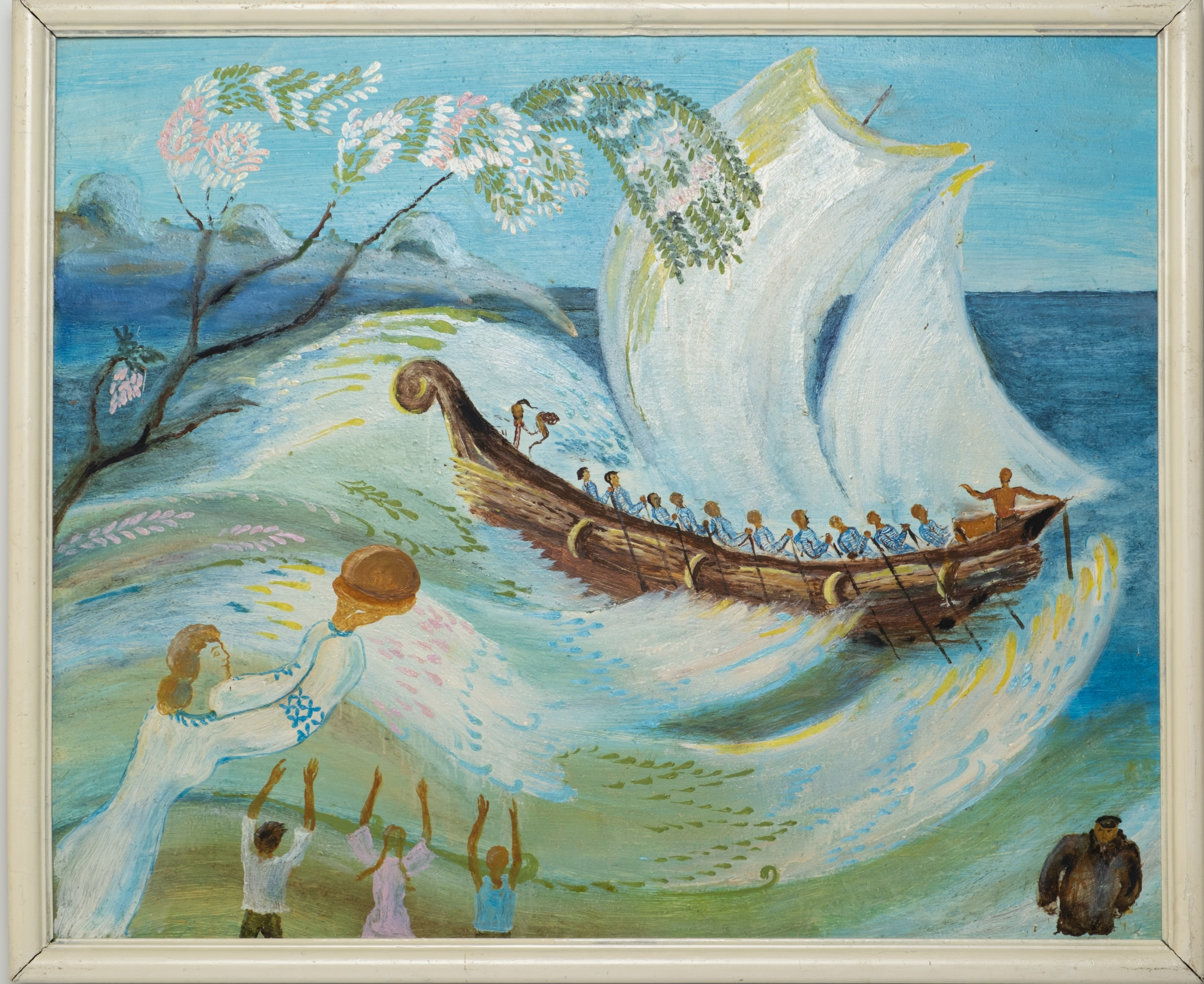
Bondarenko Yevhenia. The Chaika Returns to the Dnipro, 2008. Hardboard, oil. 56 × 68 cm. MRLHM
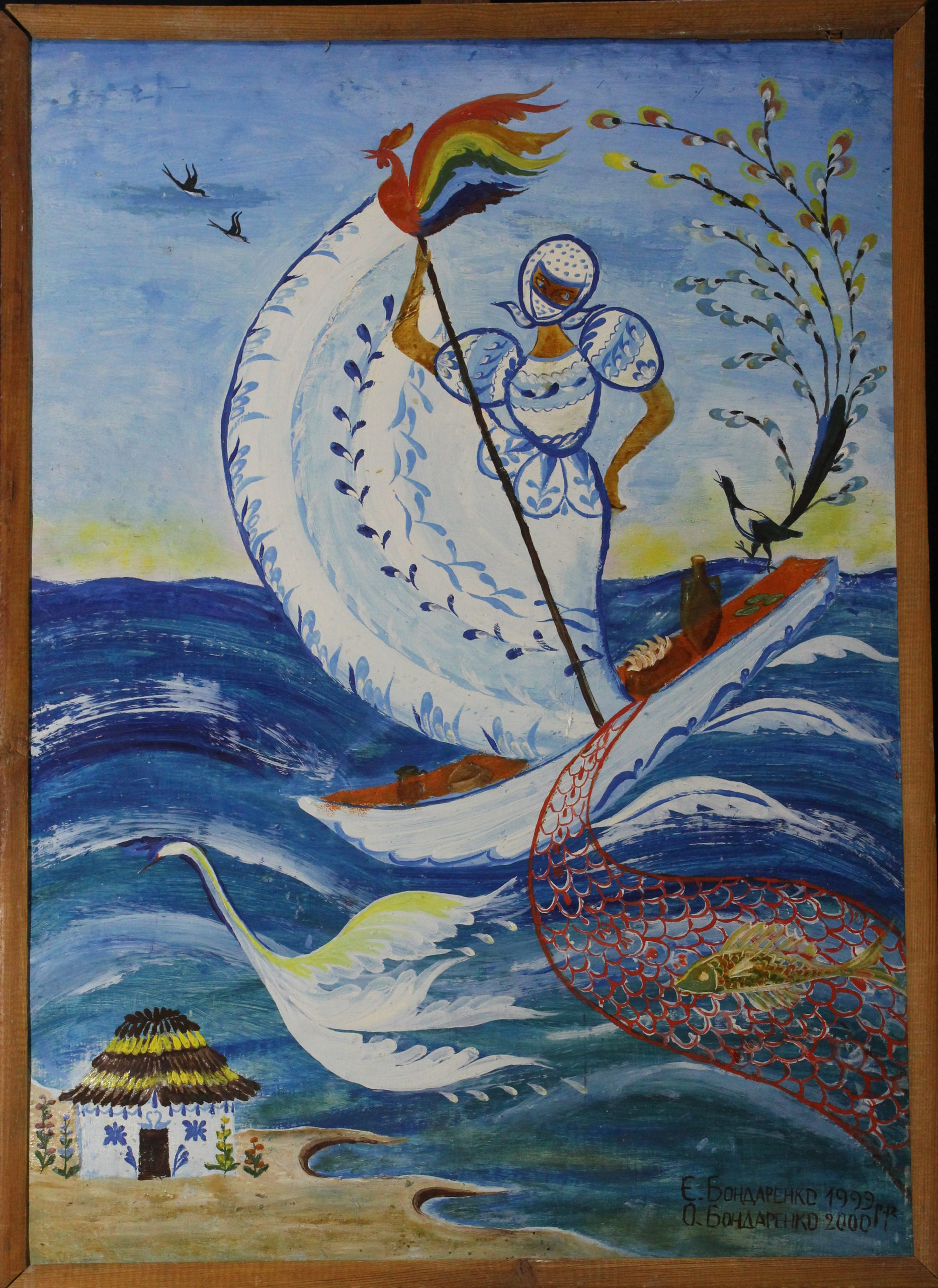
Bondarenko Yevhenia. Maria Knyha — Mazalnytsia and Painter (from the triptych Mistresses of the Yahorlyk Shore), 1999–2000. Cardboard, oil. 70 × 50 cm. MRLHM
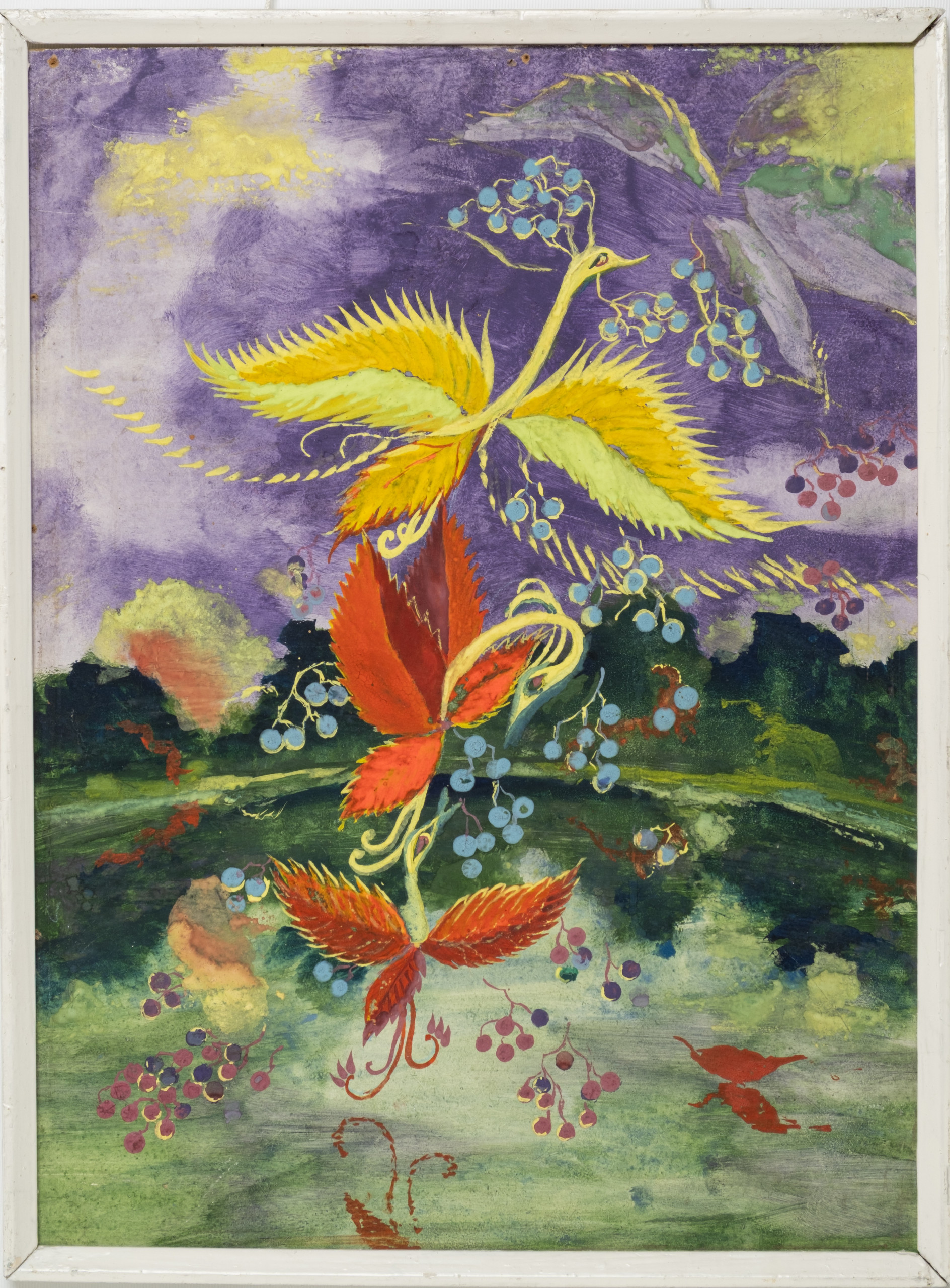
Bondarenko Yevhenia, Bondarenko Oksana. The Wild Vine Flies Away (from the series Wings over the Lyman), 1999. Cardboard, gouache. 50 × 40 cm. MRLHM
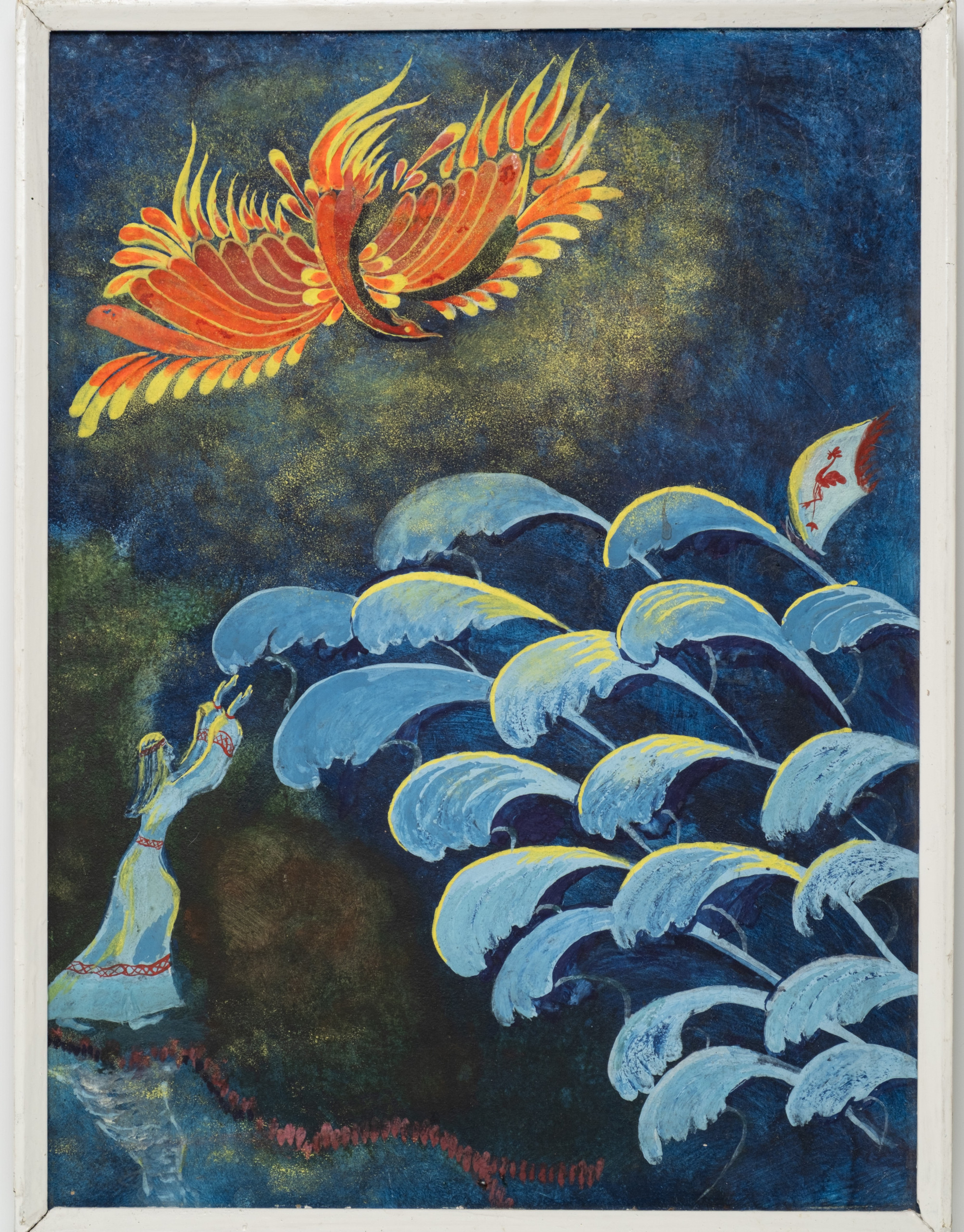
Bondarenko Yevhenia, Bondarenko Oksana. Korovaika — a Winged Lighthouse (The Legend of Korovaika) (from the series Wings over the Lyman), 1999. Hardboard, oil. 50 × 40 cm. MRLHM
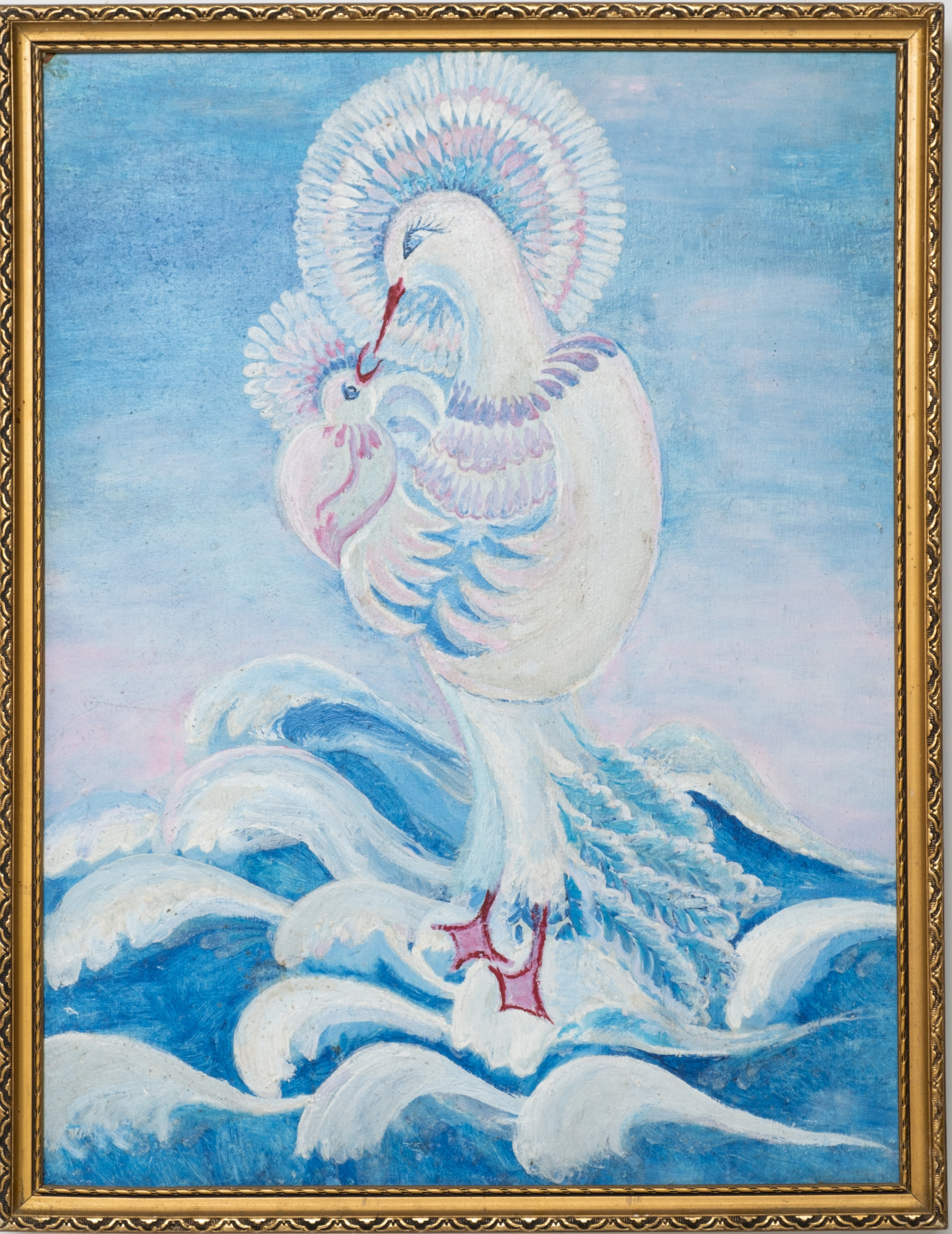
Bondarenko Yevhenia, Bondarenko Oksana. The Sea Dove, 2004. Hardboard, oil. 50 × 36 cm. MRLHM
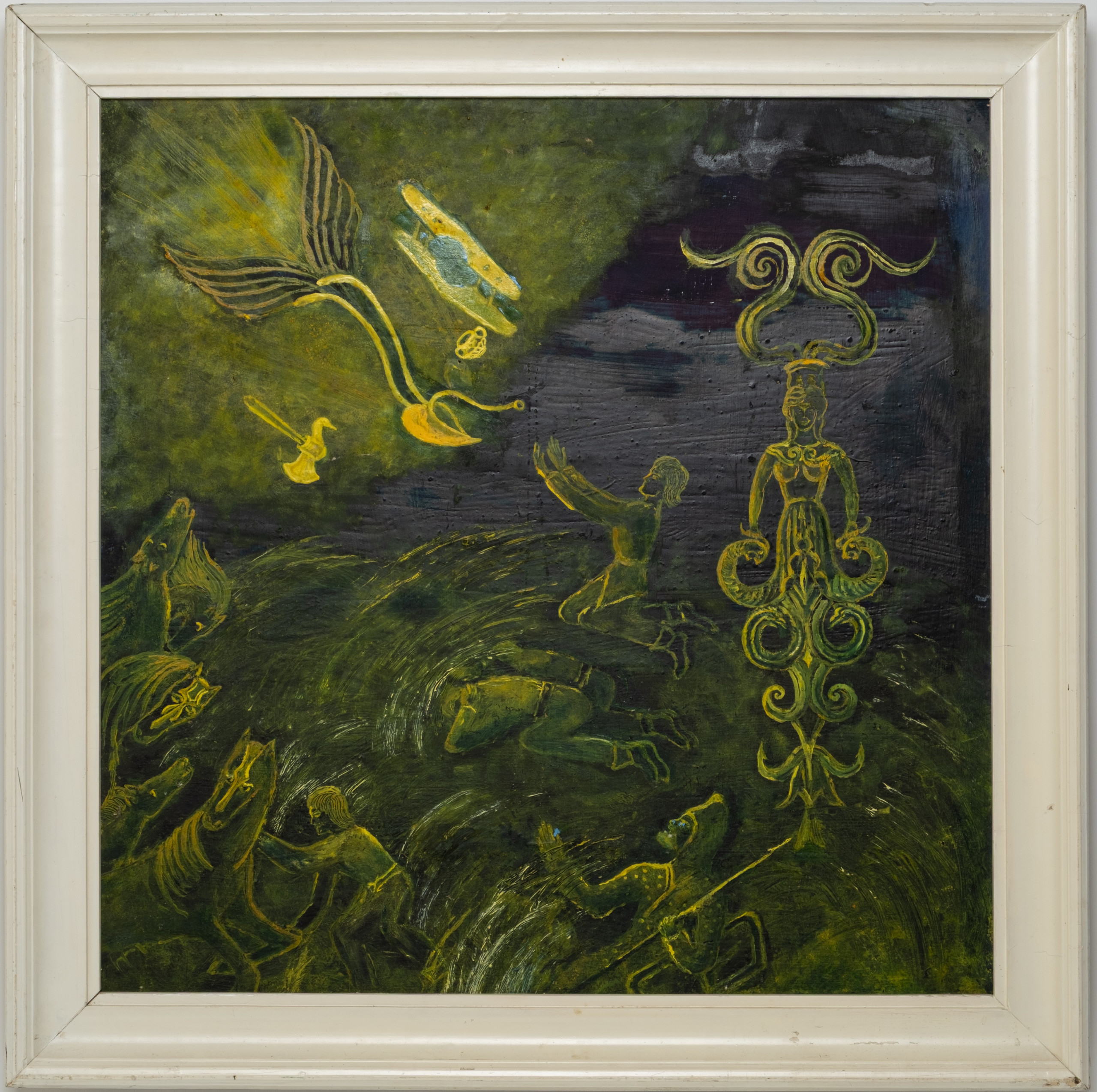
Bondarenko Yevhenia. Gift of the Scythian Sky (from the diptych Gold of the Steppe), 2003. Hardboard, oil. 62 × 62 cm. MRLHM
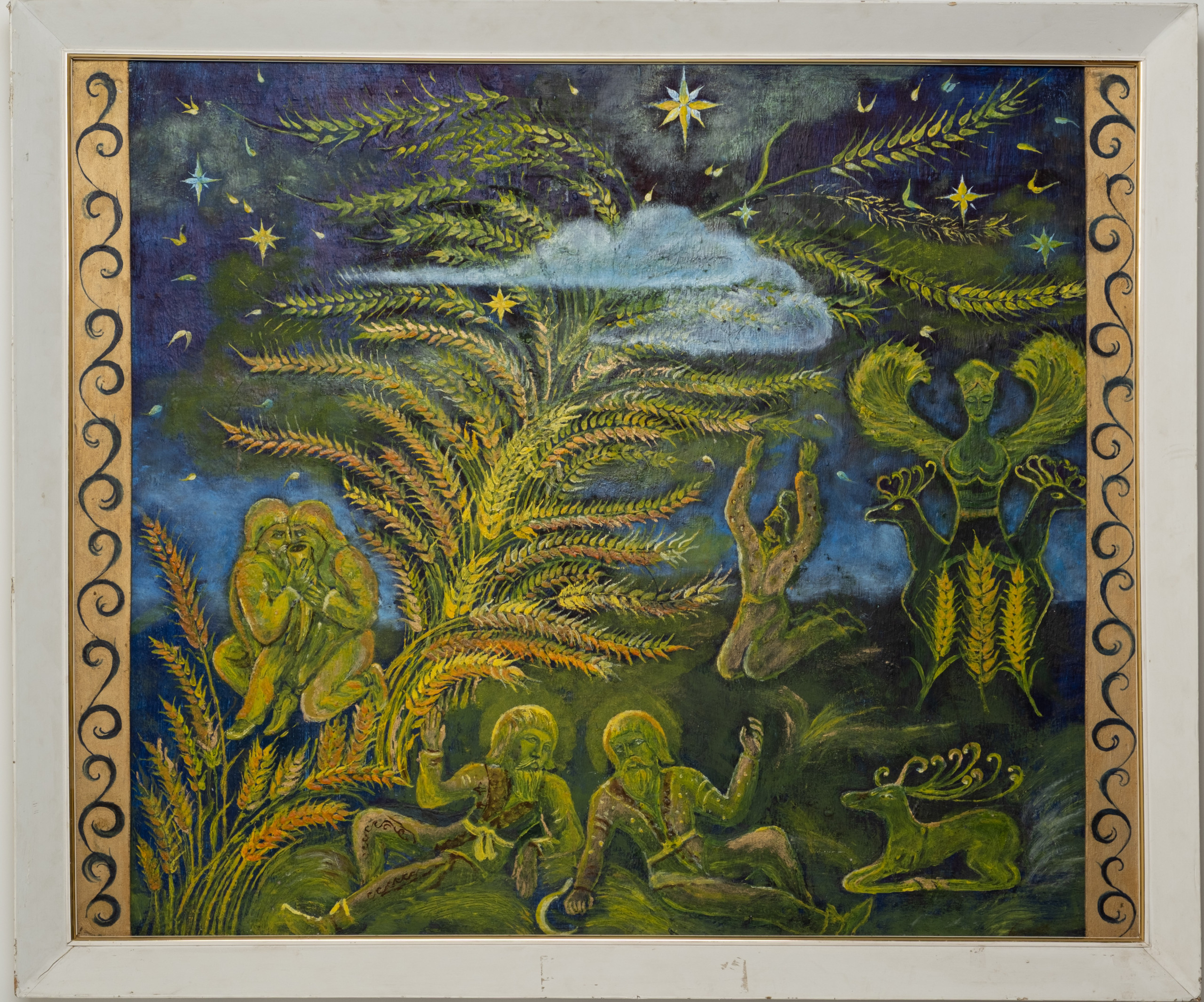
Bondarenko Yevhenia. A Gift to the Sky and to People (from the diptych Gold of the Steppe), 2003. Hardboard, oil. 75 × 90 cm. MRLHM
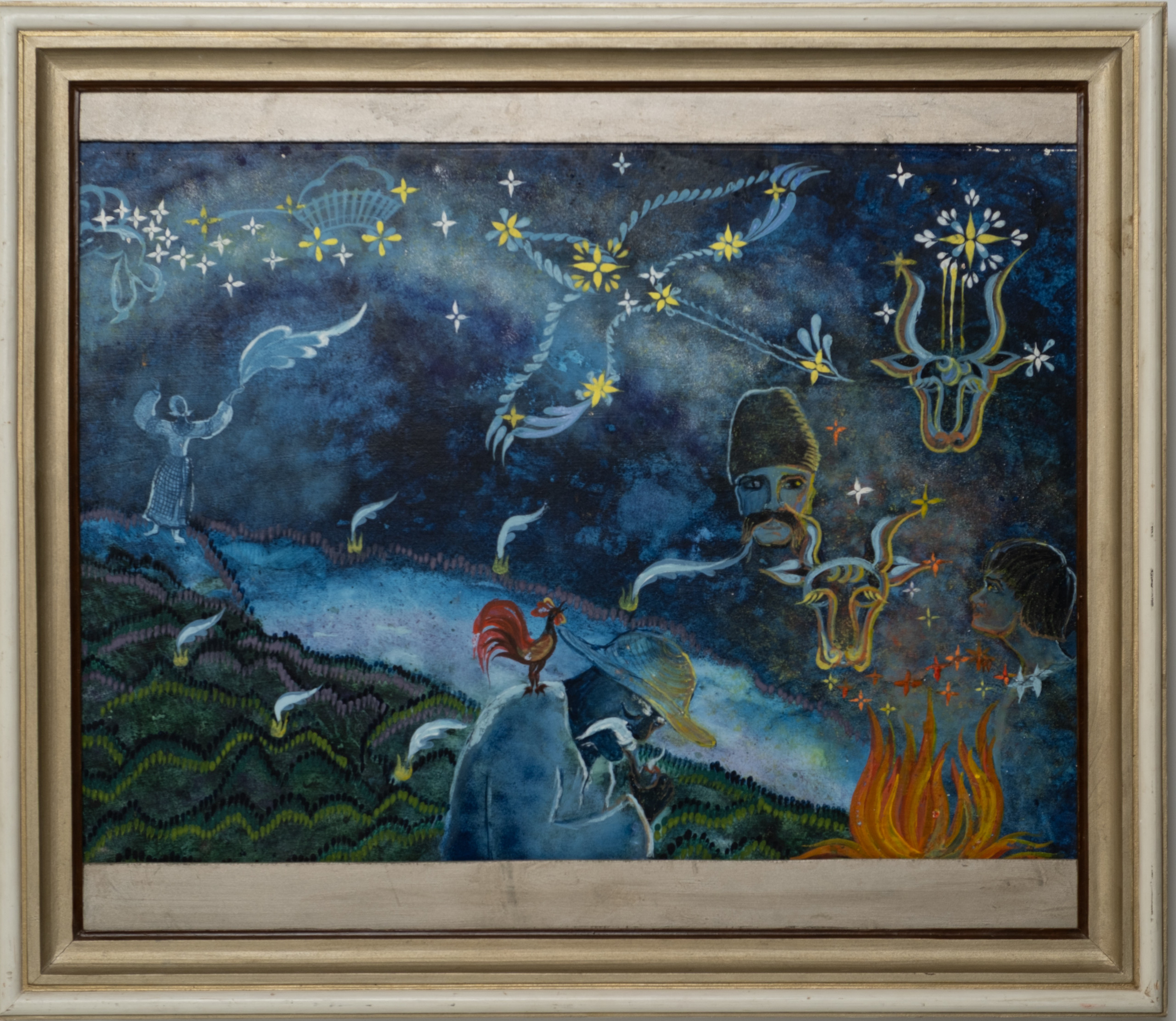
Bondarenko Yevhenia. The Chumak Road, 1997. Hardboard, gouache. 50 × 72 cm. MRLHM
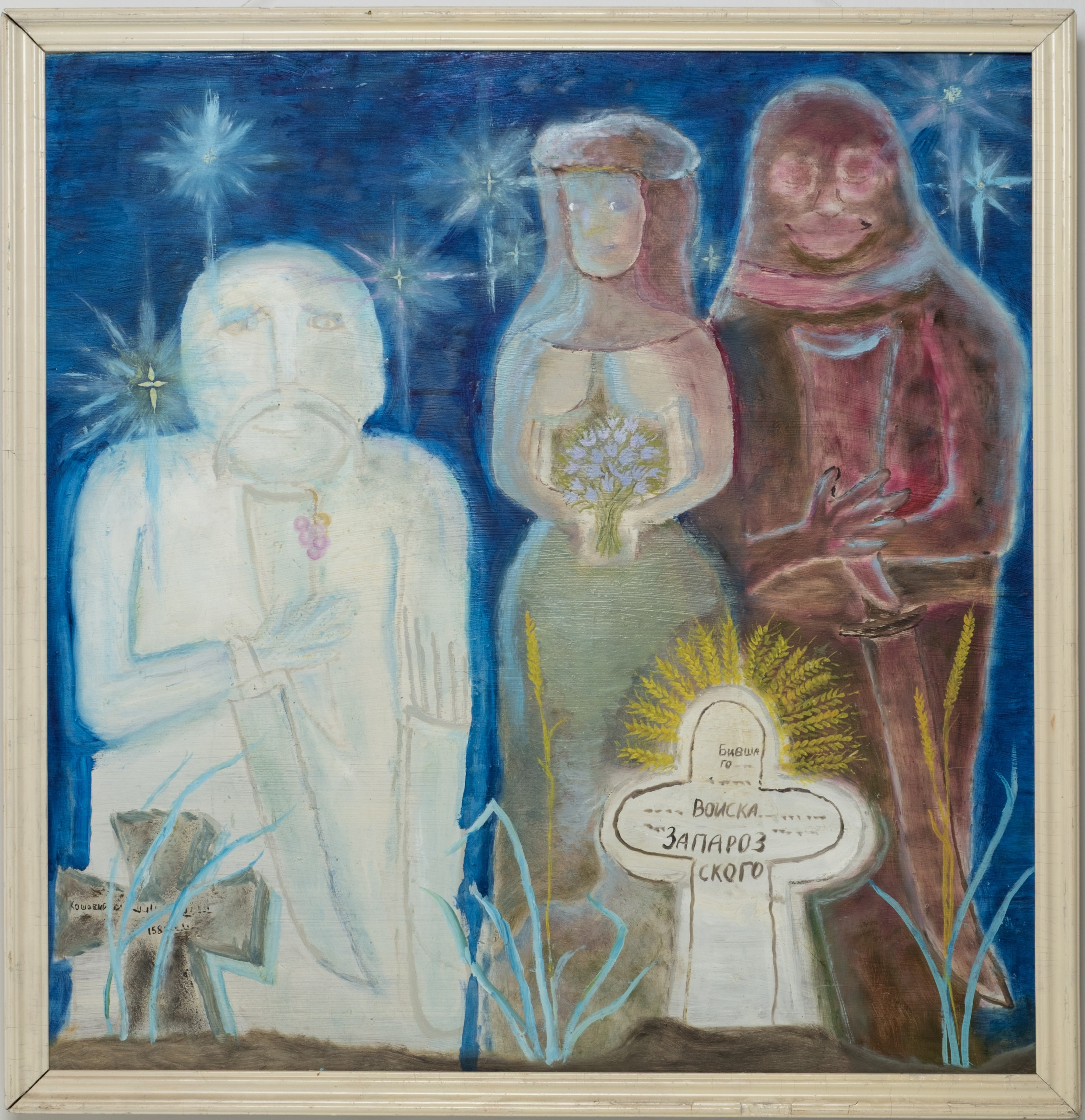
Bondarenko Yevhenia. Witnesses of the Untamed Steppe, 2008. Hardboard, oil. 78 × 75 cm. MRLHM
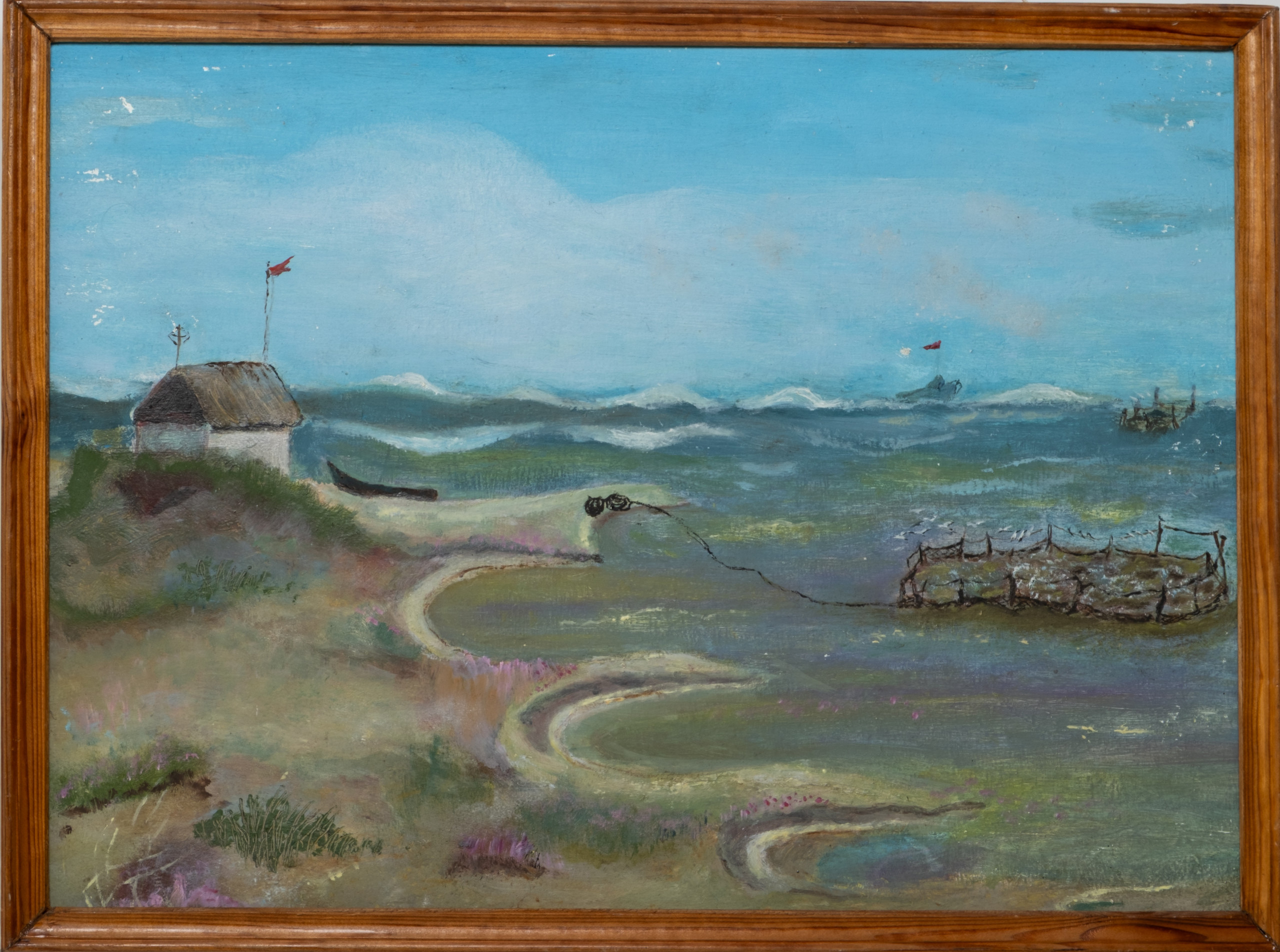
Bondarenko Yevhenia. There Is Fish! — I’m Going!, 2008. Canvas, oil. 40 × 55 cm. MRLHM
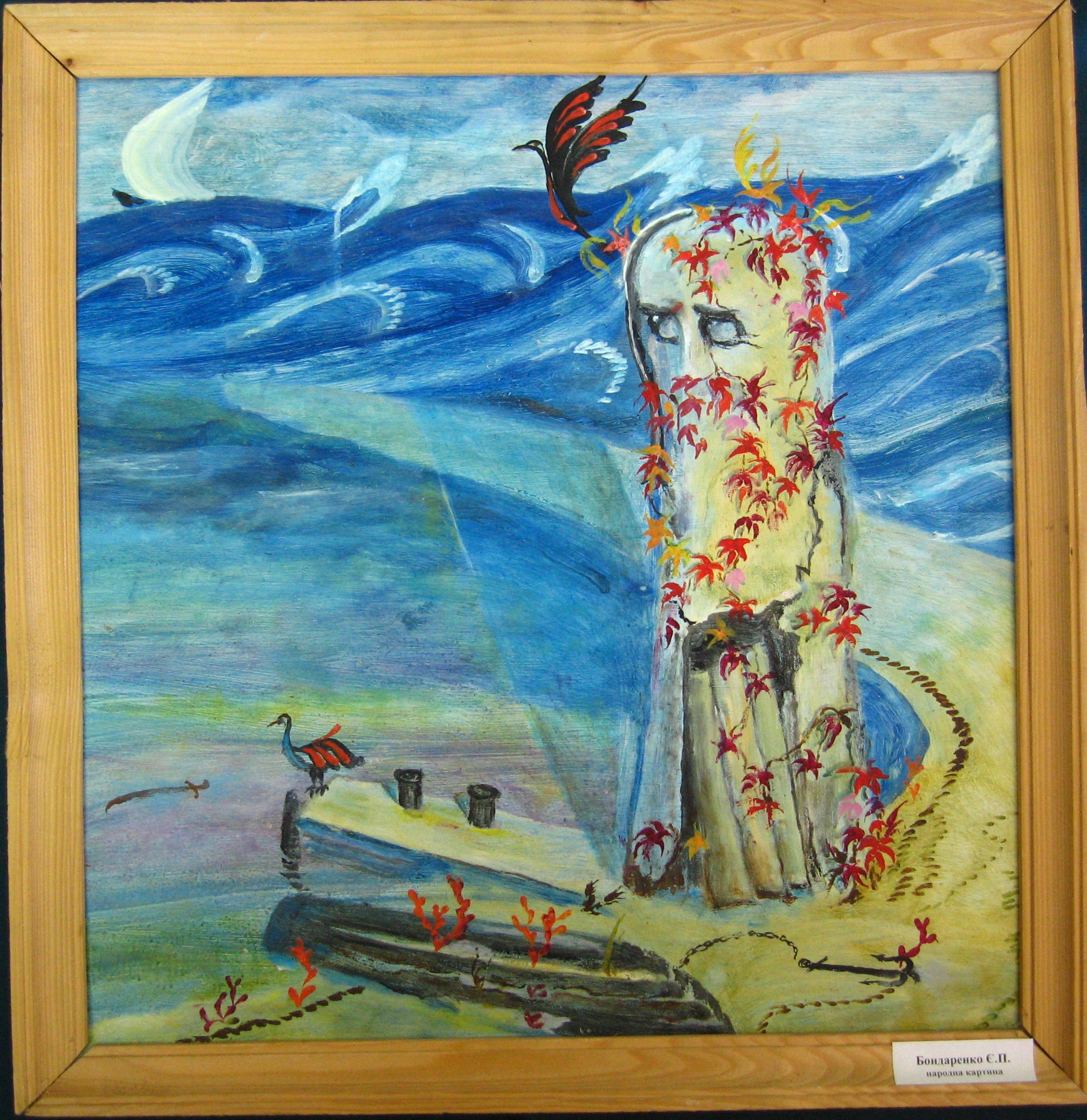
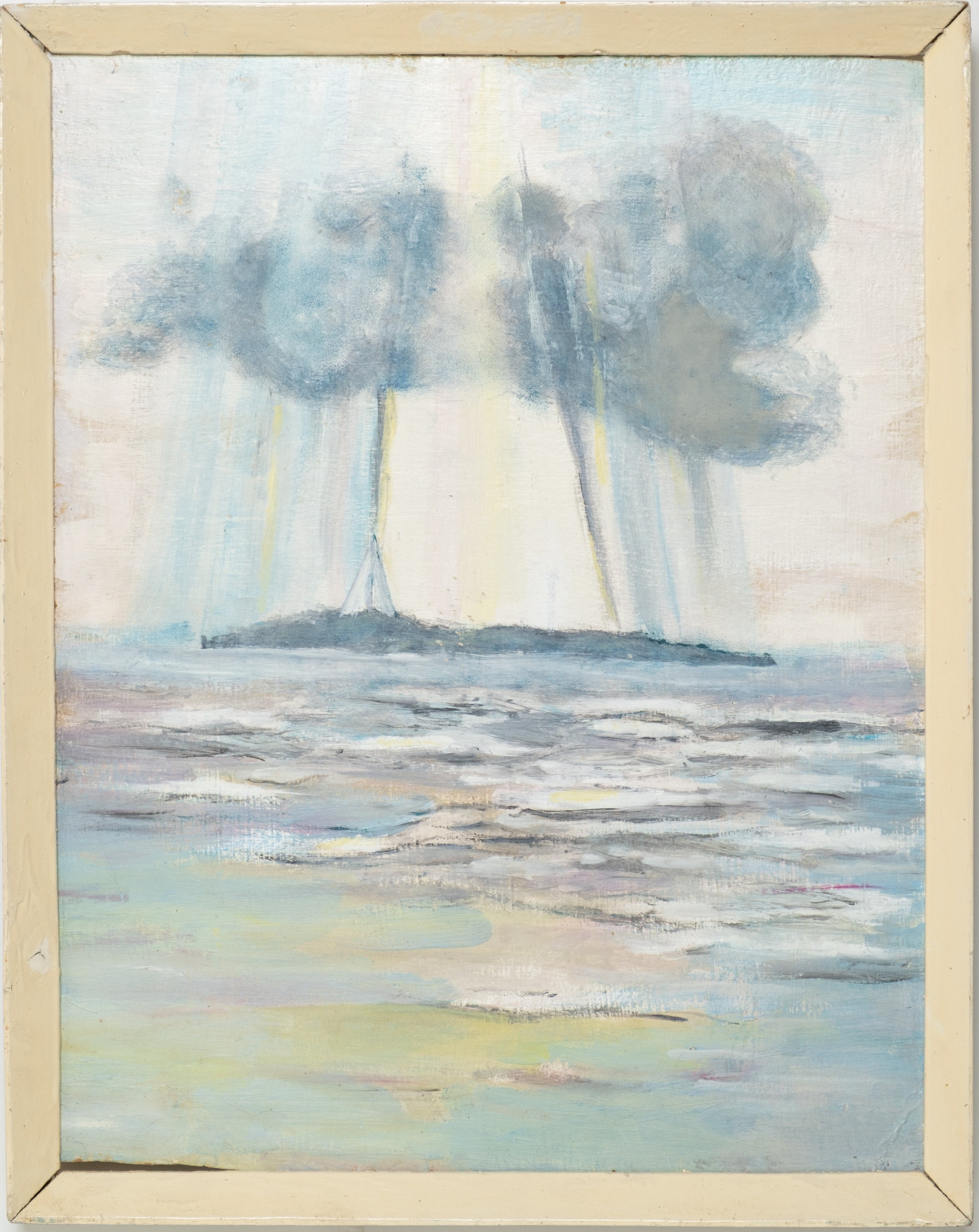
Bondarenko Yevhenia. The Forgotten Lighthouse. It Saves. 59 × 59 cm. MRLHM
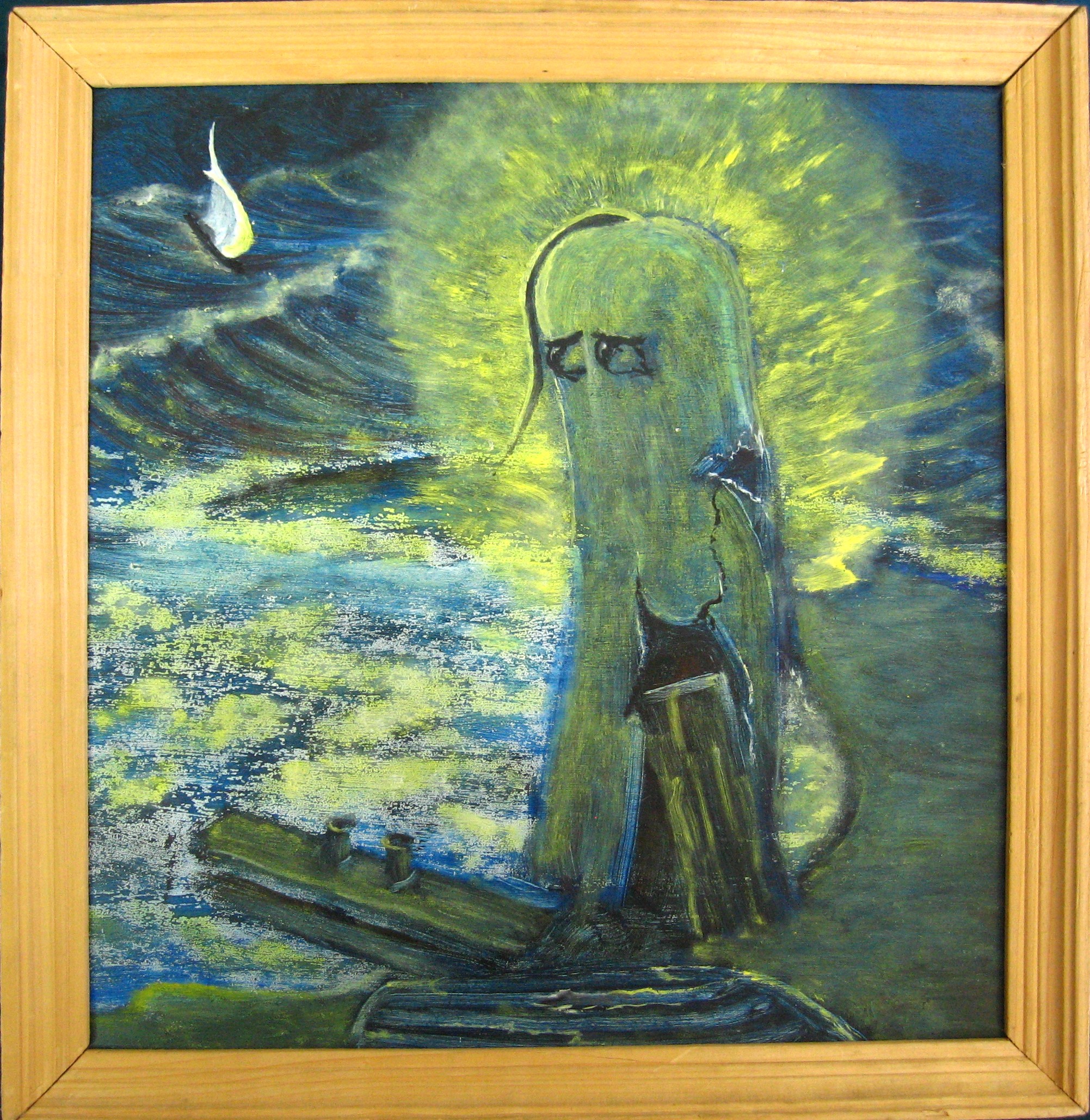
Bondarenko Yevhenia. The Forgotten Lighthouse. It Grieves. 59 × 59 cm. MRLHM
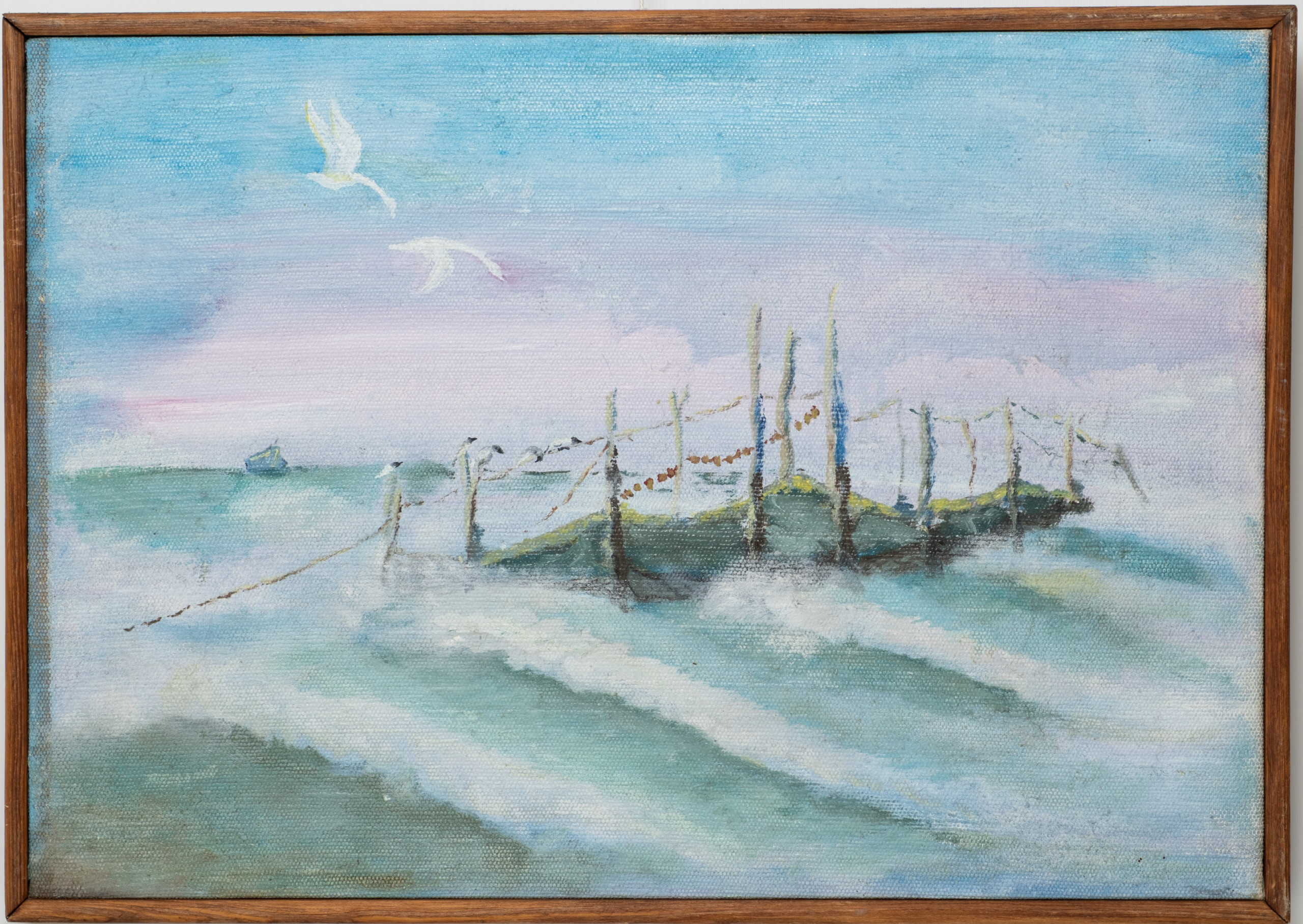
Bondarenko Yevhenia. The Stake Net, 2008. Canvas, oil. 36 × 51 cm. MRLHM
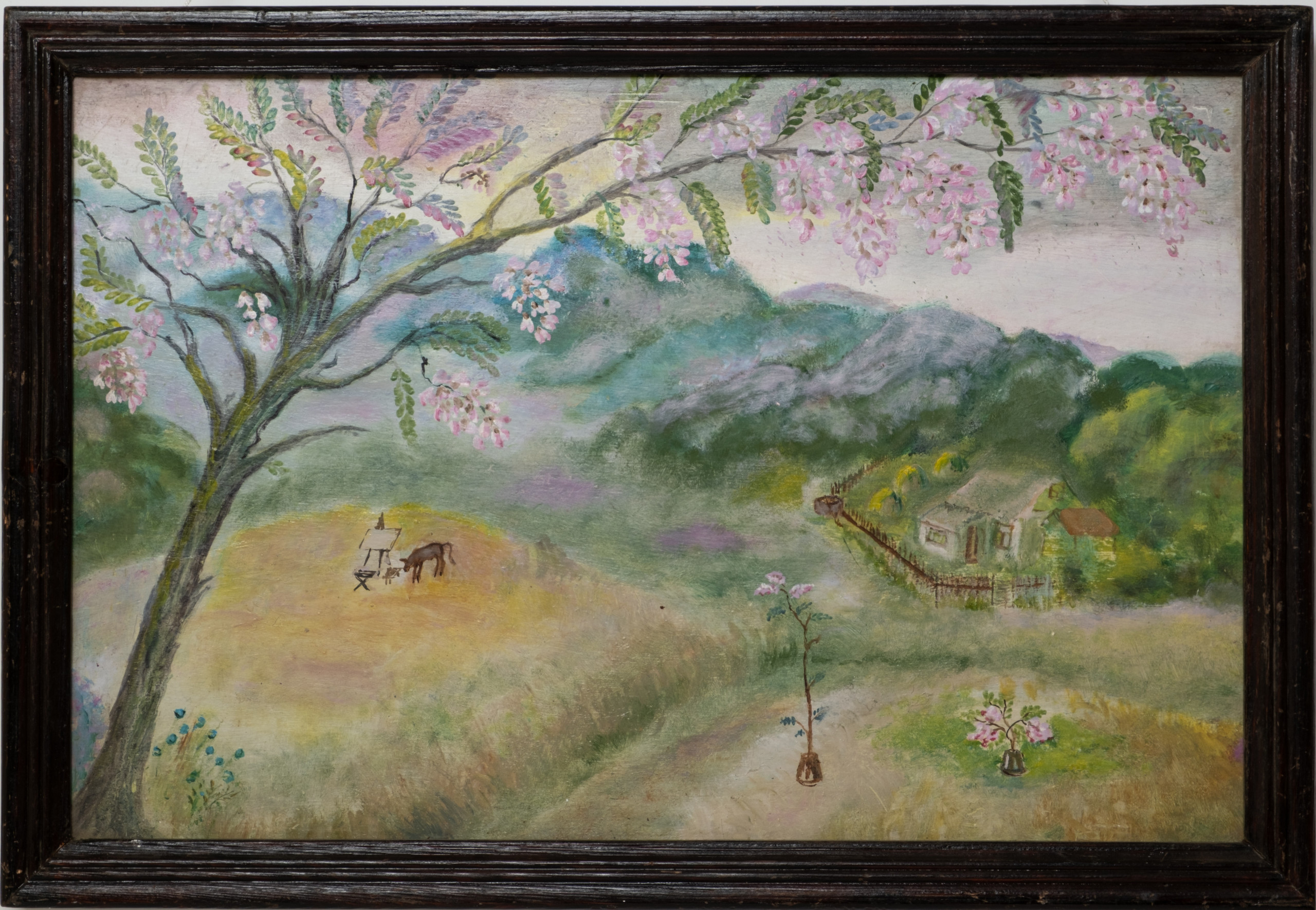
Bondarenko Yevhenia. June ’93 over Kinburn, 2003. Hardboard, oil. 40 × 60 cm. MRLHM
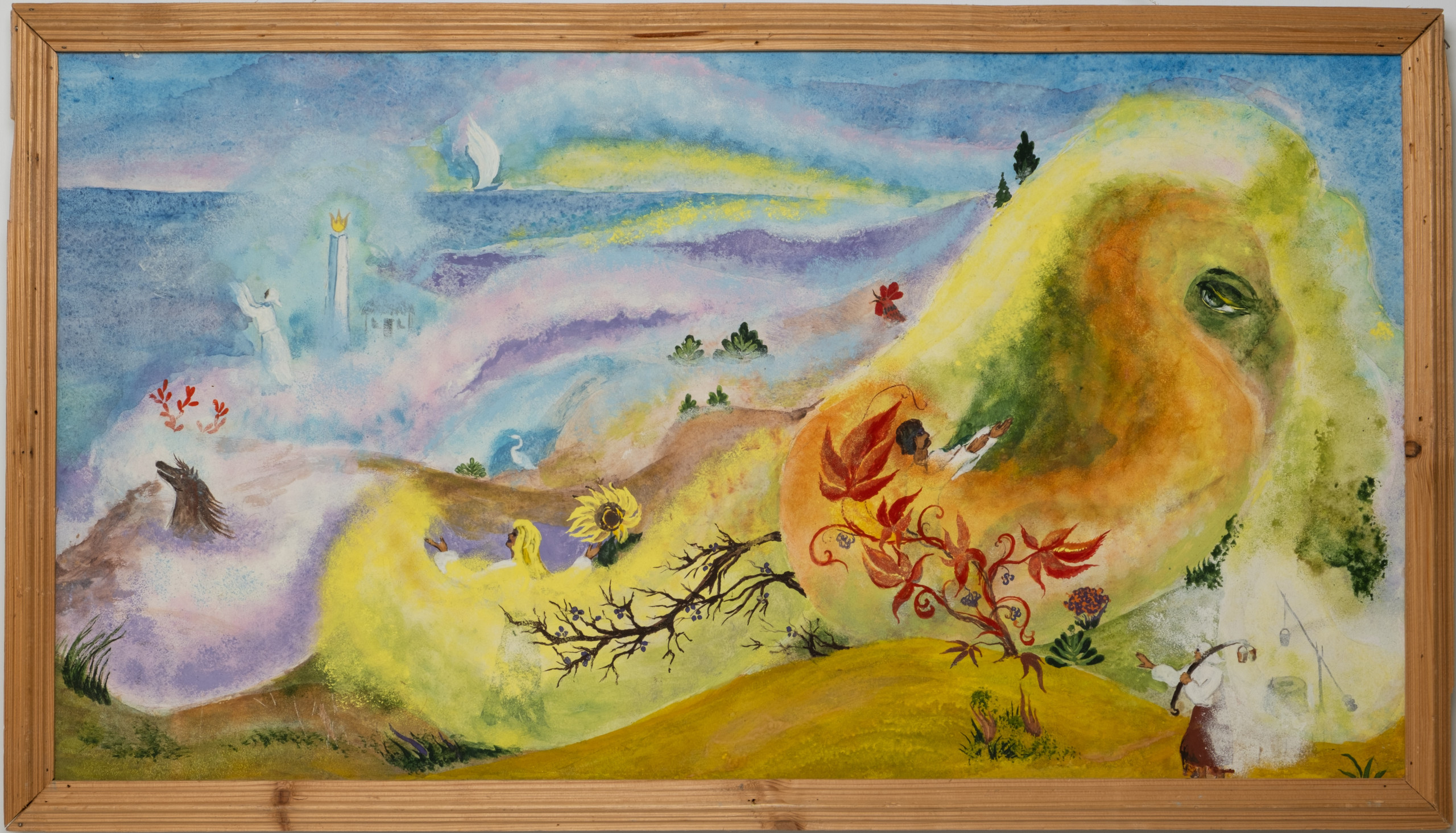
Bondarenko Yevhenia. The Mist Maiden, 1997. Hardboard, gouache. 45 × 82 cm. MRLHM
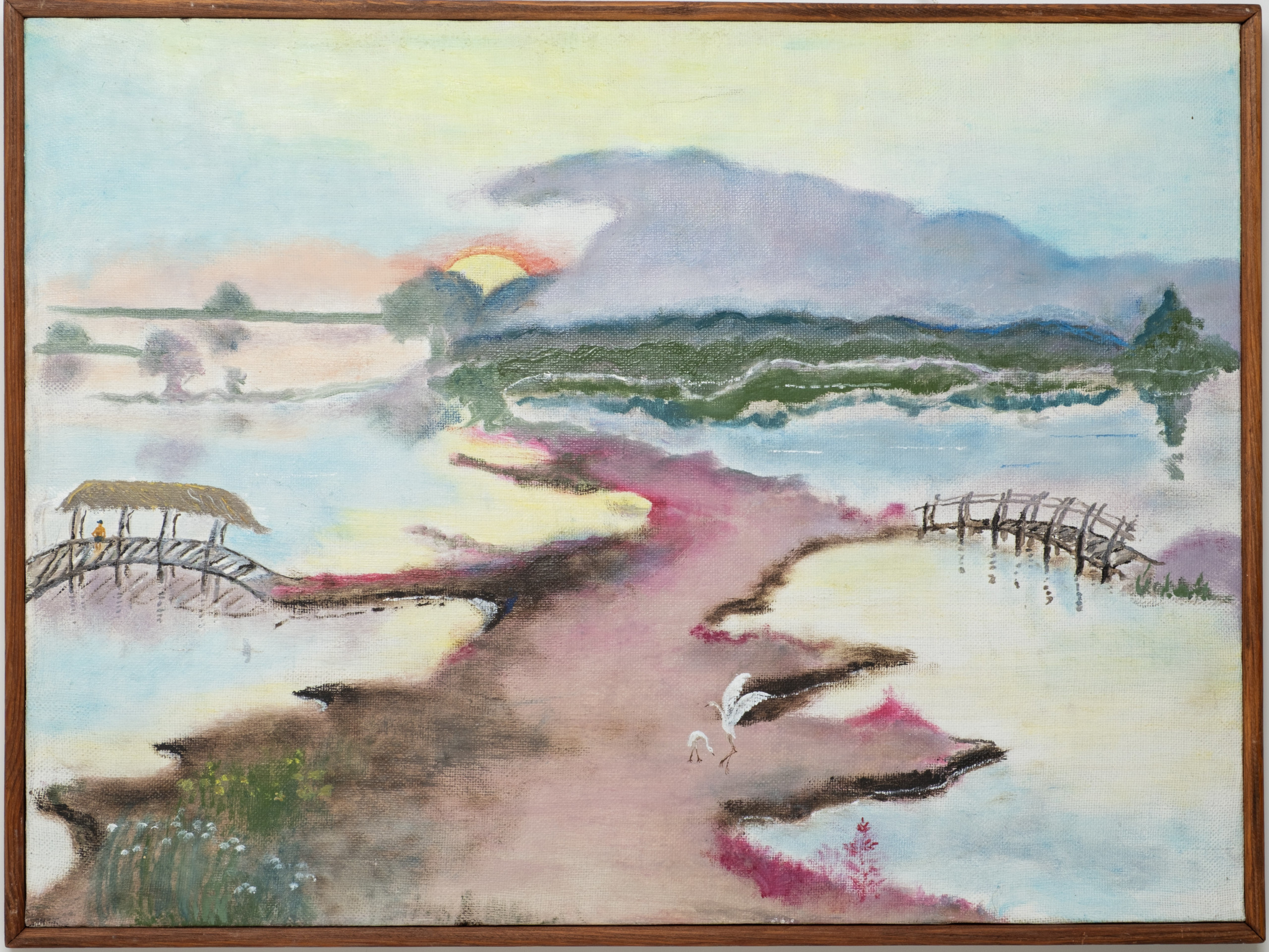
Bondarenko Yevhenia. Kinburn. Salt Lakes, 2008. Canvas, oil. 45 × 50 cm. MRLHM
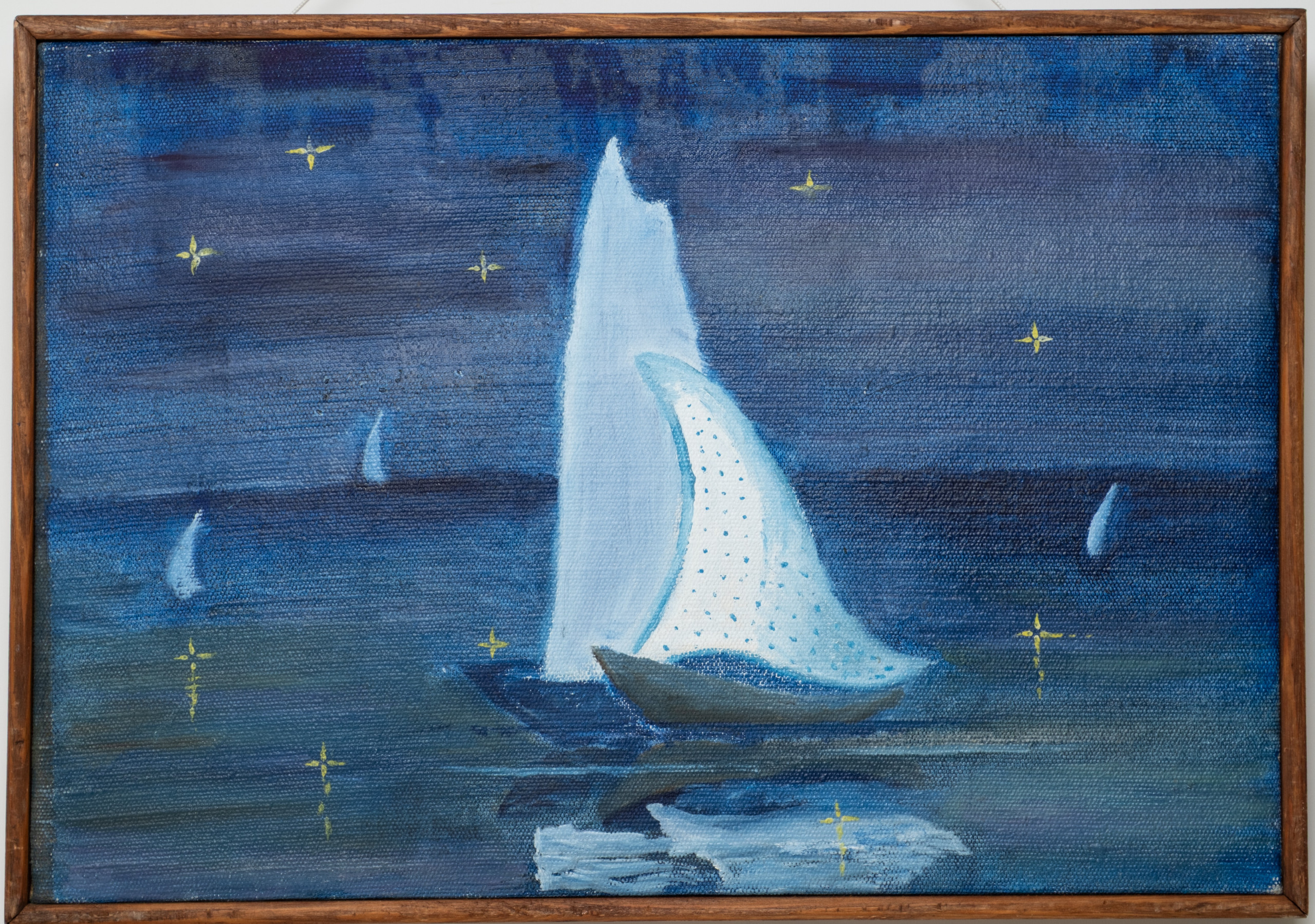
Bondarenko Yevhenia. Two, 2008. Canvas, oil. 35 × 52 cm. MRLHM
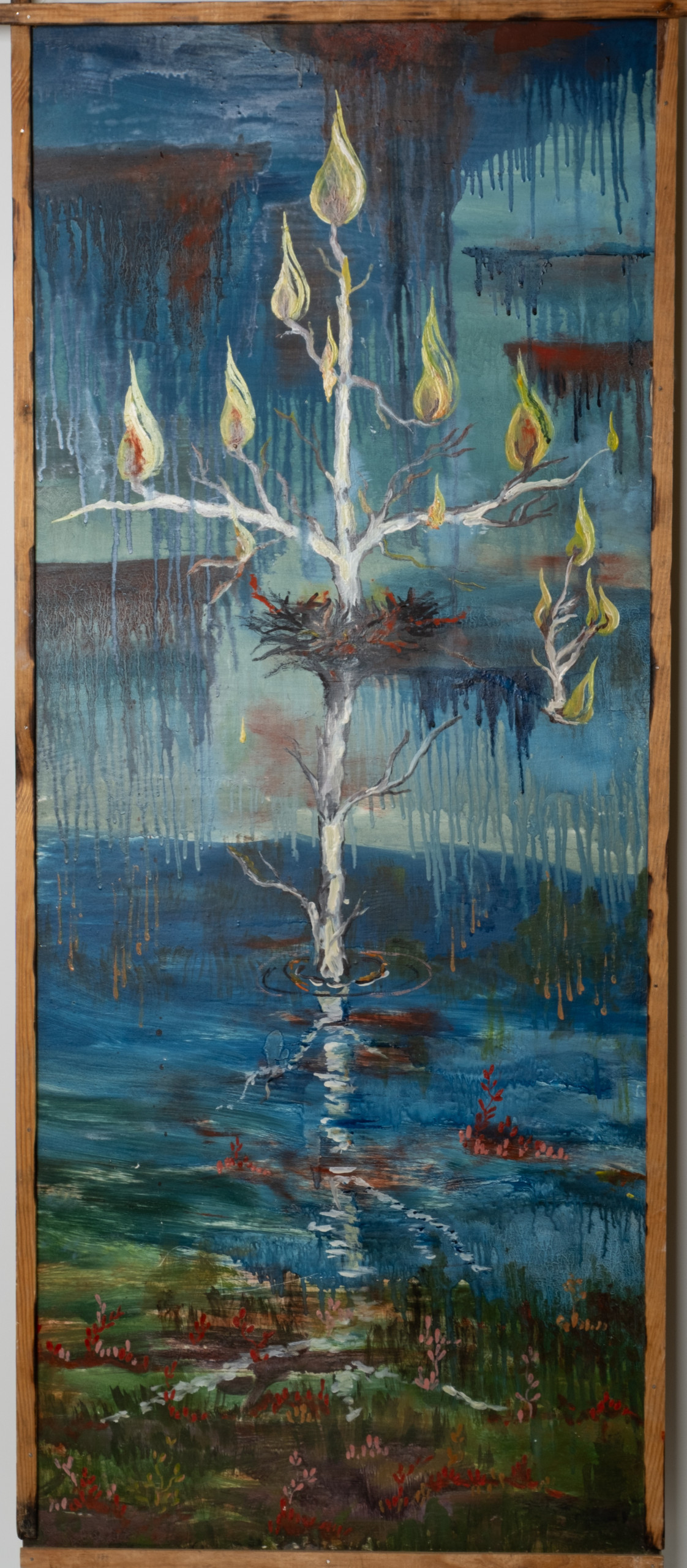
Bondarenko Yevhenia. Do Not Weep for Me, Mother (from the triptych Hylaea–Kinburn 2001), 2001. Cardboard, oil. 122 × 50 cm. MRLHM
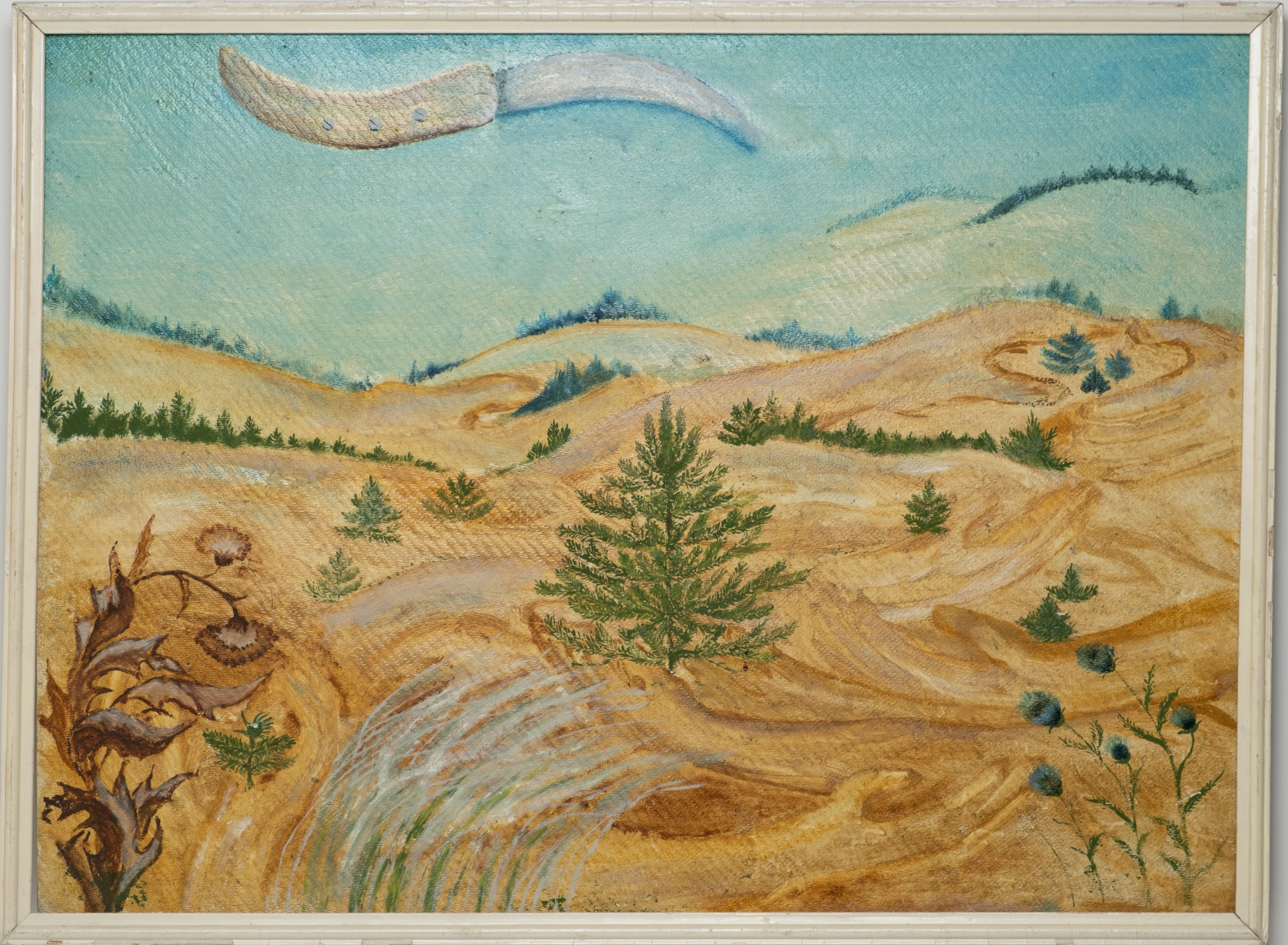
Bondarenko Yevhenia. Vasyl Peredrii’s Pine, 2008. Hardboard, oil. 54 × 73 cm. MRLHM
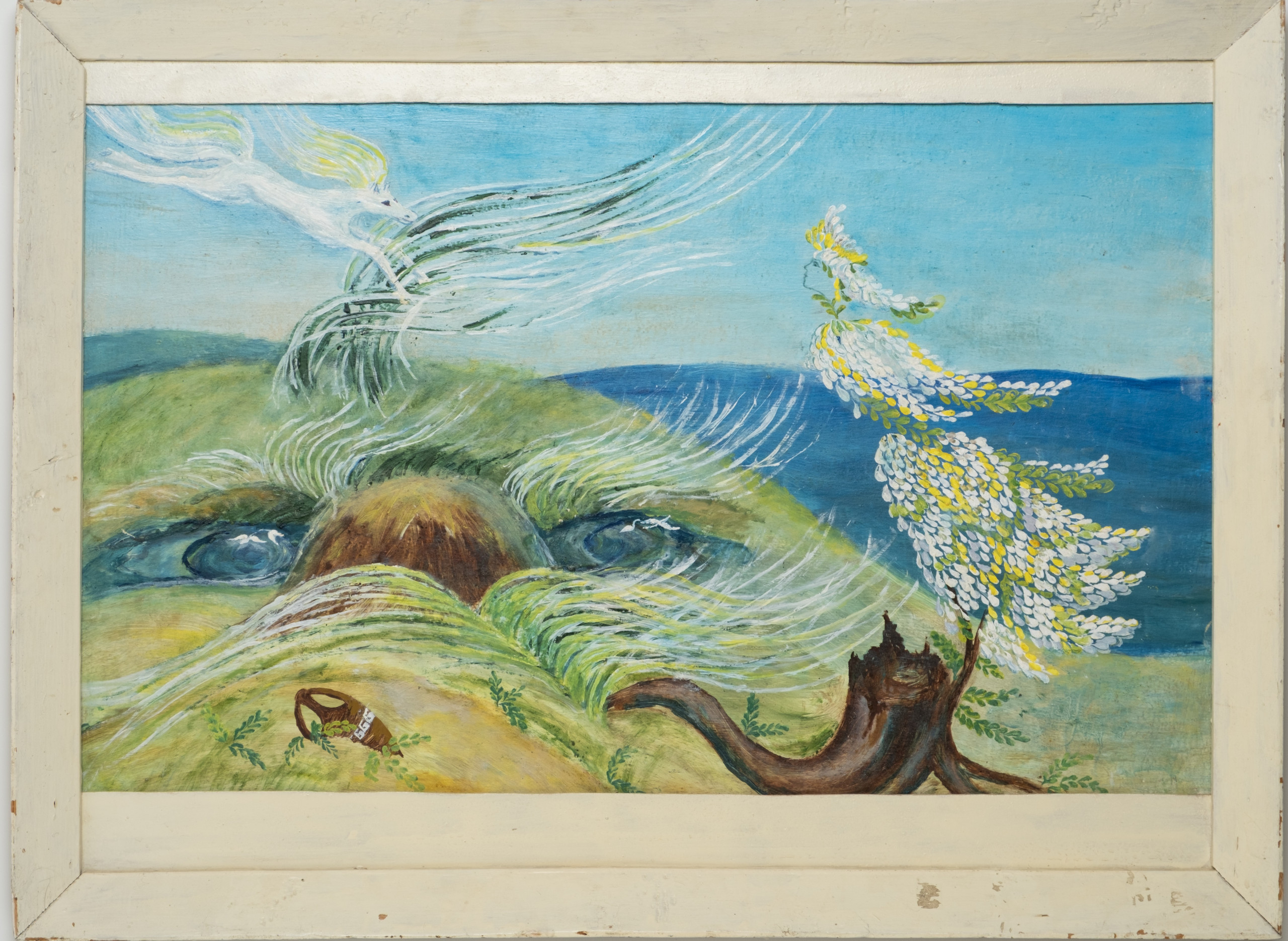
Bondarenko Yevhenia. The Bride, 2003. Hardboard, oil. 47 × 74 cm. MRLHM
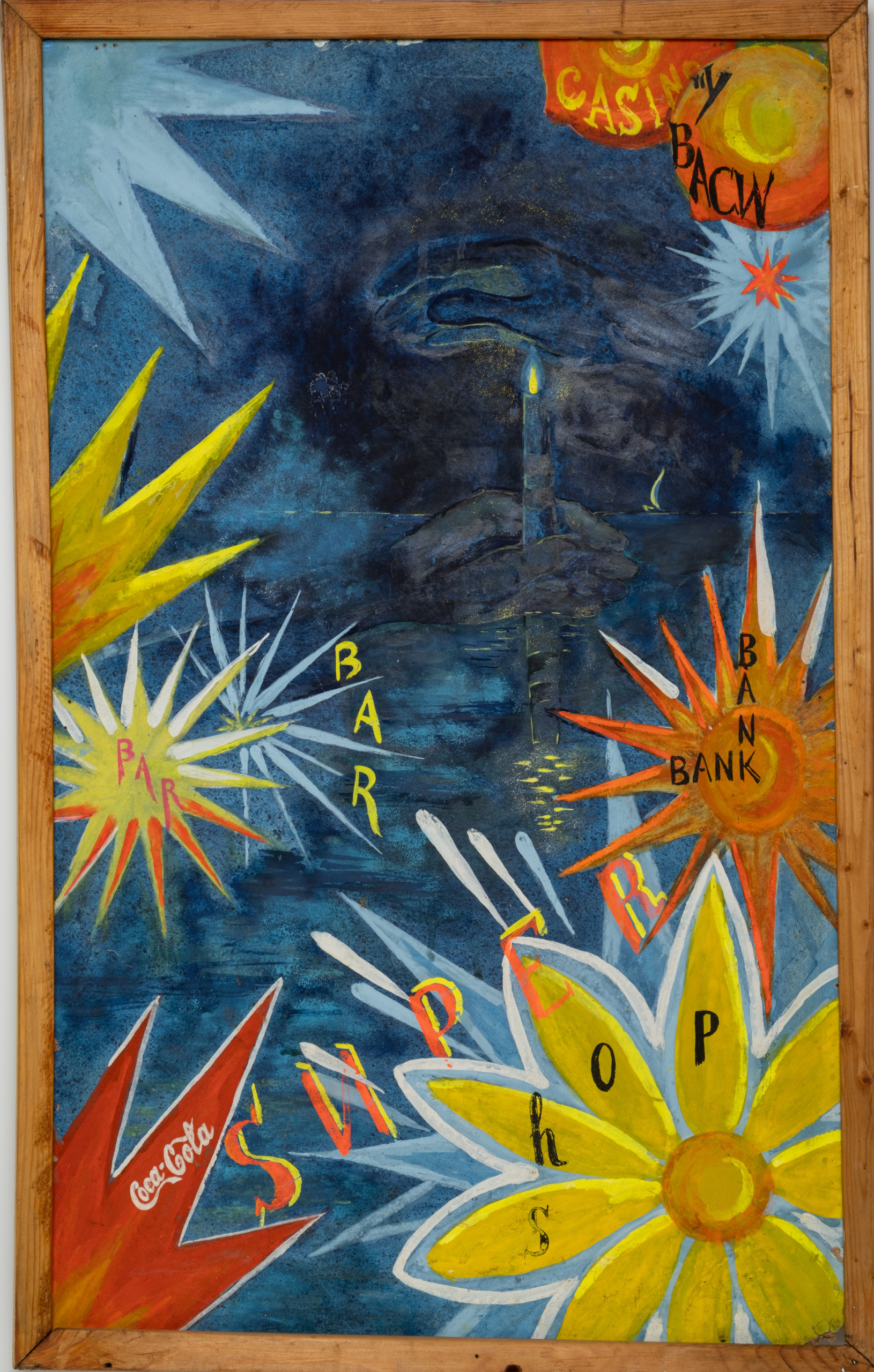
Bondarenko Yevhenia. The Lighthouse on Tendra, 1995. Hardboard, gouache. 80 × 50 cm. MRLHM
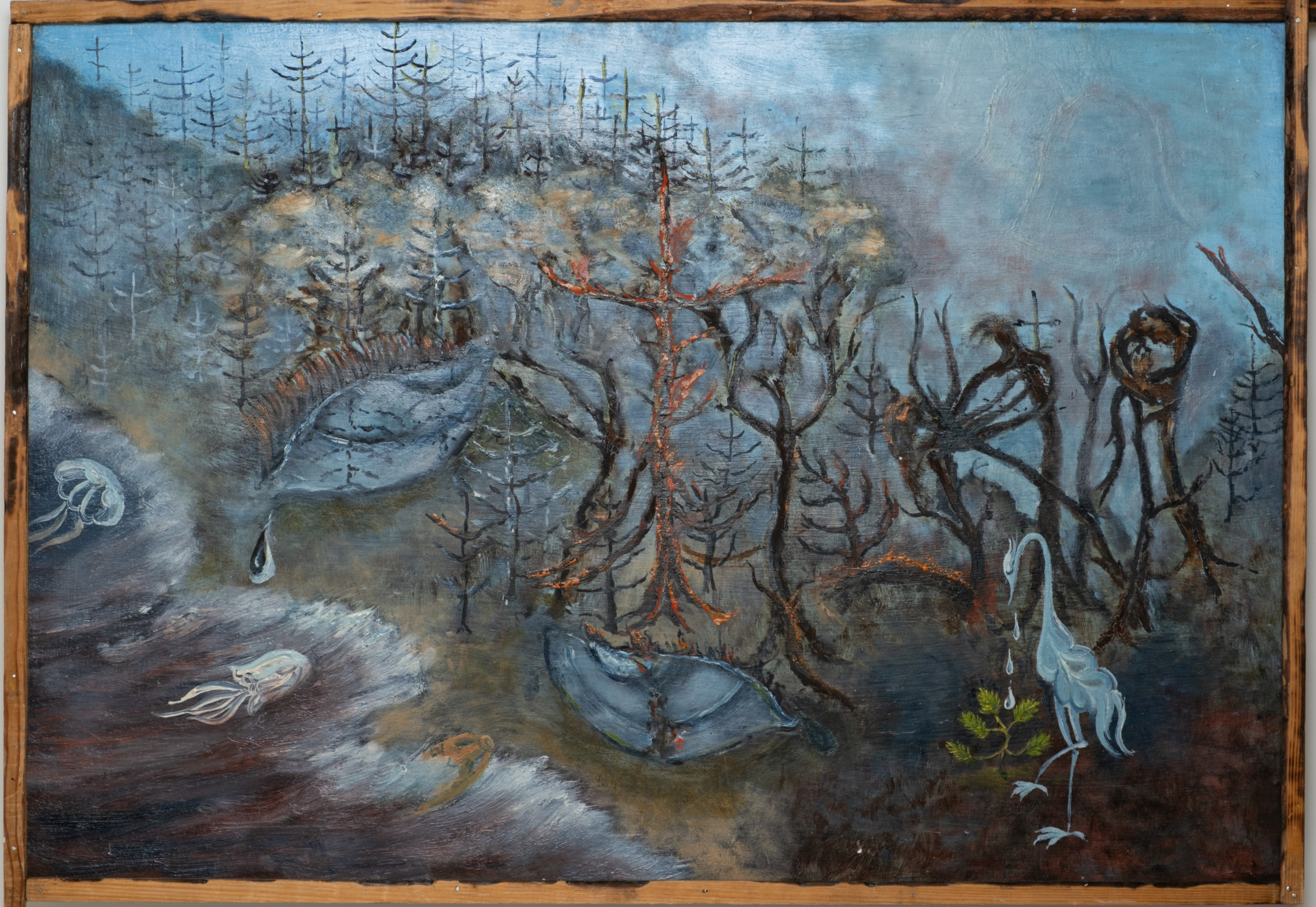
Bondarenko Yevhenia. The Trees Died Standing (from the triptych Hylaea–Kinburn 2001), 2001. Cardboard, oil. 61 × 89 cm. MRLHM
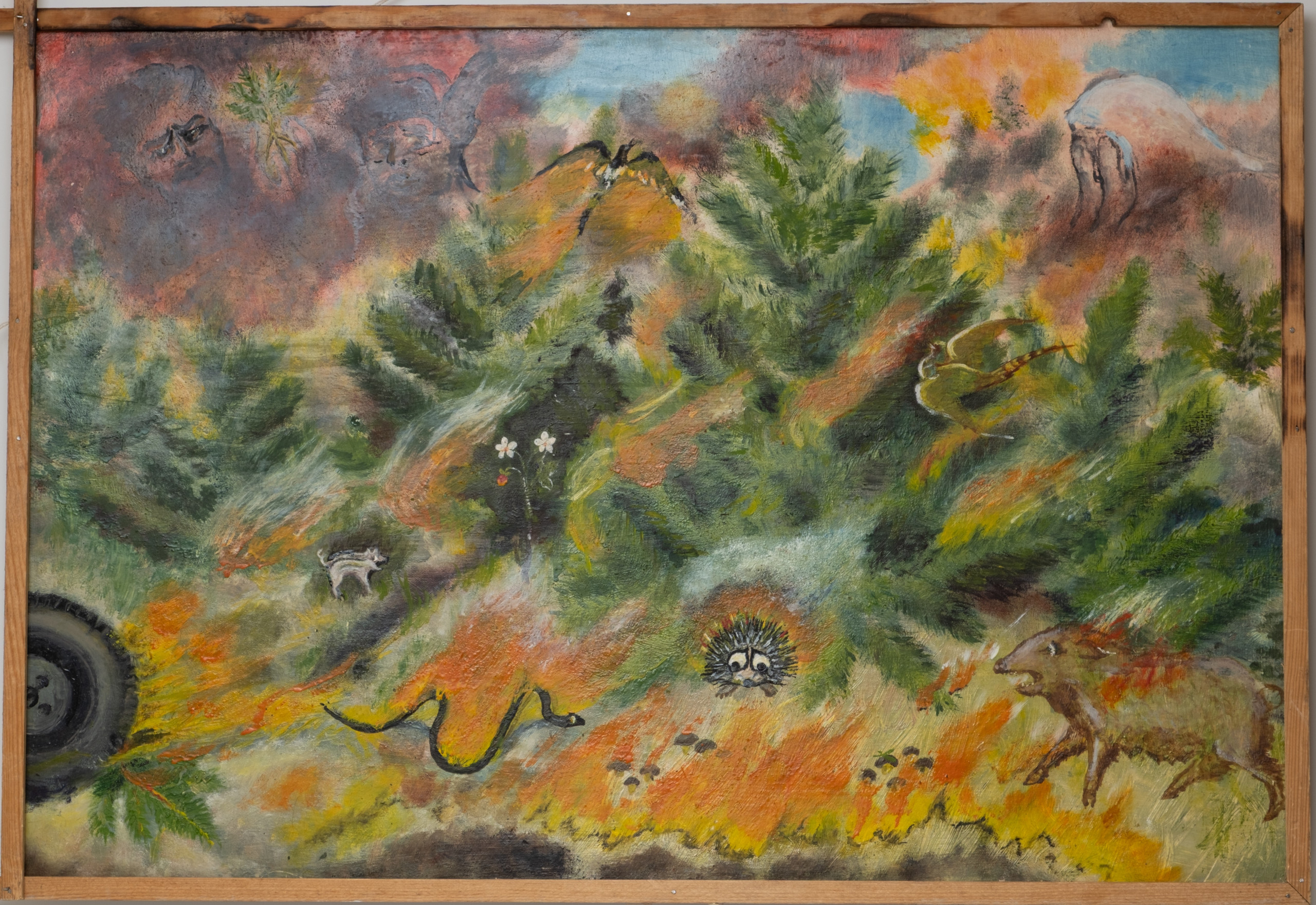
Bondarenko Yevhenia. The Pine Burned, It Blazed (from the triptych Hylaea–Kinburn 2001), 2001. Cardboard, oil. 61 × 89 cm. MRLHM
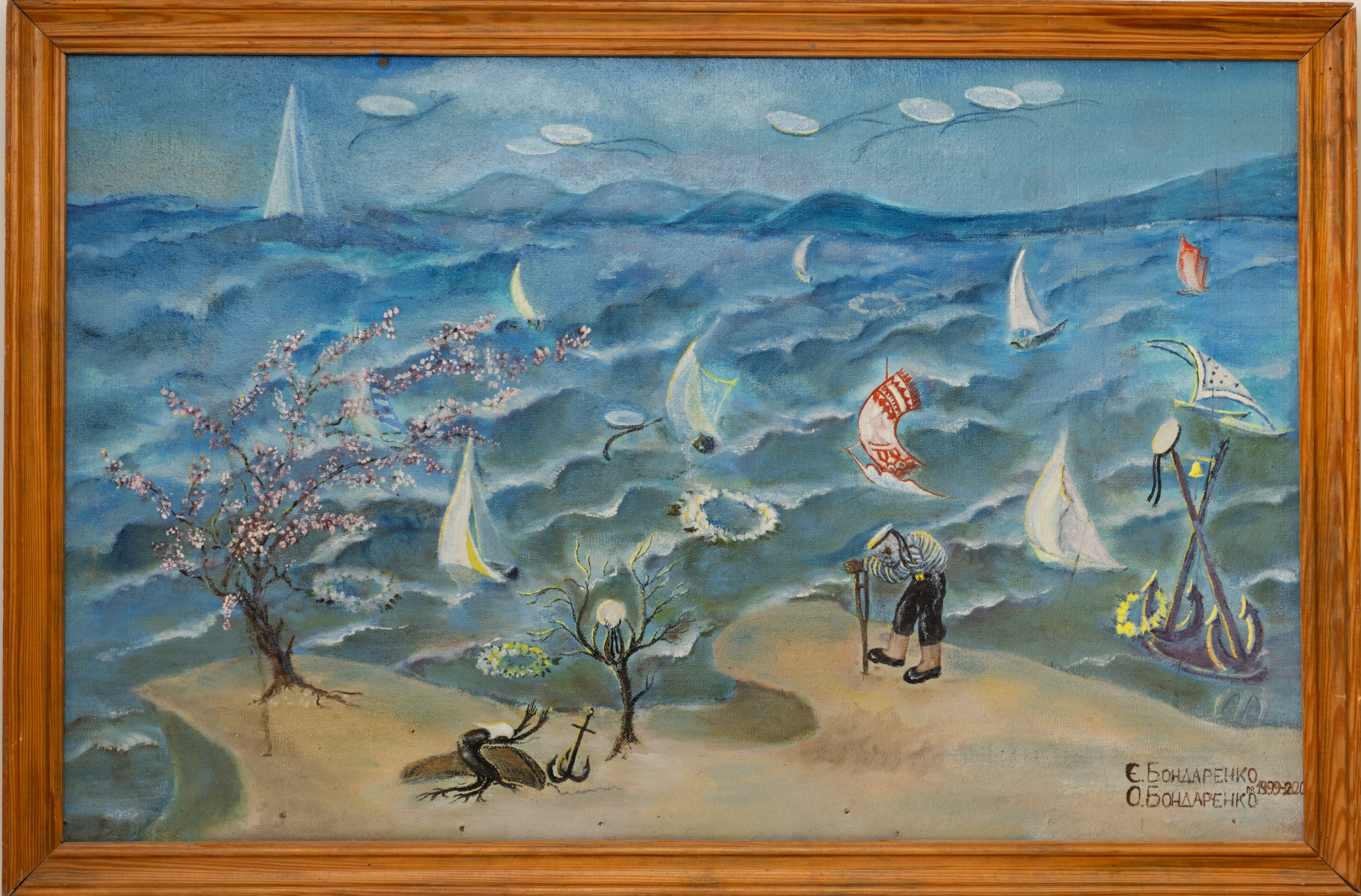
Bondarenko Yevhenia, Bondarenko Oksana. Sailors’ Widows (from the triptych Sailors’ Widows), 2000. Cardboard, oil. 78 × 122 cm. MRLHM
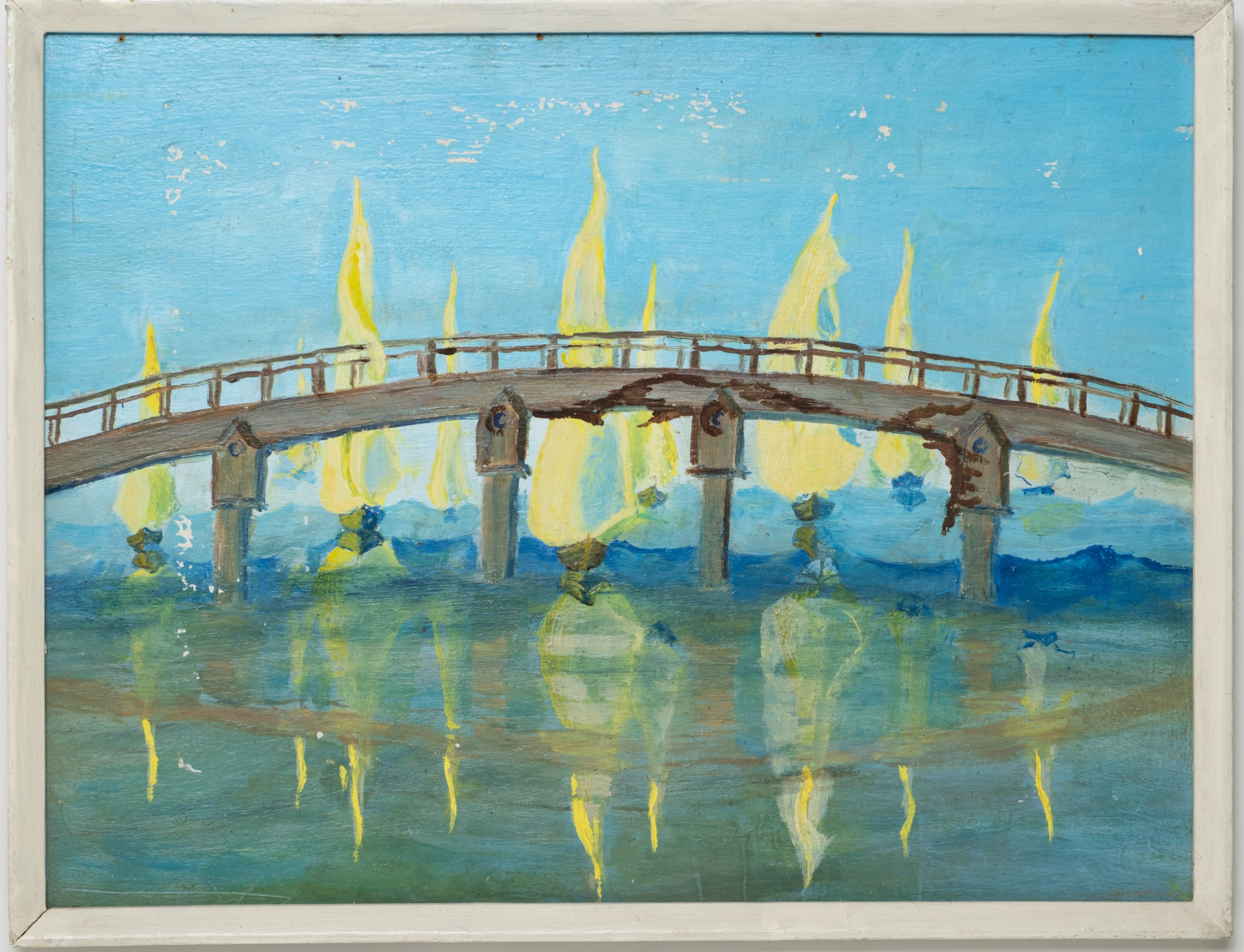
Bondarenko Yevhenia. Shall We Break Through (The Bridge. A Broken Mast), 2003. Hardboard, oil. 42 × 54 cm. MRLHM
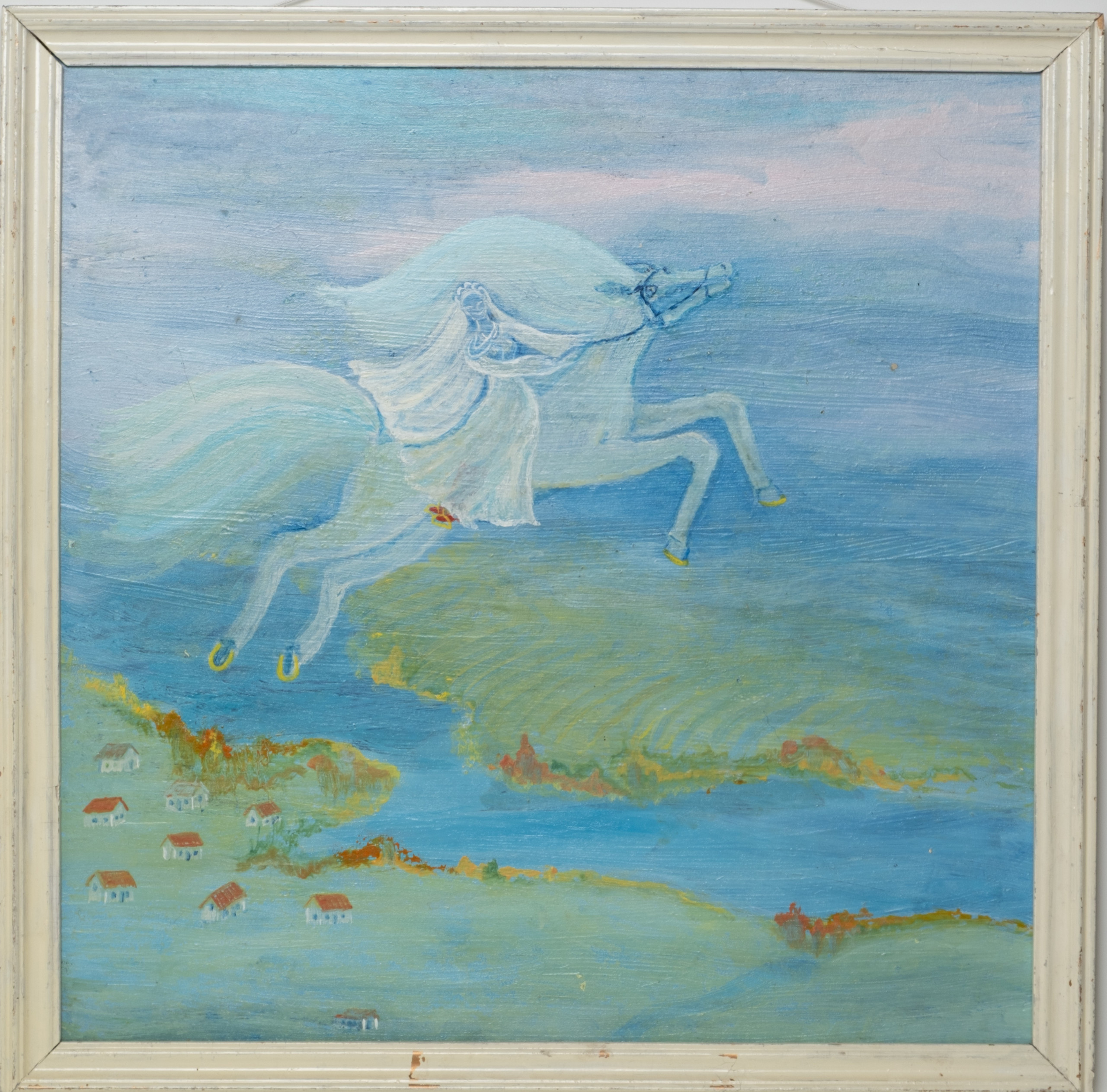
Bondarenko Yevhenia. The Bashtanka Bride, 2008. Hardboard, oil. 63 × 63 cm. MRLHM
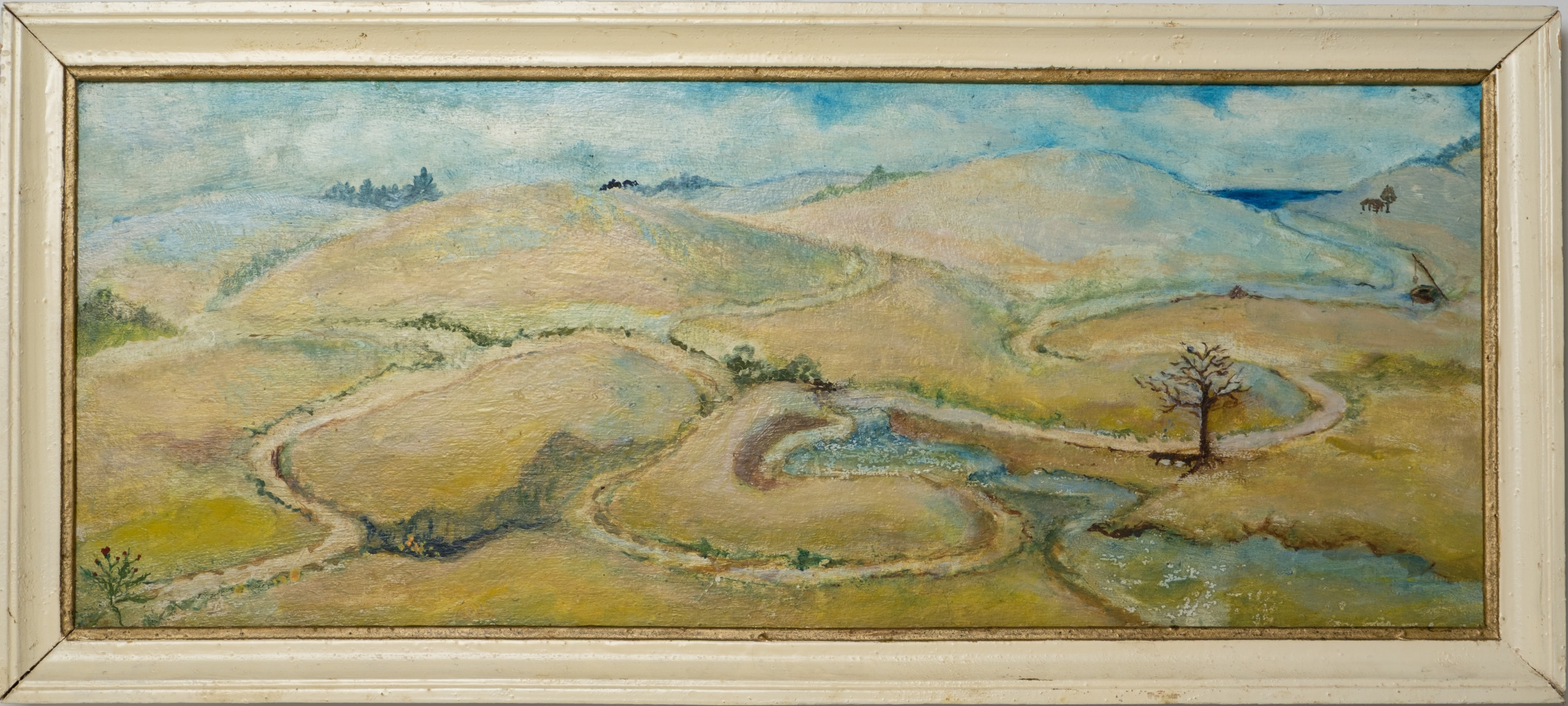
Bondarenko Yevhenia. Oh, Long Is the Path to the Lyman, 2003. Hardboard, oil. 30 × 74 cm. MRLHM