Teaching Methodology
Ornaments in Tavrian Painting and Their Kinds
For thousands of years ornament has remained the foundation of folk art. The simplest element of any ornament is the repeat (or motif). From a single repeat one may make any number of ribbon ornaments. Having mastered even the simplest elements of the painting, and alternating them with one another, one can create very interesting patterns for decorating household objects or for use in the adornment of a home.
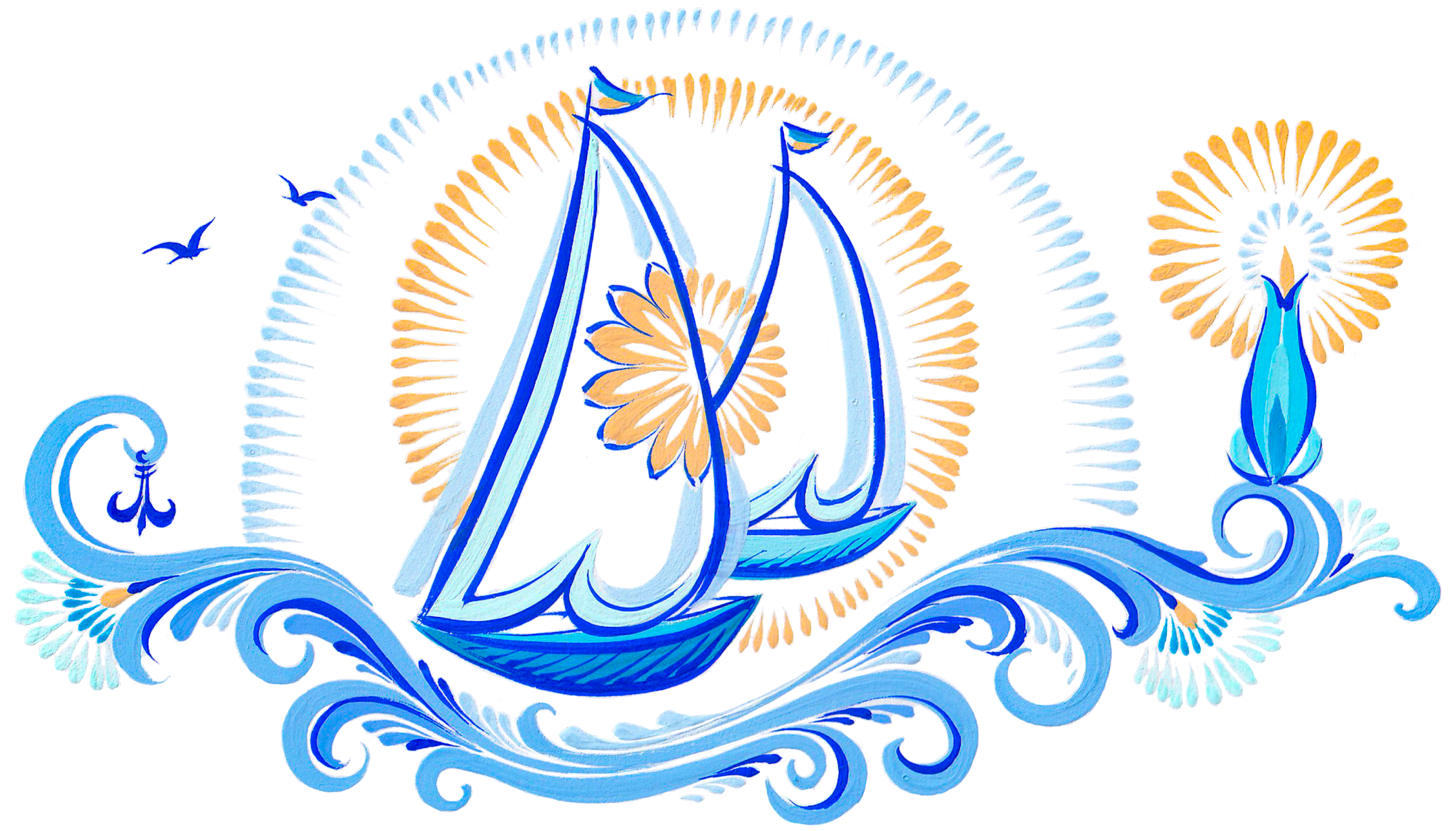
Into the ornaments of “Tavryka” were “woven” grasses and flowers, fish and curling waves, and the provider-matula. With these patterns the mazalnytsi and the mistresses of houses wished for themselves and for the whole family a good harvest, generous plenty from the garden, the plot and the household, well-being, and health from the nature around them. Ornamental compositions were not packed tight: between the elements much air was kept, and also lightness and a lace-like quality.
One should also take into account that different kinds of decorative and applied art are closely bound to one another, even if the ways of working the materials differ. Ornaments, symbols, subjects and schemes of compositional structure are very similar. So, in studying the ornament of embroidery or ceramics, one may suppose that a similar compositional structure could have existed in Tavrian painting as well. The centripetal placing of Trees of Life and flower vases, and the ribbon arrangement of motifs in crosswise bands in the embroidery of rushnyky and in the painting of ceramics, is an example of a compositional scheme used widely not only in the South but across almost the whole of Ukraine. That is why such a placing of elements in Tavrian painting is held to be natural and fitting.
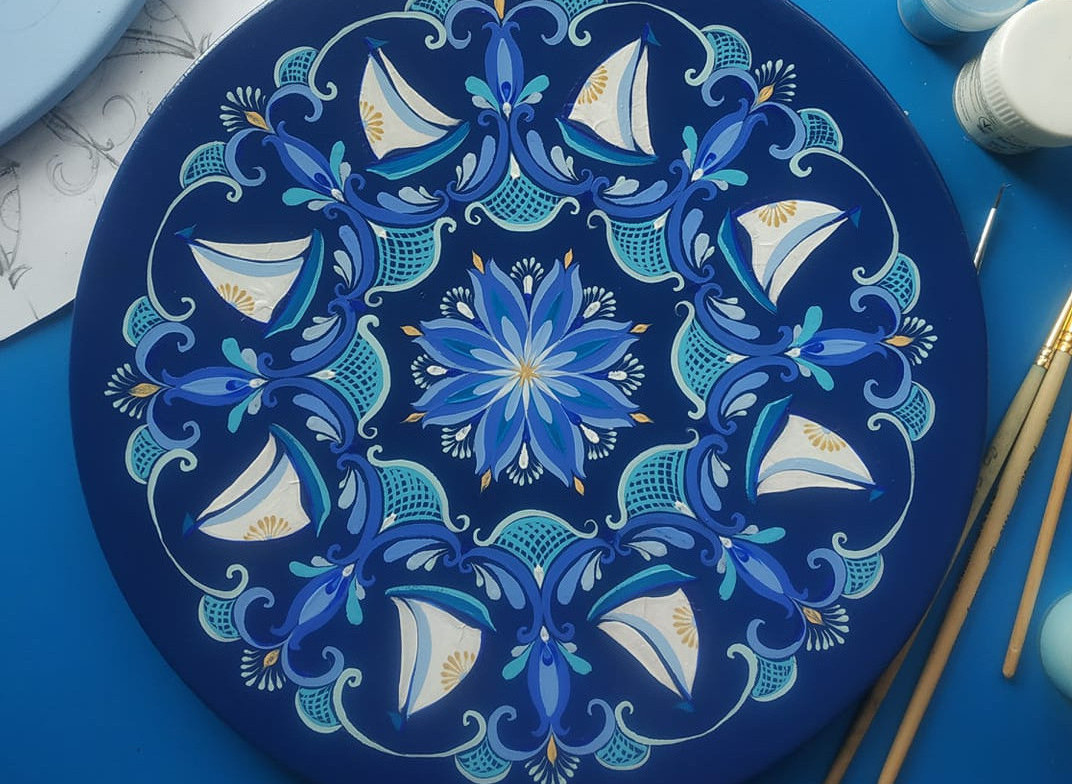
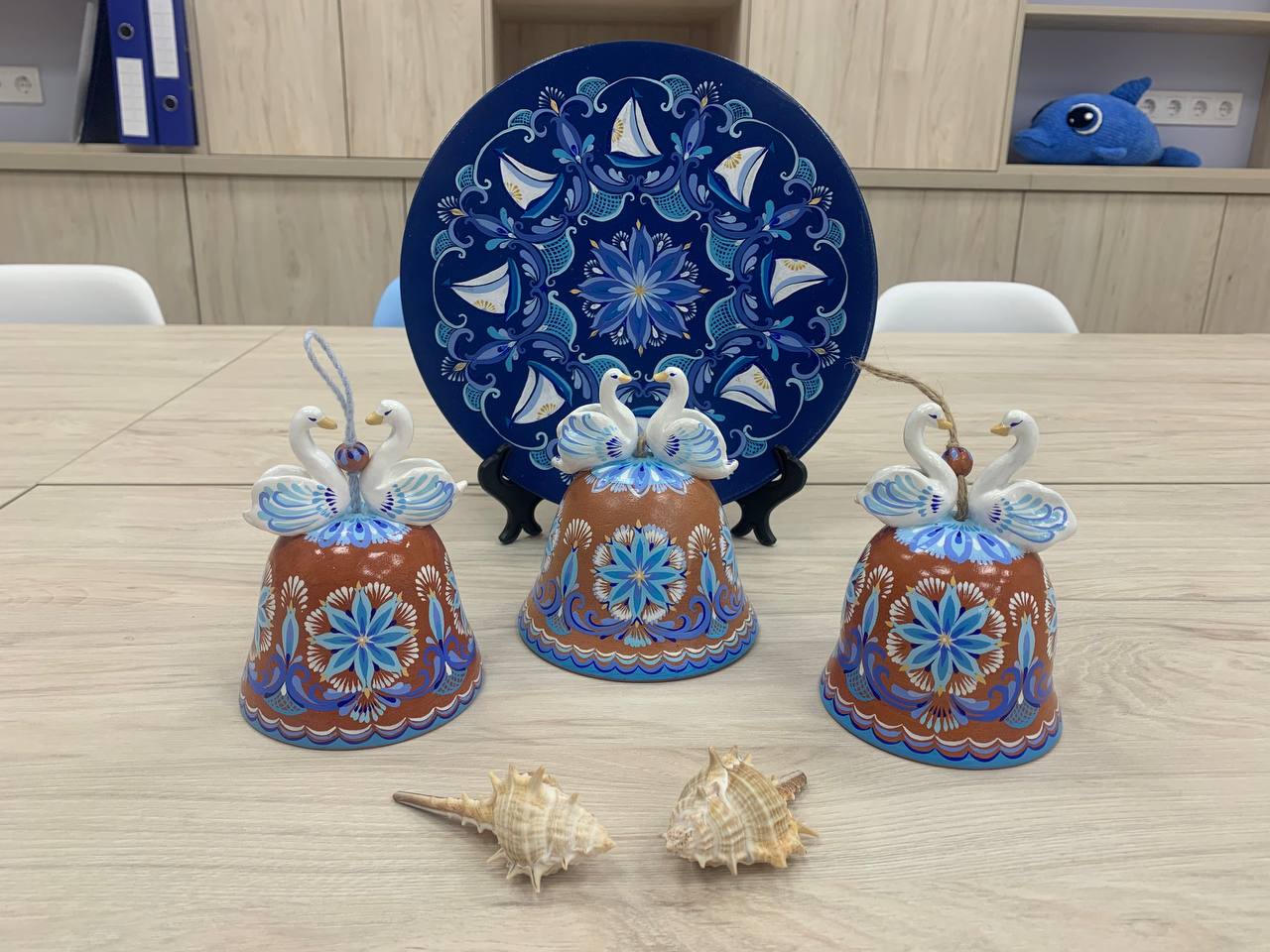
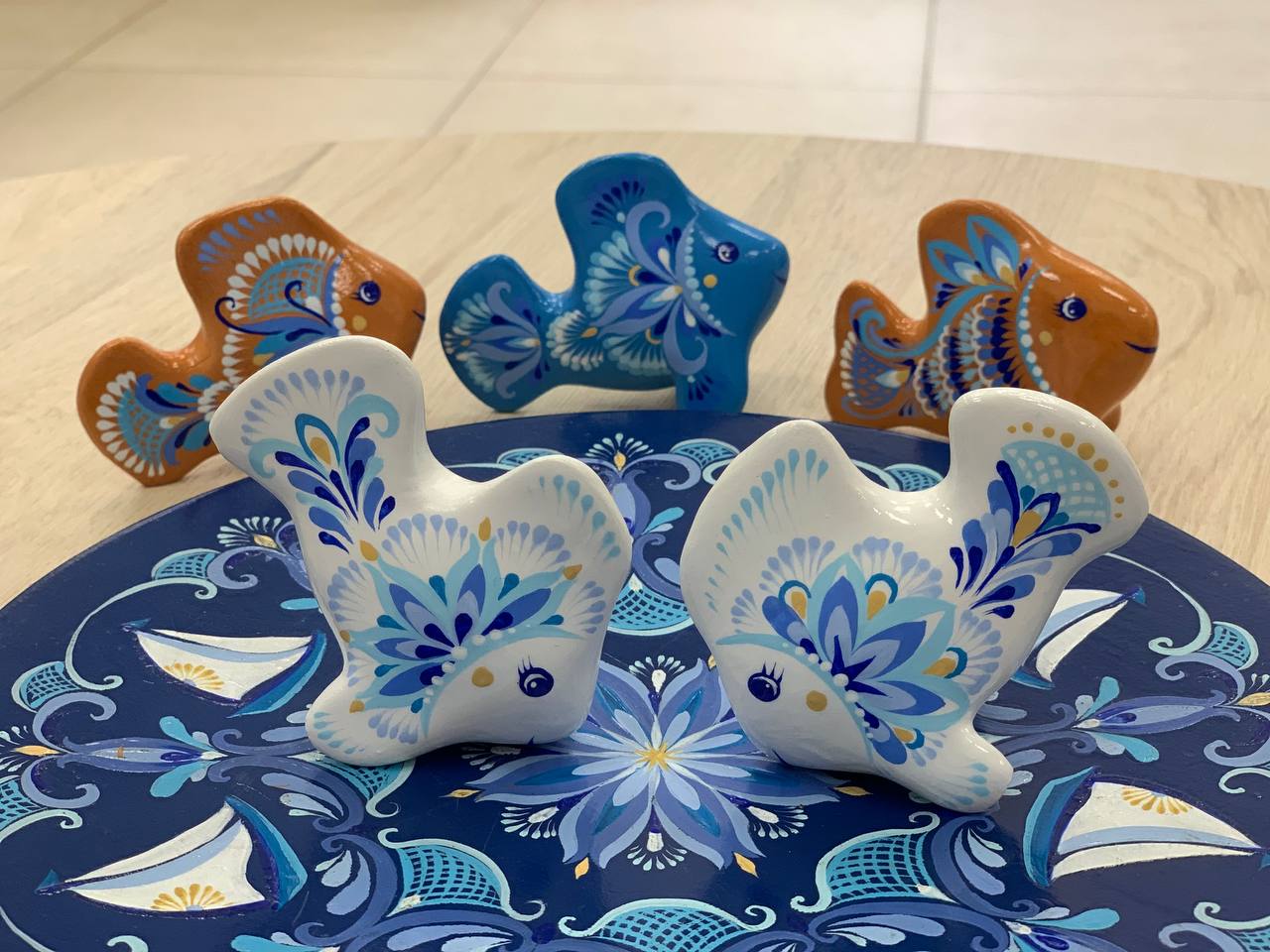
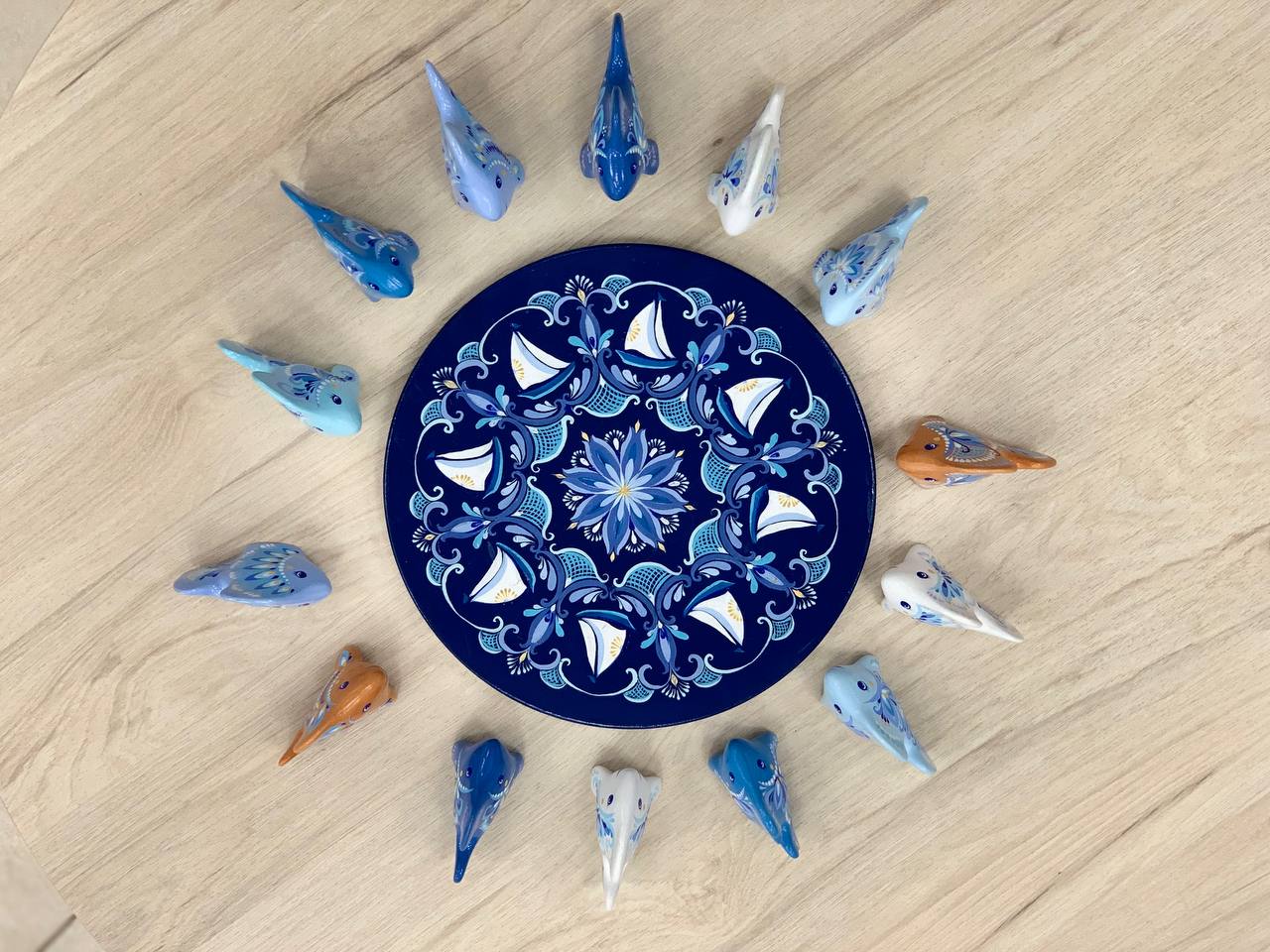
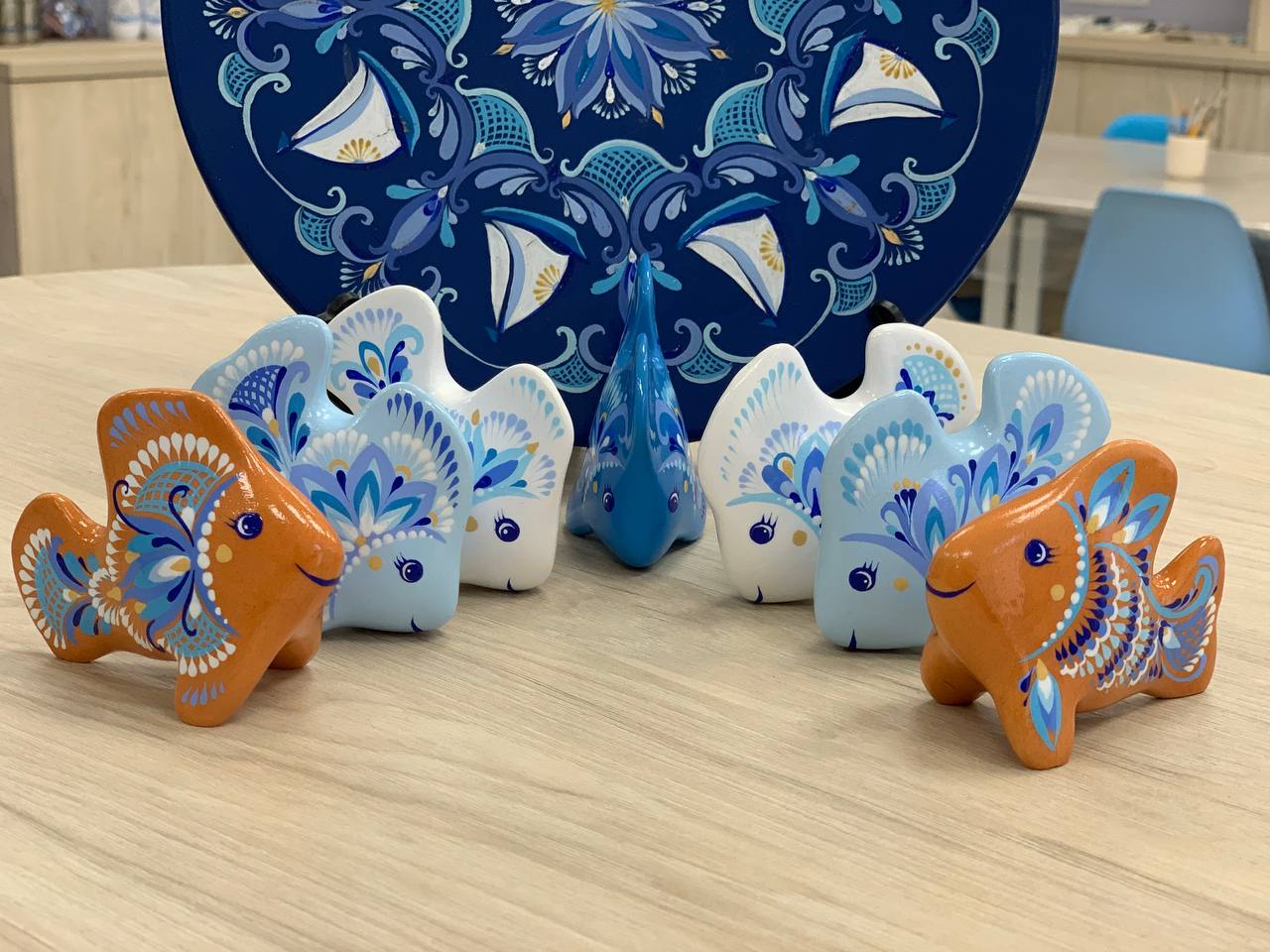
Paraniuk Liubov. Plate Heart of the Sea. 2020
This is also confirmed by the research of Yevhenia Bondarenko. In her works she writes that she saw similar elements in vyshyvankas made with thread on old shirts. The colour of the cloth in such cases was a little lighter than the threads themselves — pale blue, pale pink, lilac, white. Proceeding from the fact that the main classifying features of an ornament are its origin, purpose and meaning, one may say that Tavrian painting is quite rich in this respect. Among the kinds of ornament one may distinguish:
- landscape (images of waves, heavenly lights and the like);
- plant (images of leaves, flowers, fruit);
- zoomorphic (images of animals, fish, insects, birds);
- symbolic (images of the “rose of the winds,” lighthouses, a guiding star and the like).
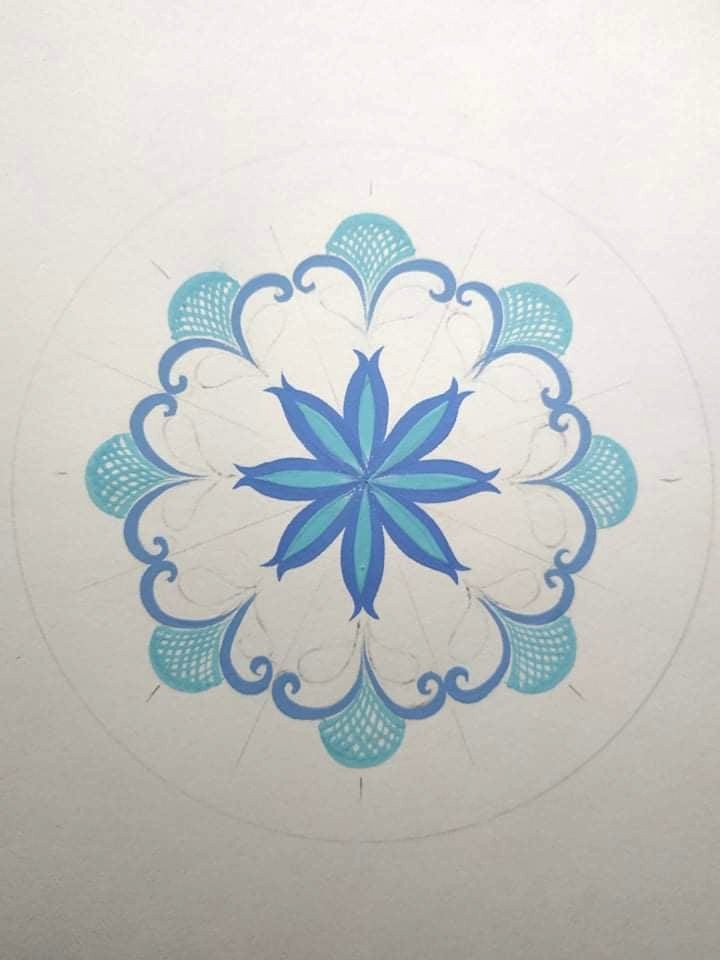
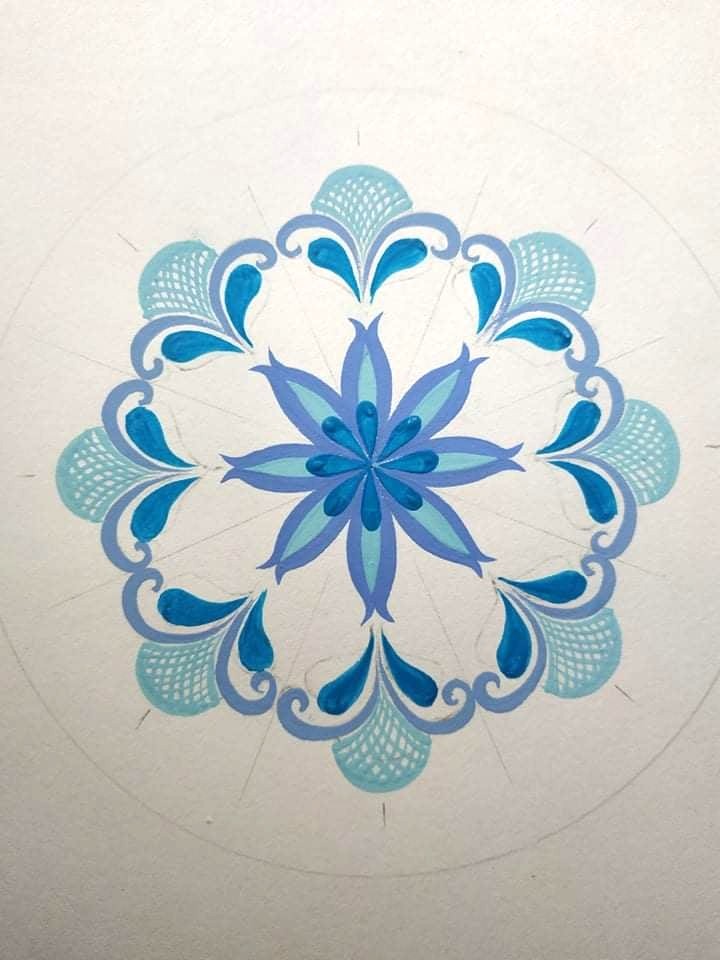
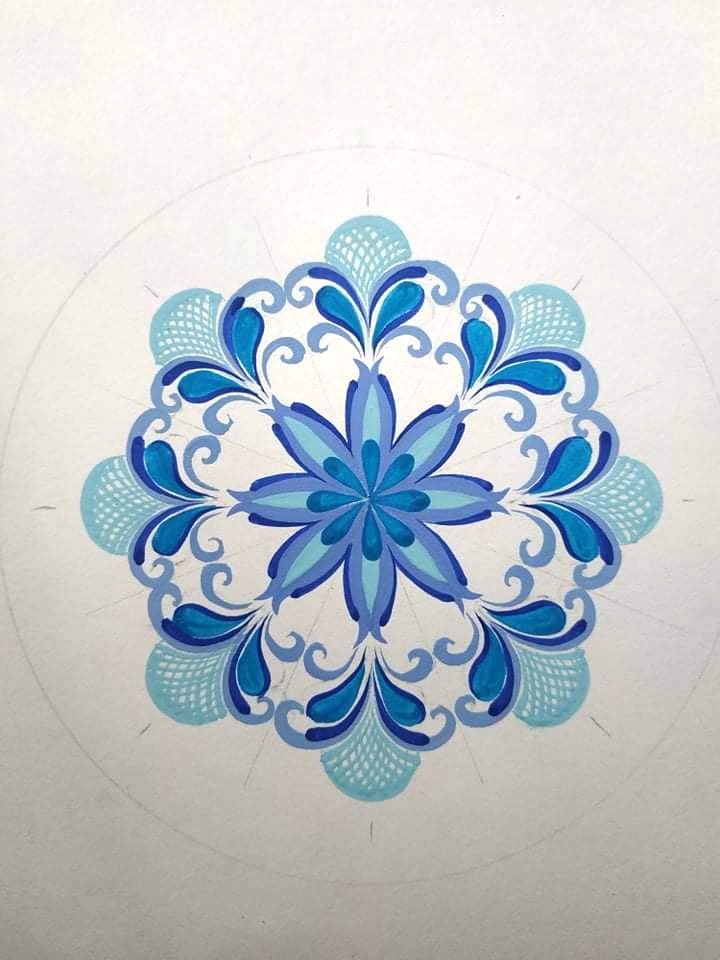
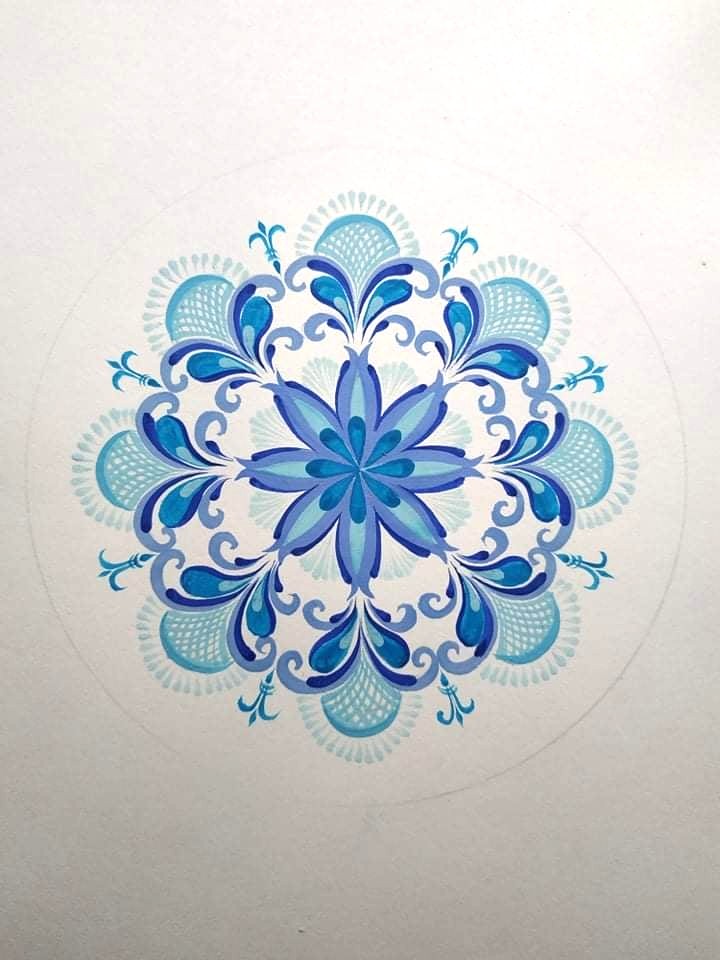
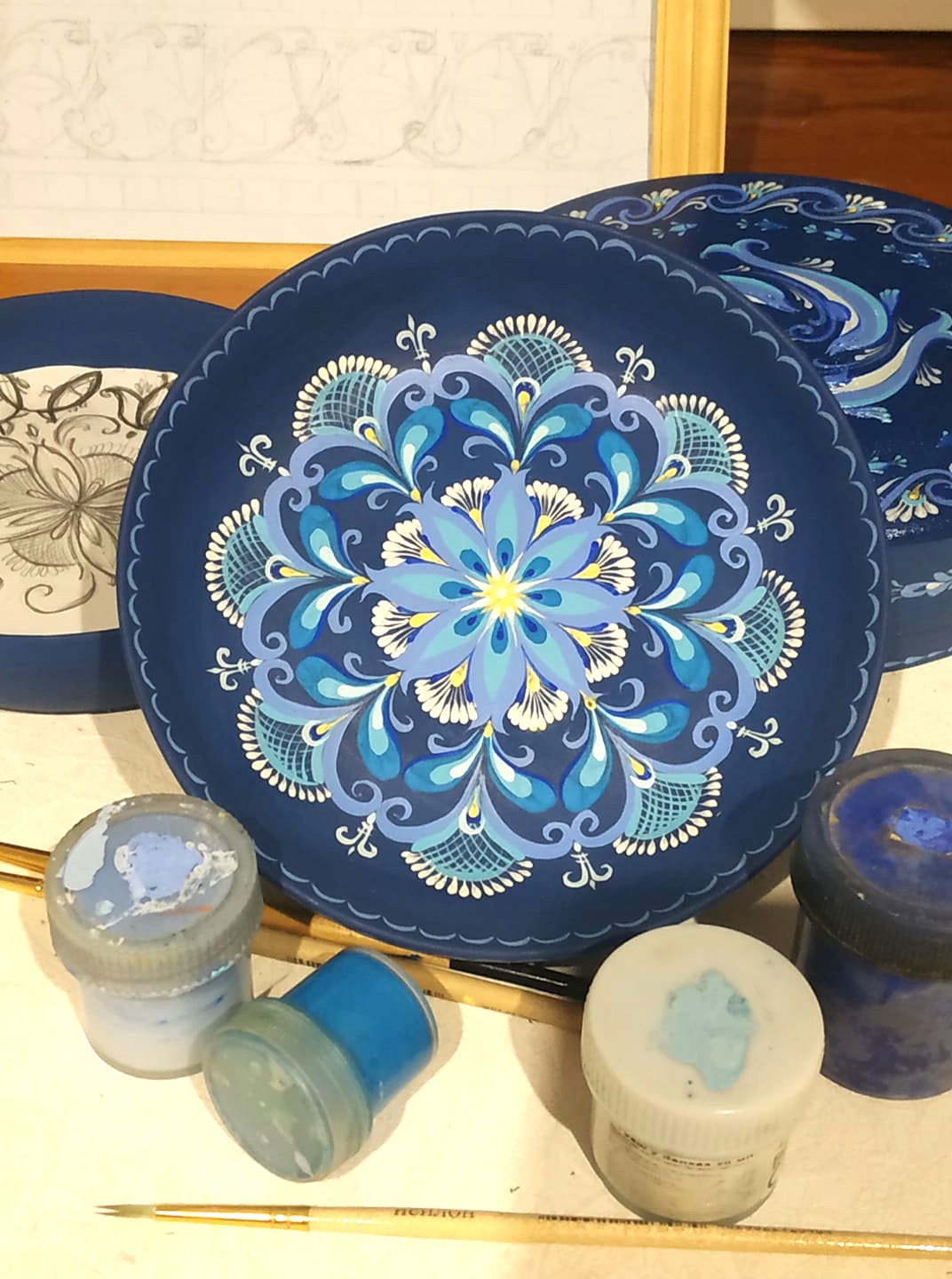
Stages of work on a closed ornamental composition