About
Themes and Symbolism. Stylisation
In her research Yevhenia Bondarenko finely gathered together all that she heard from villagers, mazalnytsi and fishermen, in long talks with grandmothers and grandfathers, and all that she learned by asking schoolchildren and teachers, lighthouse keepers and foresters from Pokrovka and Vasylivka on Kinburn and from other settlements of the Mykolaiv Region.
She watched with particular care the work of the mazalnytsi who painted houses with unusual patterns, learned the meaning of the painting’s symbols, and wrote down the folk legends, tales and stories bound up with it.
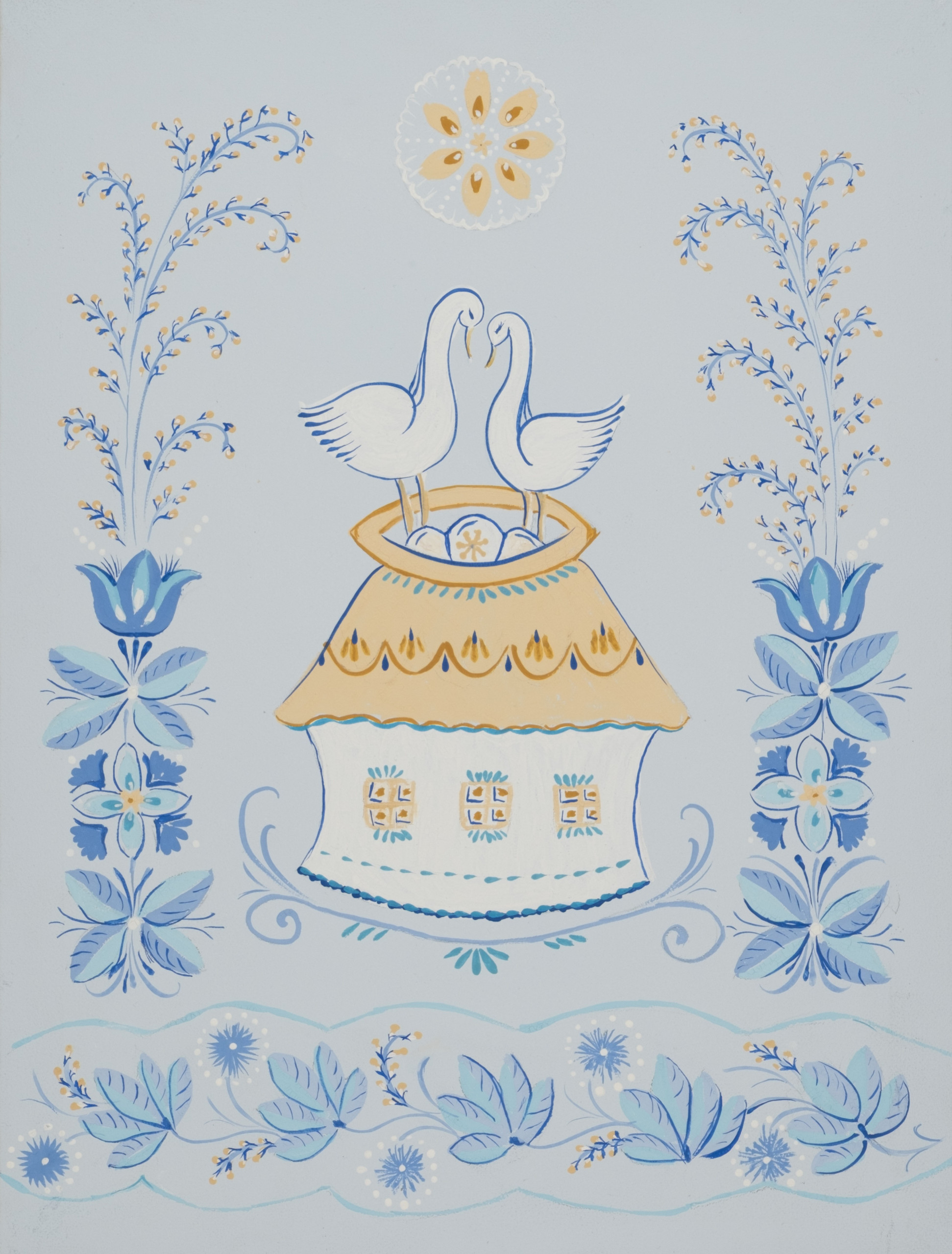
It was found that, when a house was decorated, the patterns were by tradition placed above the door, around the windows, under the eaves and near the very foundation. The themes of Tavrian painting reflected almost every side of life on Kinburn and in the Ochakiv region, the character of everyday work, and the picturesque nature of the native land. One of the joking songs of the mazalnytsi of that time ran:
On my little vikhtyk
Whatever you wish will grow…
Travelling the South, Yevhenia Bondarenko noted that Tavrian painting, with its symbolism, had gone deep into the Mykolaiv Region, beyond Kinburn. So blue-eyed houses could be met not only in coastal settlements but in districts far from the sea. The researcher wrote: “I have seen these charms in the village of Oleksandrivka in Voznesensk district, in the villages of Solonchaky and Yaselky in Ochakiv district, and in Snihurivka district (the village of Yevhenivka).”
It is important to say that in Tavrian painting all images and symbols have a positive meaning. This is bound to two things:
- Everything in nature that lived, breathed, grew and so on in Tavria was filled with immeasurable love, and so called forth respect and trust.
- The mazalnytsi laid all images on the walls of houses not only for the sake of beauty, but for the sake of symbolism, of encoding meaning, of protecting the dwelling. To paint anything negative or evil would have been quite illogical and would have gone against the moral and spiritual principles of how the people of Kinburn and the neighbouring lands saw the world.
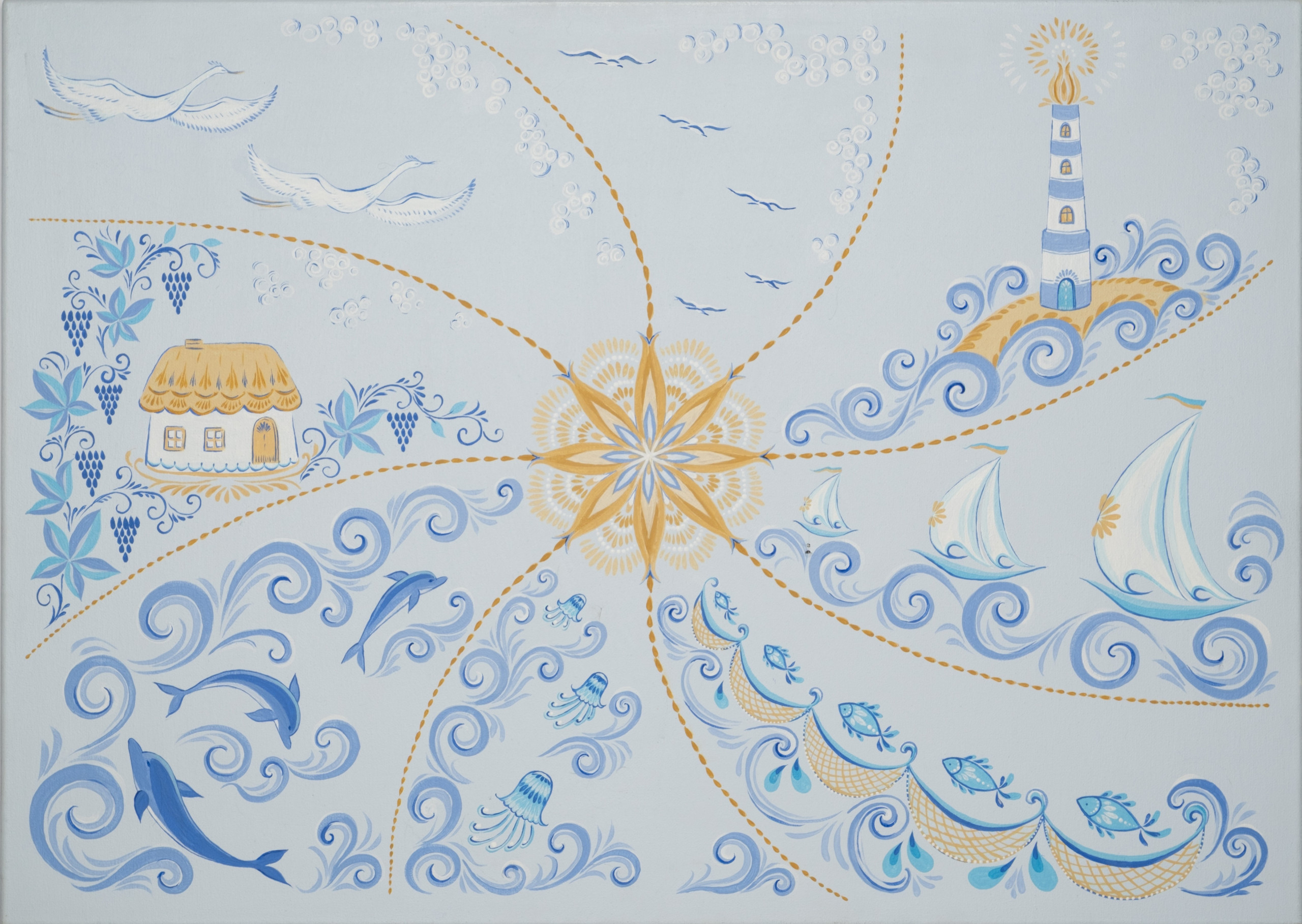
And indeed the whole universe of the Kinburn Spit and of other coastal zones of Southern Ukraine was reflected in Tavrian wall painting. People considered themselves particles of Great Nature, and the house was not to shut the world away from them — it was to reflect it entirely, to mirror it. So high on the walls, under the very roof, the masters painted various clouds, seagulls or a night sky of stars. On the house itself flowers shone, full-faced acacias, sea views with little waves and boats, things of family use. Along the lower walls and under the windows, so that the rains would come in time, they painted swallows; and by the very foundation they set yellow sand-dunes or blue waves, boats with sails and the like. From the walls of the clay houses clusters of grapes heavy with juice also looked out at people. They stood for a rich harvest and prosperity, the joy and beauty of life, fertility and good masculine strength; they were a symbol of marriage and of protection from unclean forces.
Further plant motifs and protective symbols include:
- watermelons and pumpkins, cucumbers and parsley, trees and grasses — a good harvest and generous plenty;
- sunflowers — symbols of a fertile summer, of the sun and of harmony in the family, of the household hearth;
- daisies — symbols of love, of a girl’s modesty, of tenderness, friendship, trust, health and well-being;
- raspberry — sweet youth, girlhood, a girl’s attractiveness;
- kalyna (guelder rose) — a symbol of a girl’s beauty, youth, chastity, life-giving power and the continuity of the family line, of fidelity, of pure and bright love, of eternal and historical memory, of what cannot be destroyed;
- strawberries — summer, summer carelessness and pleasure;
- hollyhocks — symbols of Cossack valour, of love for the native land, for one’s people, for the father’s house. They embody a person’s spiritual roots and fidelity to the spiritual inheritance of the ancestors;
- thyme — fertility, courage, health, protection from evil; a symbol of the native land and home, of the family’s peace and of children’s health;
- feather grass — a symbol of the Ukrainian steppe and of its waving space; it reflects the beauty and uniqueness of Ukrainian nature and is also a symbol of steadfastness and of the defence of Ukrainian land;
- white lilies — a girl’s beauty and charm, spiritual purity, chastity, pure girlish love, life and the immortality of the human soul;
- cornflowers — life, beauty, kindness, youth, a girl’s honour;
- water lilies — the beginning of life; a charm against illness, cattle disease and enemies in a strange land;
- willow — a sign of favour, blessing, of being drawn into the mysteries of nature; a charm against illness and unclean forces;
- oak — strength, authority, order in the family, warmth at home, an unbreakable popular spirit, endurance, steadfastness, courage, the inviolability of family traditions; a charm against illness and evil spirits;
- wheat — life, a prosperous life, well-being, friendliness, kindness, wealth, a wedding;
- rye — fertility, plenty, well-being, life; a symbol of happiness for the young.
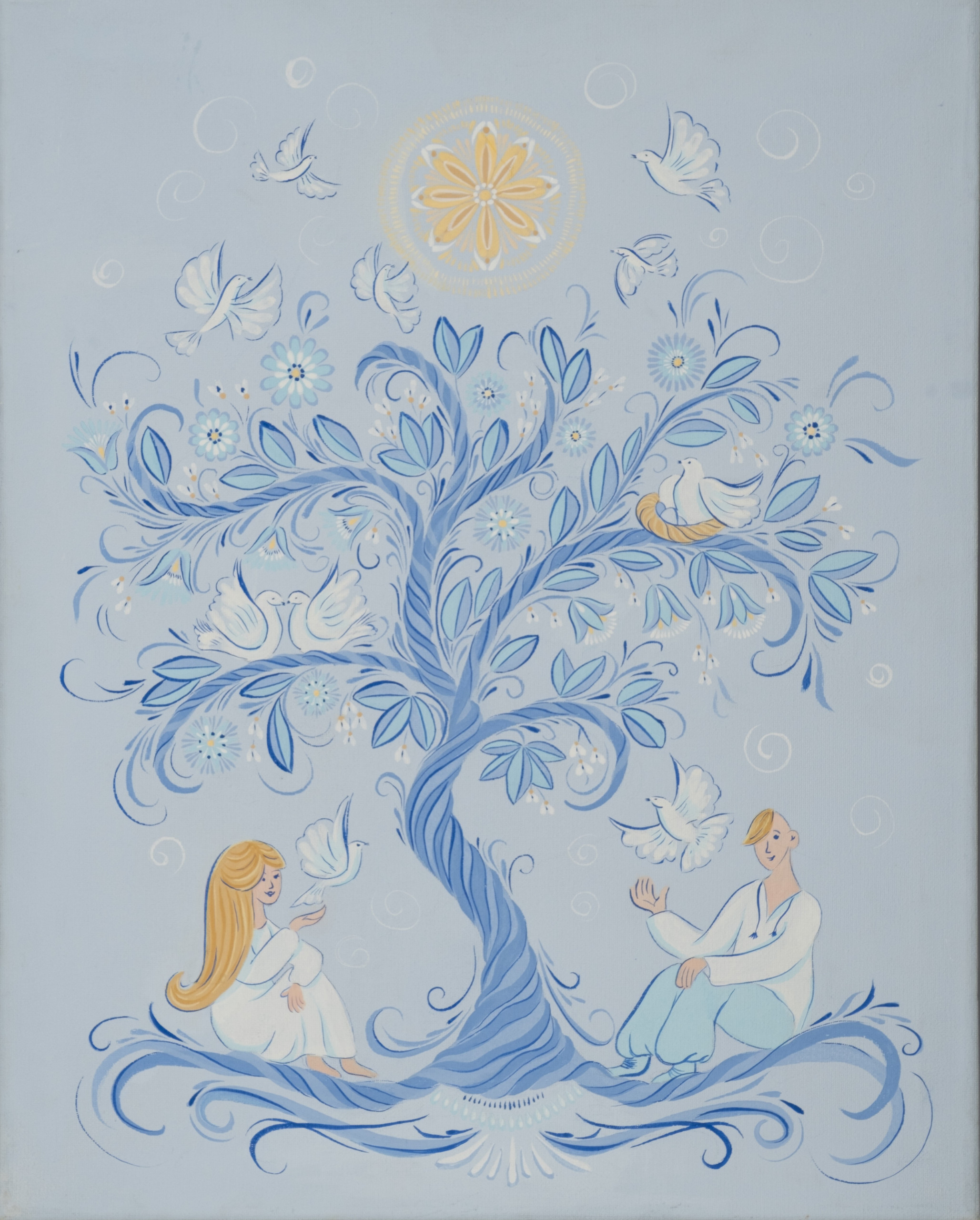
Images of birds were popular as well. Drawing on the research of Serhii Tanadaichuk, Oleksii Kononenko, Vasyl Skurativskyi and other students of metaphor and symbol in Ukrainian decorative art and culture, we offer the following meanings.
Birds:
-
storks — happiness, well-being, prosperity, renewal, industry, love of parents, the coming of children, the keeping of the household from misfortune;
-
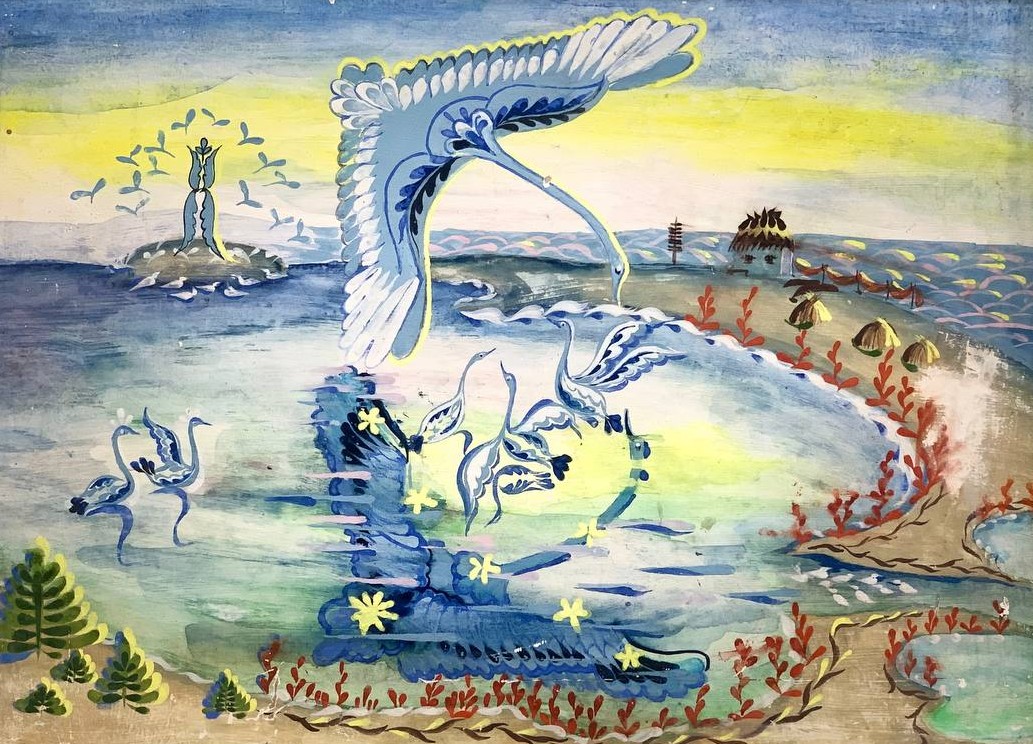
cranes — renewal, love of the Homeland; heralds of spring and of return to the native land;
-
herons — wisdom, a bond with the element of water and a bond among the three elements (earth, water, air), calm, caution, grace, purity, longevity, wisdom, and also the coming of spring and positive change;
-
swans — goodness, love, noble purity, beauty and fidelity;
-
seagulls — help, a mother’s love and tenderness, trust, friendship, rescue;
-
swallows — spring, renewal, warmth, goodness and the well-being of the family; heralds of rain, birds that bring sunny days on their wings;
-
nightingales — merriment, joy, first love, a first kiss, the tenderness of those newly in love;
-
owls — wisdom and knowledge;
-
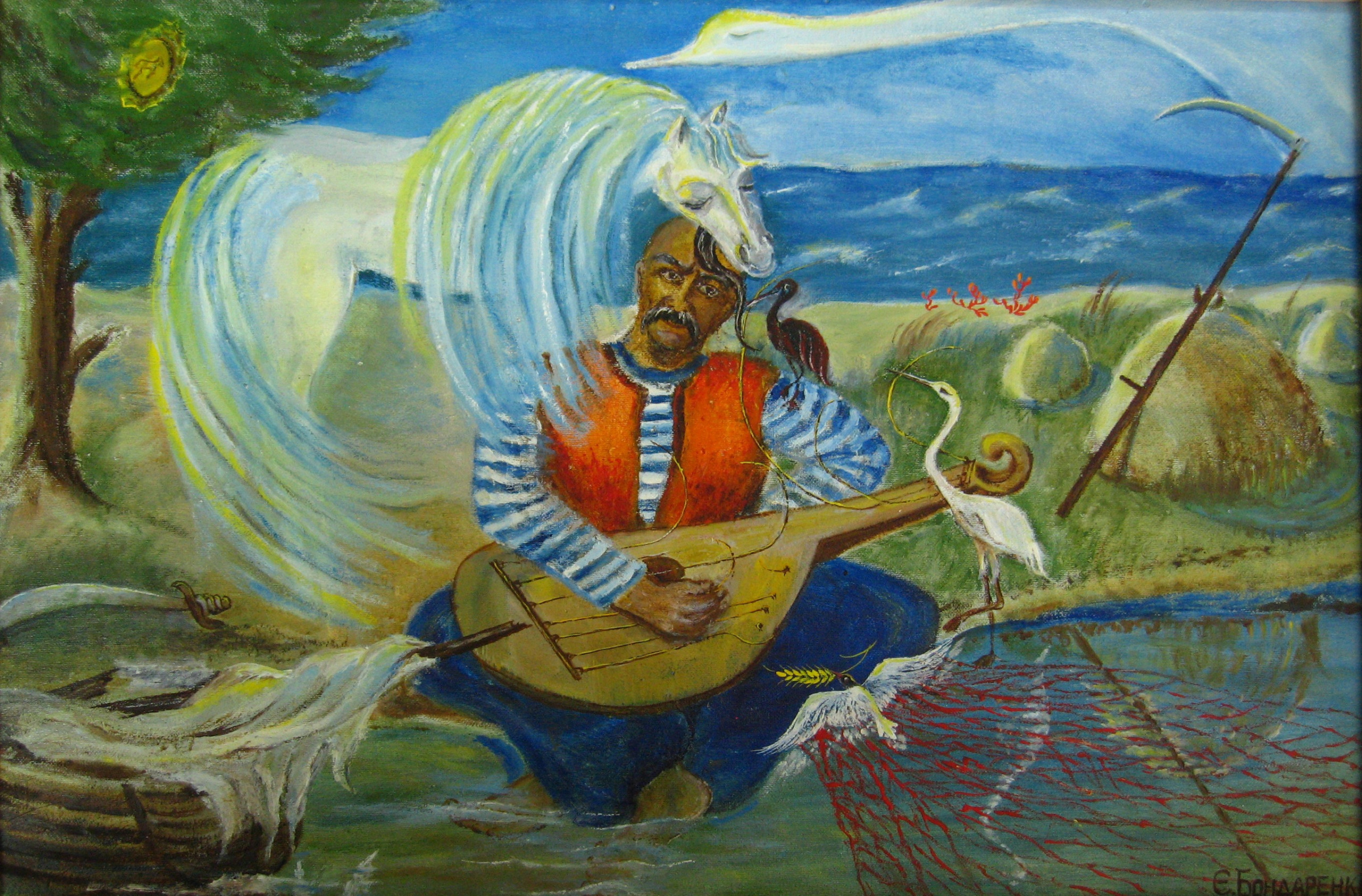
cocks — the morning sun, awakening, a rainbow, success on the Chumak road;
-
cuckoos — time, the mystery of time’s eternal flow, life; prophetesses of spring and of the future;
-
magpies — news, hospitality.
It should also be said that “Tavryka” has unique symbols of its own, found in no other painting, because they are bound to this particular place — the land where the folk painting was born. In the symbolism of birds we have:
-
the red-and-black Korovaika, who embodies good deeds;
-
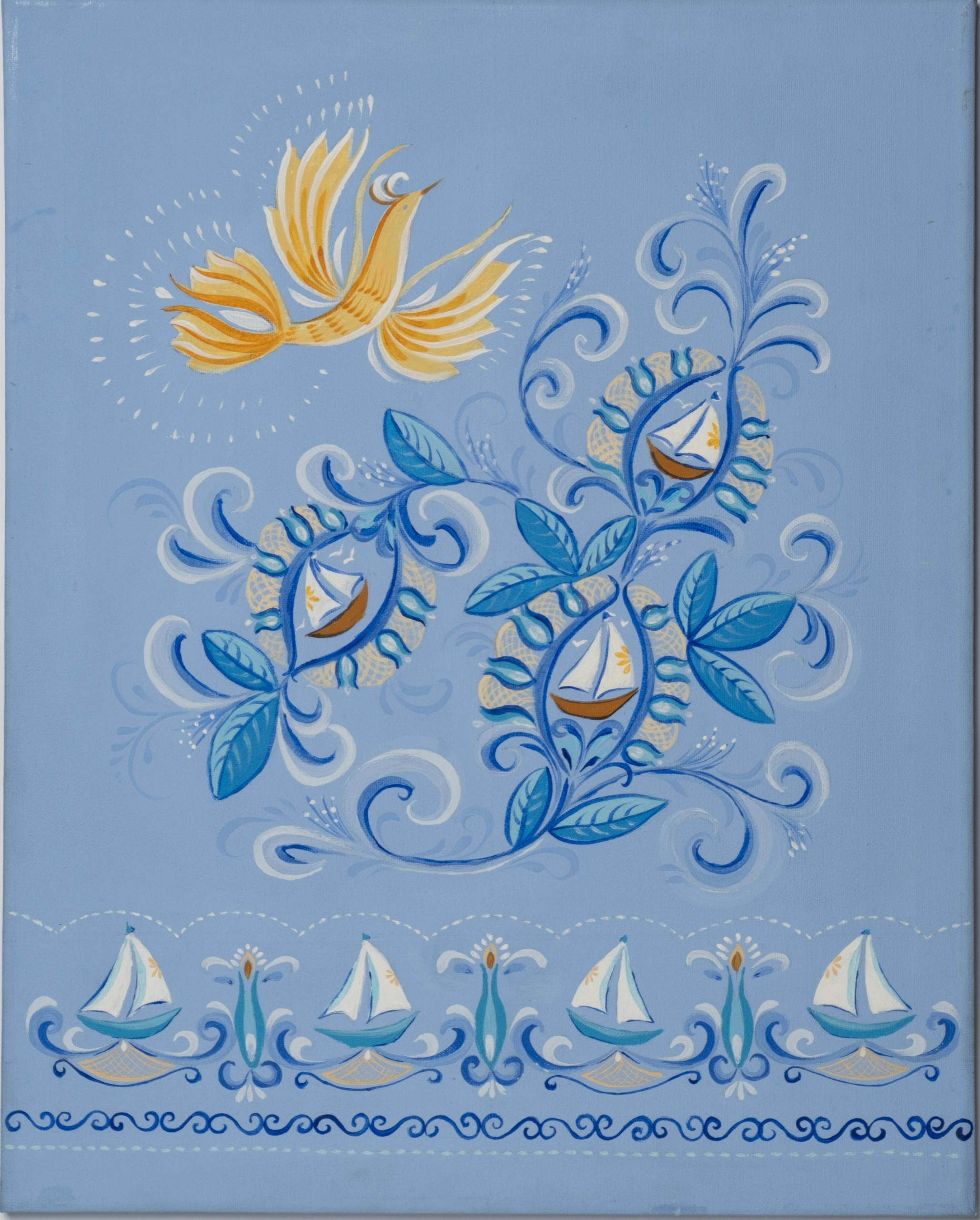
the Fiery Korovaika, who was once the Firebird and lived by the lake and the lighthouse, lighting the way for fishermen with the flame of her wings; she stands for rescue, the light of the lighthouse;
-
the slender Yellow Heron — a herald of happiness;
-
the graceful White Heron — a symbol of the nature of the boundless Tavrian steppes, an image of the phoenix that is continually reborn;
-
blue cranes with long bills — heralds of rain, the finest festival in Tavria;
-
the Sea Dove — a mother who guards her children;
-
the black-headed gull who saves the bread;
-
the magpie who first brings word of spring;
-
swallows that bring abundant and frequent rains;
-
white swans that protect from unclean thoughts and unclean forces.
And indeed swans were valued in a particular way. A pair of snow-white birds was often painted above doors and windows as a charm for the family against misfortune, dark thoughts and unclean forces. The constellation of the Swan also served as a landmark for fishermen and sailors and as a guide for the chumaks. It is held to be the most ancient charm of Tavria. Beside this, the constellation of the Most Holy Swan stands for purity of soul and conscience, for truth, goodness and warmth. It defends against what is evil and points the way to the Sun and to the Lyman.
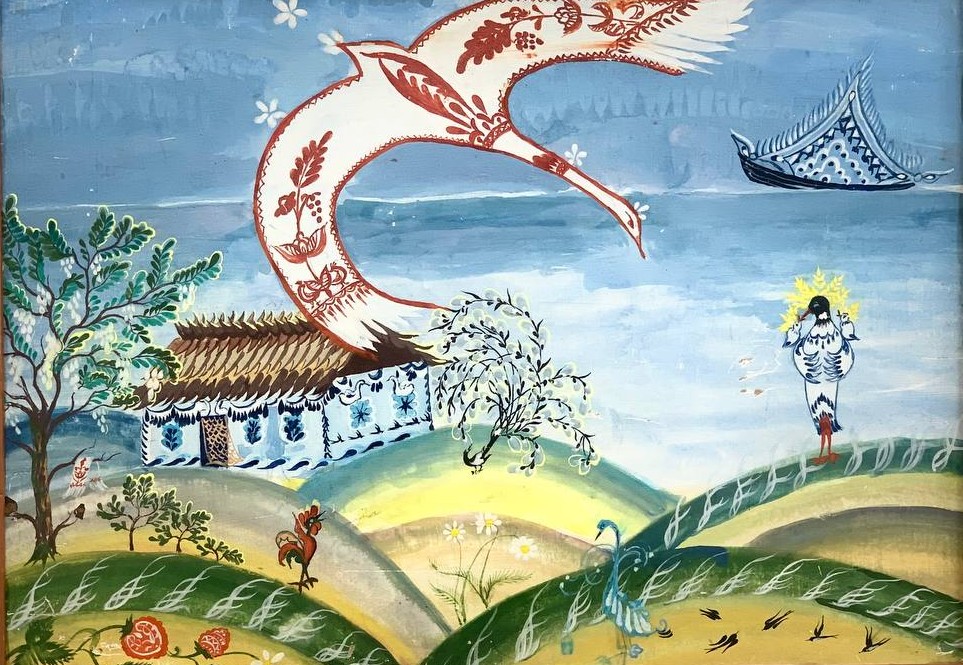
As for the animal world, one should note:
- horses — a symbol of friendship, endurance, a person’s fate, vital force and strength; they are good counsellors, reliable companions, drivers of the Sun across the sky;
- deer — associated with the sun, light, purity, nobility, renewal, rebirth, long life, prosperity, spirituality and fertility. Their antlers, which recall branches, are bound to the Tree of Life; they may also stand for the rays of the sun;
- cats — gentleness, calm, love, affection, the warmth of home.
Та все ж таки провідною в таврійському розписі є морська тематика. Отже, зупинимося на ній детальніше.
Insects must be mentioned too. Bees are a symbol of purity of soul, of spring, industry, cooperation, order, cleanliness and chastity; in love they speak of the sweetness of honey. The ladybird, or “sun-beetle,” is also about people’s love. She brings children and helps to find livestock that has strayed.
And yet the leading theme of Tavrian painting remains the sea. So we turn to it more closely.
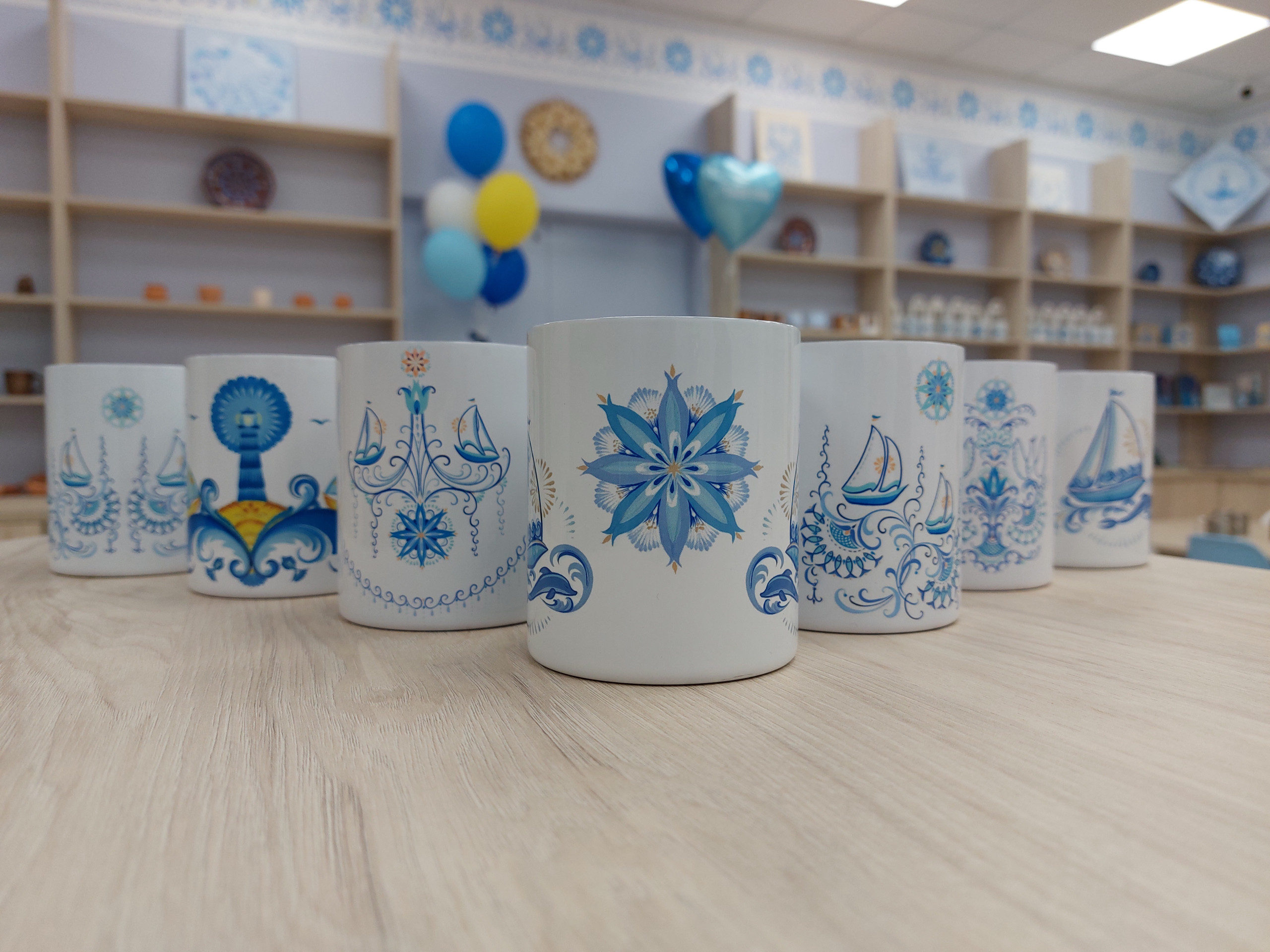
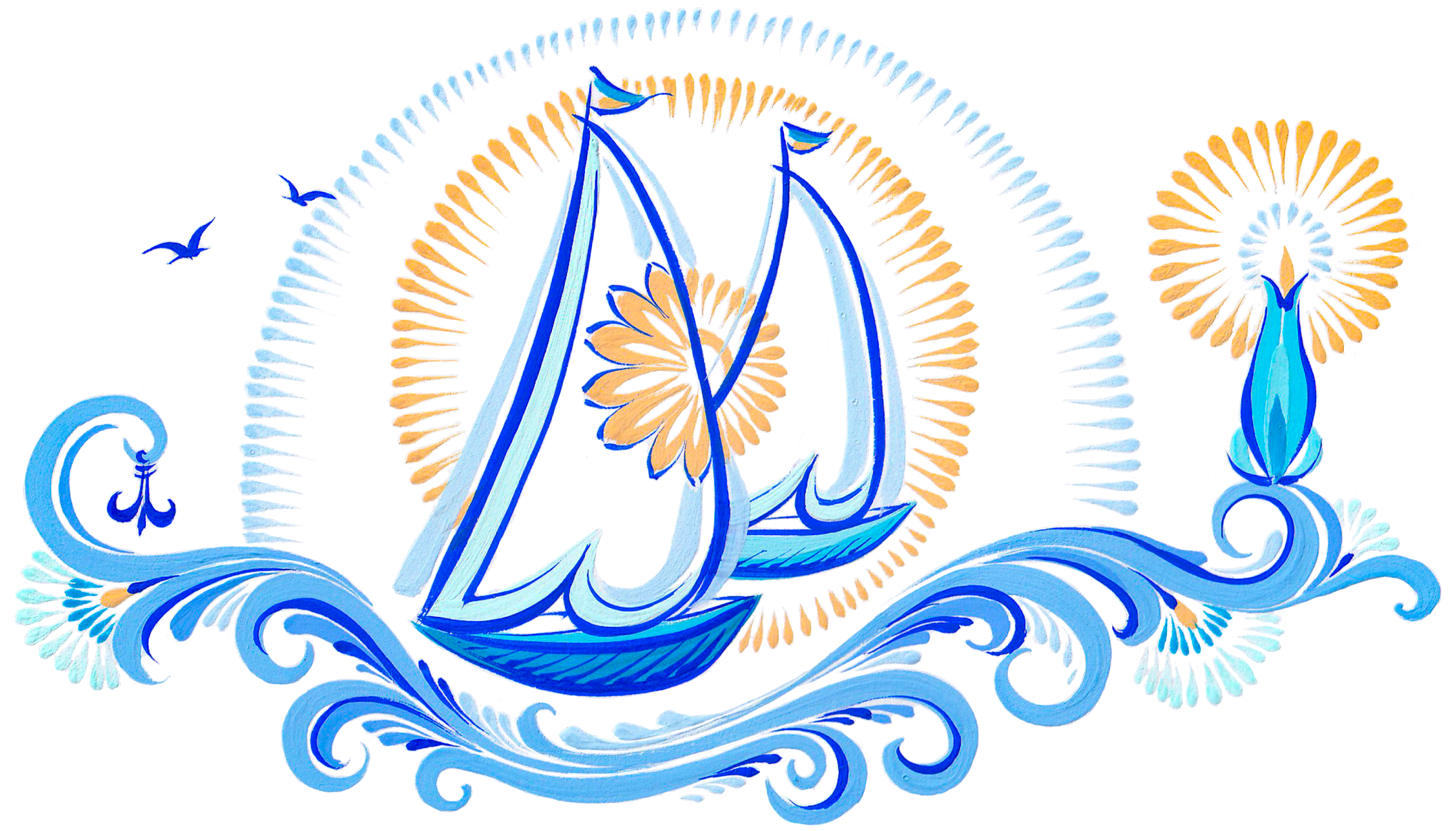
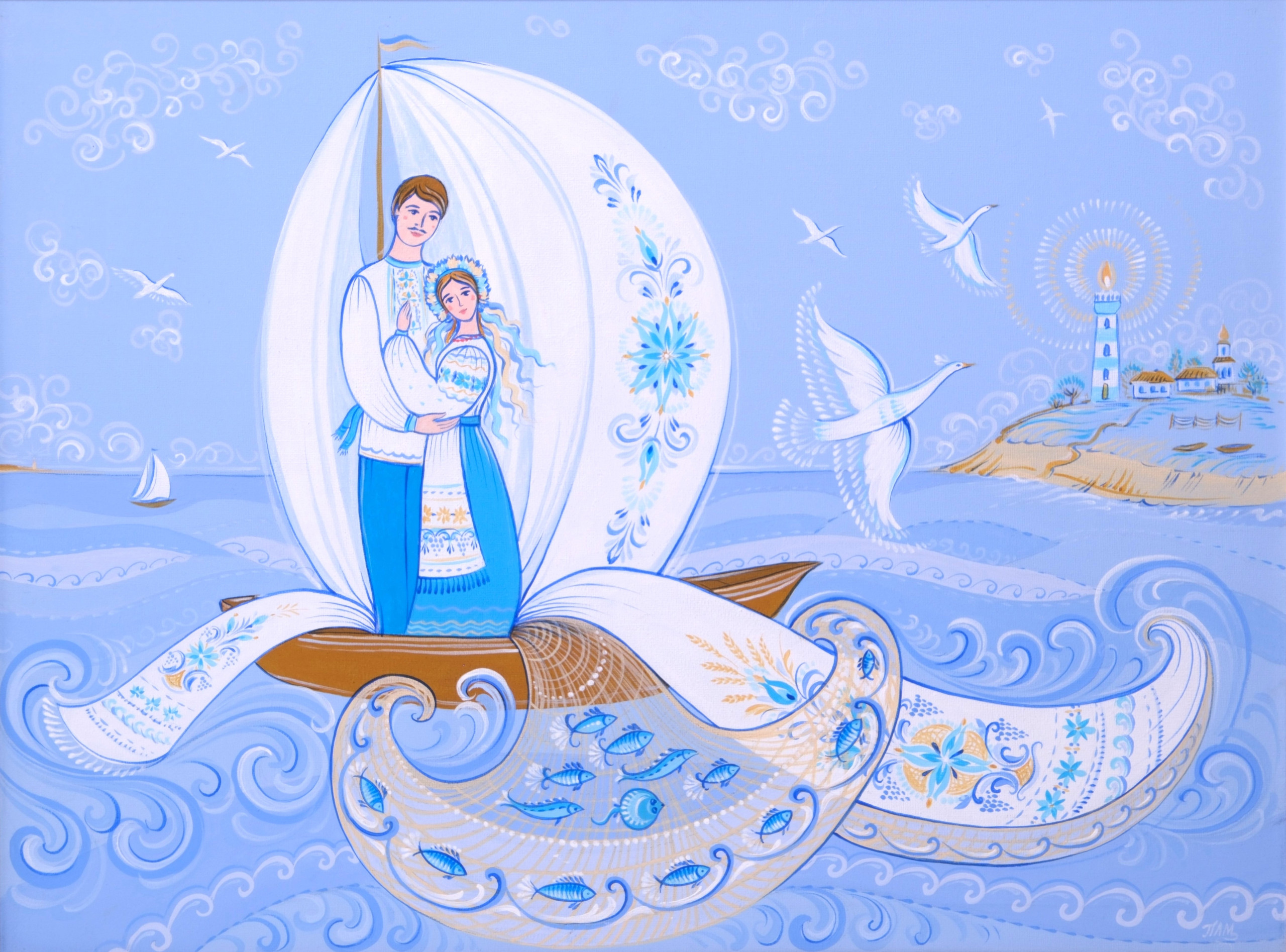
Sails have undergone many transformations in folk poetry and decorative painting — a symbol of the force of the sea. In the work of Yevhenia Bondarenko they continually change into new images. In the form of sails one may see women’s kerchiefs, birds’ wings, Cossack sharovary, flower petals, rushnyky and even women’s skirts.
In all, sails stand for dreams, hope, faith that wishes will come true, freedom, journeys, and sometimes love. They also speak of the search for something new, or of overcoming obstacles; of the greatness of the human spirit, which can turn a dream into reality.
A sailing boat is a symbol of movement toward a chosen goal. It is associated with courage and zest.
A boat is a vivid embodiment of strength and of the intention to go on along one’s own path, with faith in higher powers, with hope of a fair wind, with a certain trust in something greater than oneself, in life and in general. In Tavrian painting it is closely bound to the life of fishermen, and so stands for a reliable helper, a defender against storms and the troubles of life, a provider who can help bring the catch from the sea, and also the energy of nature needed to reach a goal. So it is no surprise that the ancient understanding of this symbol was bound to the movement of heavenly bodies — above all the Sun — and to the movement of the energy of life.
There is also a harmonious joining of the feminine and the masculine in the image of the boat, which stands for a bond with water through the hull and with the sky through the sails.
An anchor is a symbol of seafaring, of a vessel, of safety, hope and luck. It is associated with firmness, reliability and steadfastness.
The Great Water speaks of life, of life-giving forces, of movement, energy, cleansing and renewal. It is a source of strength and healing, an element of beauty, a symbol of balance and harmony.
For people who live on sea coasts, a wave is a symbol of freedom, energy and endless movement — movement forward, into the future. It is also felt as the cradle of all that lives.
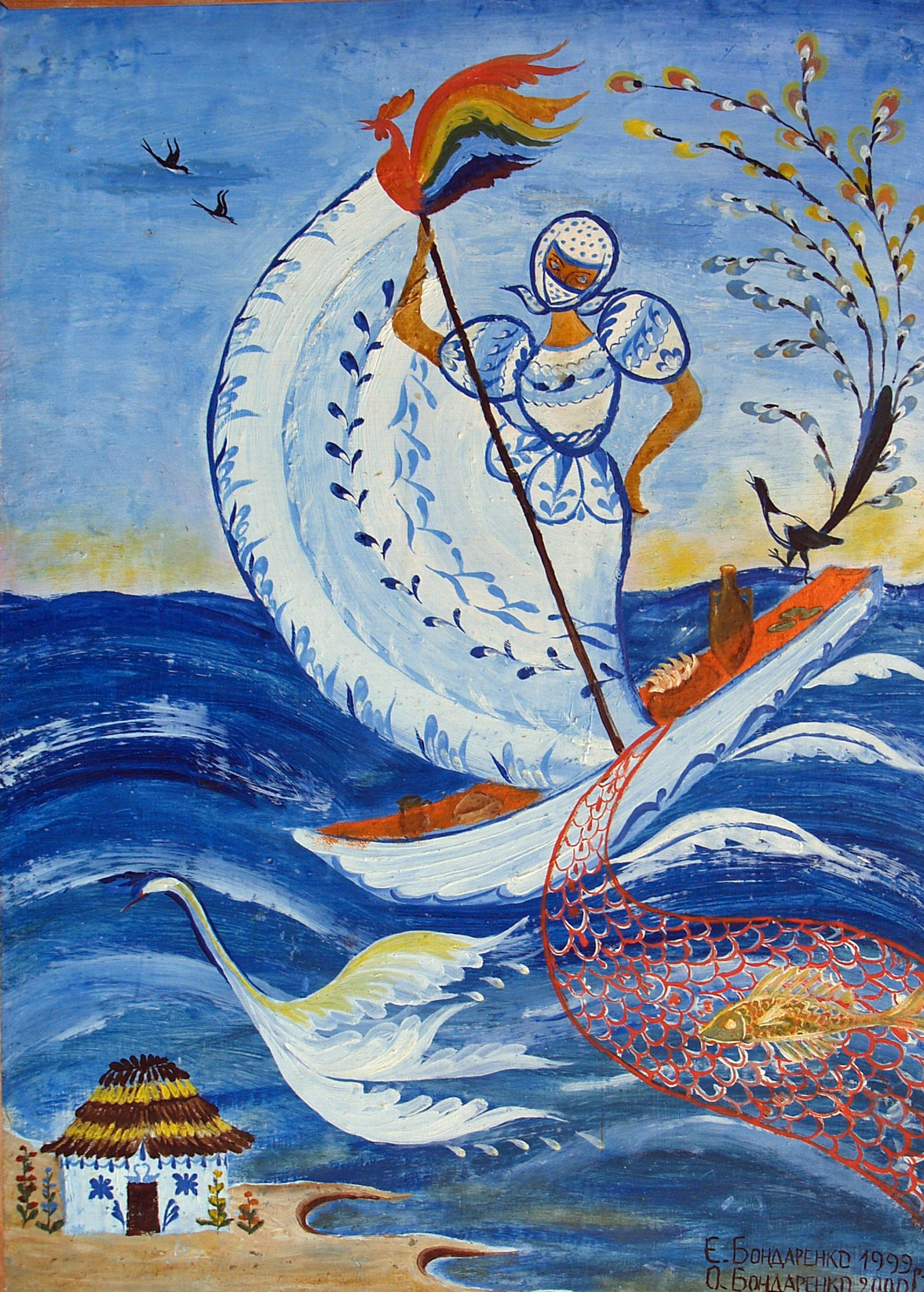
Anthropomorphic motifs in Tavrian painting are of interest as well. An elongated figure of a woman with a red flower in raised hands was a kind of prototype of a lighthouse, or of a Cossack signal tower with a fire that lit the fishermen’s way home. In folklore she is called Foremother-Berehynia, Berehynia with Light, Berehynia of Tavria. And in general, as Yevhenia Bondarenko affirmed, the image of Berehynia was quite widespread in the cultural traditions of the people of southern Ukraine, and in oral folk tradition it was used in several versions at once.
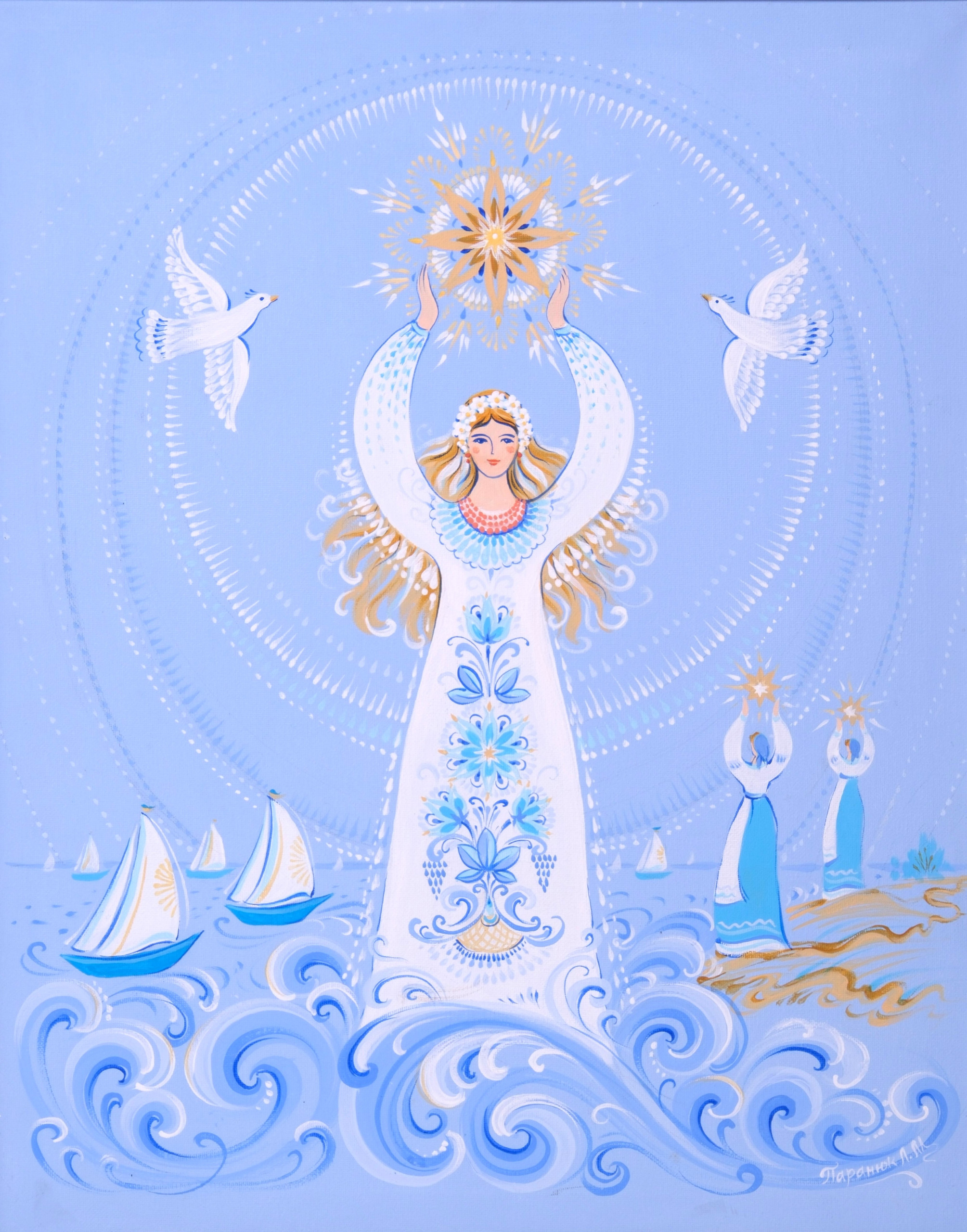
Her status changed according to what she held in her hands. If a maidenly figure held the orange bird Korovaika in hands raised high, she embodied Berehynia Mayakivna — a bright incarnation of all feminine virtues: kindness, fidelity, tenderness and more. She gave light and hope to seafarers who had lost all faith and no longer hoped for rescue.
Indeed, the beauty Mayakivna is the most enchanting image of coastal folklore. She is an obedient daughter, her father’s faithful helper in hard work. She is unswerving in love, quick-witted and brave, able to contend with storms and dark forces. Berehynia of the Vine is, it seems, by origin a great-great-great-granddaughter of the ancient Greek goddess Demeter, mother of the all-fruitful Steppe, whose images were already present in our land in the days of ancient Olbia.
The Red Berehynia has no analogue either. Her grapheme is bound to the architecture and colour of the unique Kysliakivskyi Lighthouse, which stands between the villages of Halytsynove and Lymany in the Mykolaiv Region.
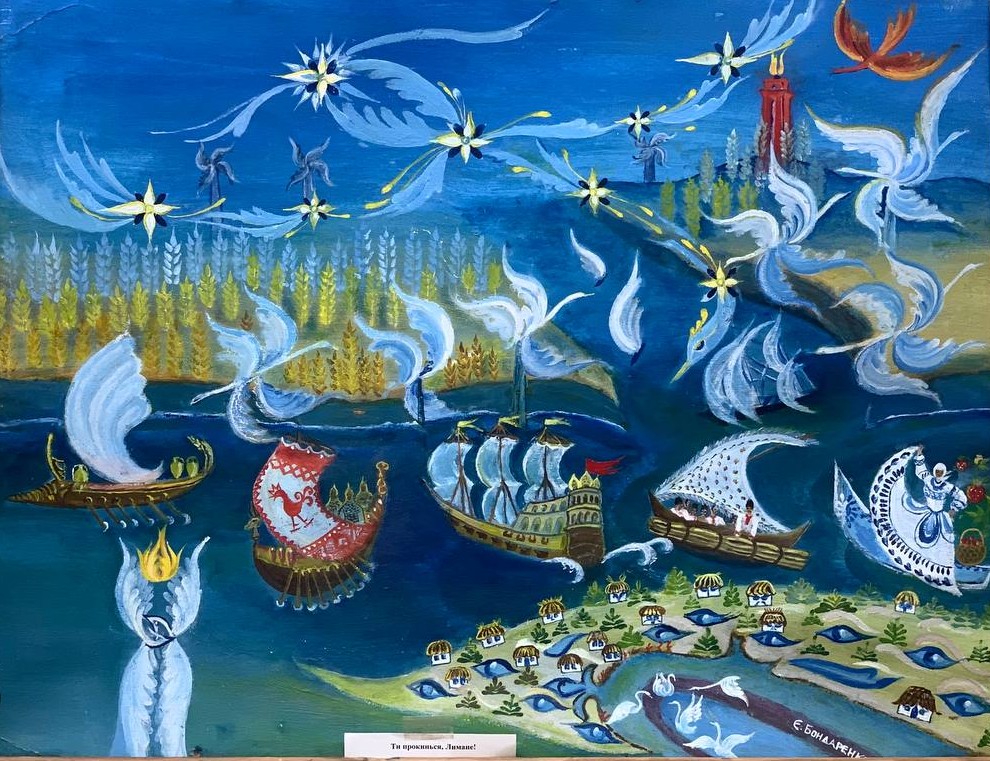
The lighthouse itself is rescue from danger and from oblivion. It is a charm of memory and of the soul, a symbol of hope and steadfastness, of choosing the right direction, of safety and reliability. It is also a guide that helps one pass through danger and lights the true road. It is associated with reaching a goal, with the fulfilment of a dream and with the end of a hard path.
Particular authenticity also belongs to the matula (the Tavrian fishing net), which in popular understanding is associated with fate — fate that binds several people into a family, a fisherman to the sea, a mother to a child, the earth to the water, and all who cannot think of life one without the other. She generously gives plenty, saving from want, and joins people and nature with her knots; so she is often associated with the Mother and the Provider.
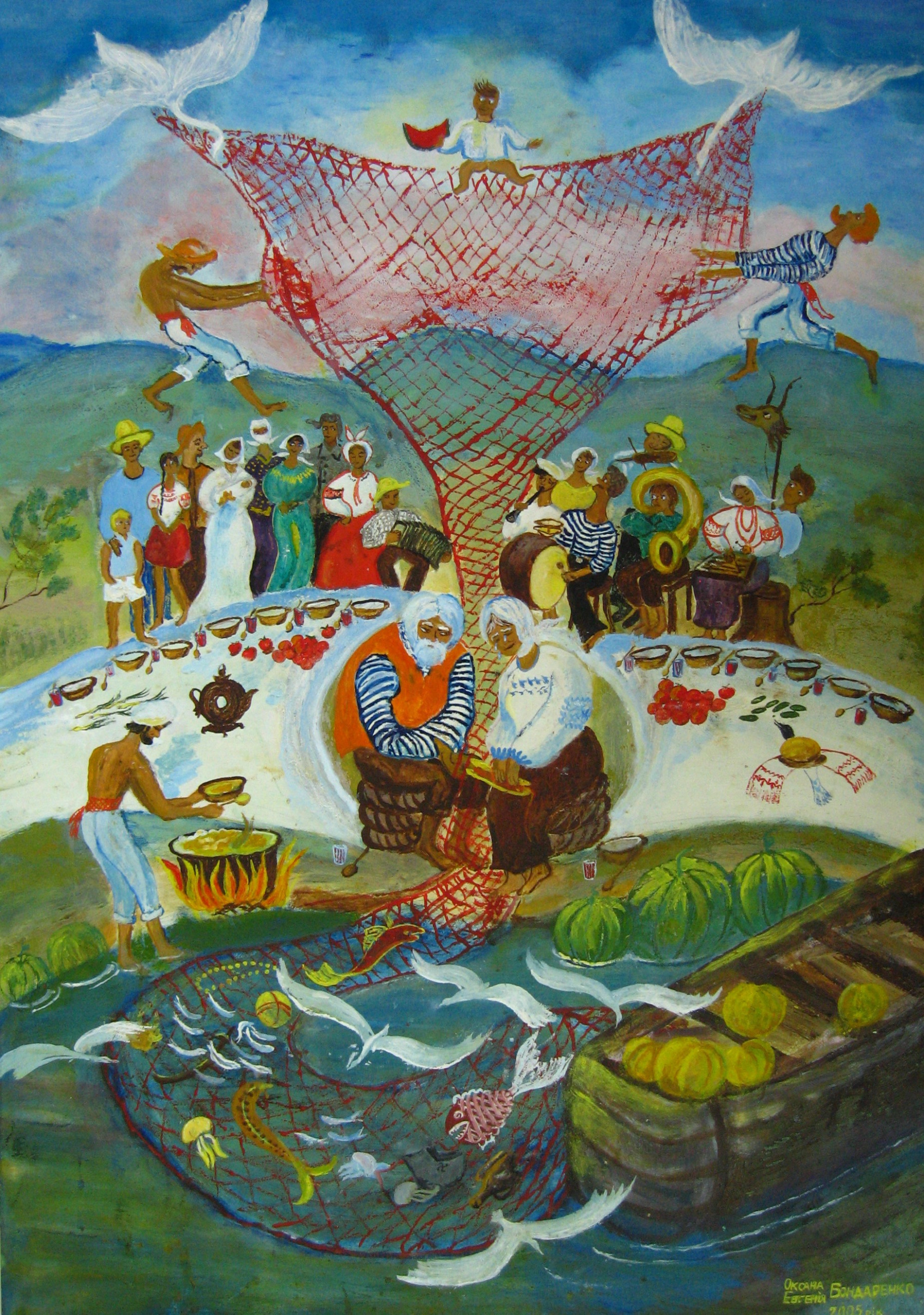
Bondarenko Ye., Bondarenko O. The Helmsman’s Matula. 2007
Stake nets on the water are faithful sentries of the fisherman’s good, watchmen and defenders of the fisherman’s bread.
Further symbols belonging to Tavrian painting alone include:
- Mother Acacia — the Tree of Life on Kinburn, for fruit trees took poorly on the sandy soils by salt waters. Yevhenia Bondarenko called her Berehynia of the Water, Berehynia of the very air, Berehynia of the Steppe, Berehynia of the House, defender and saviour;
- the Tavrian Mazalnytsia — a highly original image, and perhaps the chief one in the painted folklore of Tavria: the Foremother and living guardian.
A complex element created by Liubov Paraniuk deserves separate attention: the “rose of the winds.” At its base is Yevhenia Bondarenko’s description of the woman-berehynia, who is at once a symbol of the lighthouse and the guardian of the household hearth (the figure of a woman with hands raised, fire burning in them, showing sailors the way home). While studying Yevhenia Bondarenko’s work and analysing the painting itself for a future methodology of learning it, Liubov noticed that, besides the elements of “Tavryka” already drawn, there were others that Yevhenia Bondarenko also used often. One of them is the “hands of Berehynia,” which stand for lighthouses.
Inspired by this deep image, Liubov Paraniuk presents a new symbol which is, in essence, the “hands of Berehynia” holding fire and turned toward all sides of the world, so forming a “rose of the winds.” At the centre of the composition is a guiding star — a symbol of light, warmth and faith, pointing the true path. Under its radiance it gathers all who are dear.
The element is so deep and so fine that the master’s pupils have come to regard it as a kind of emblem of Tavrian painting.
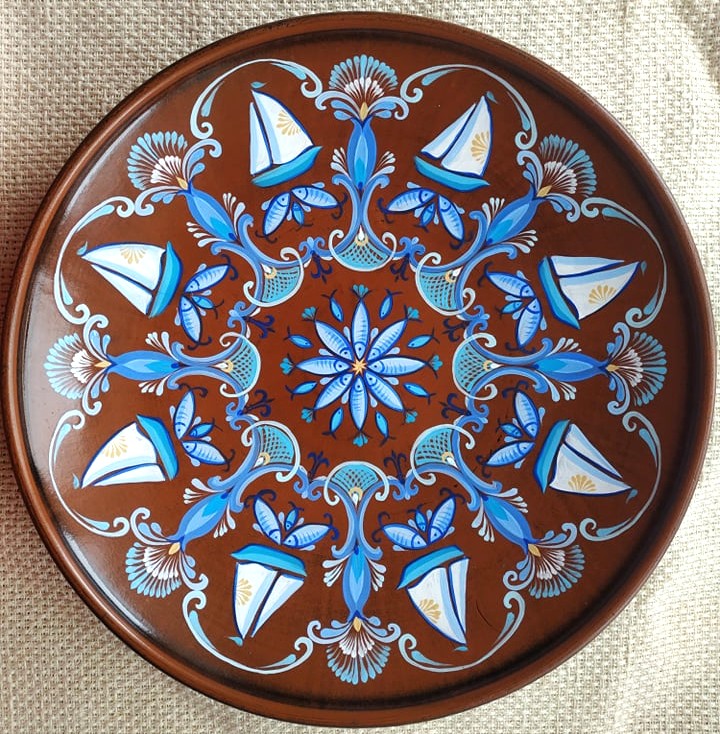
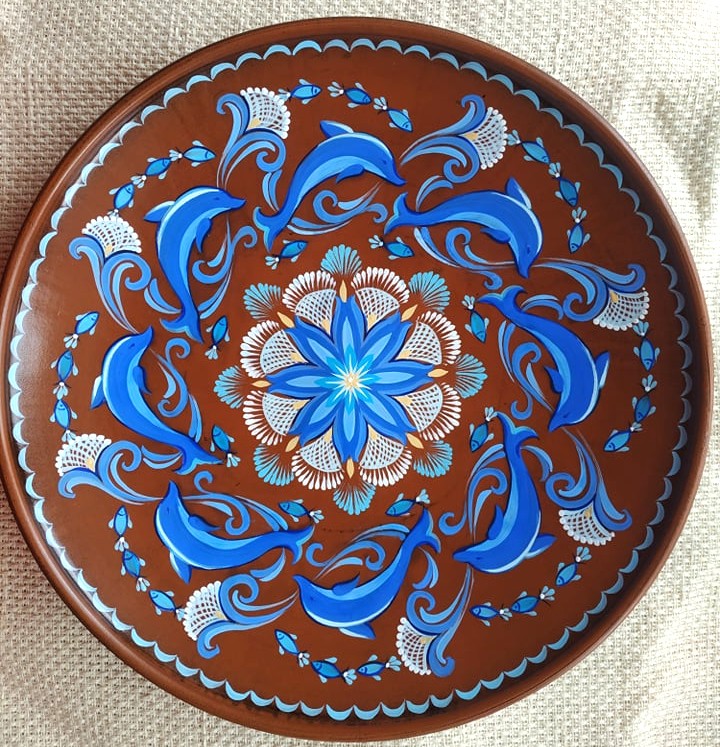
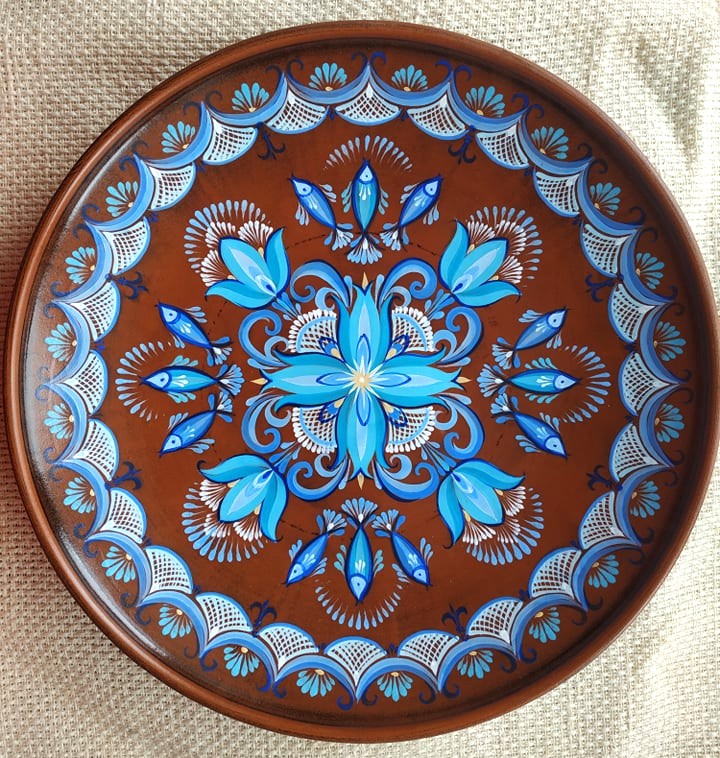
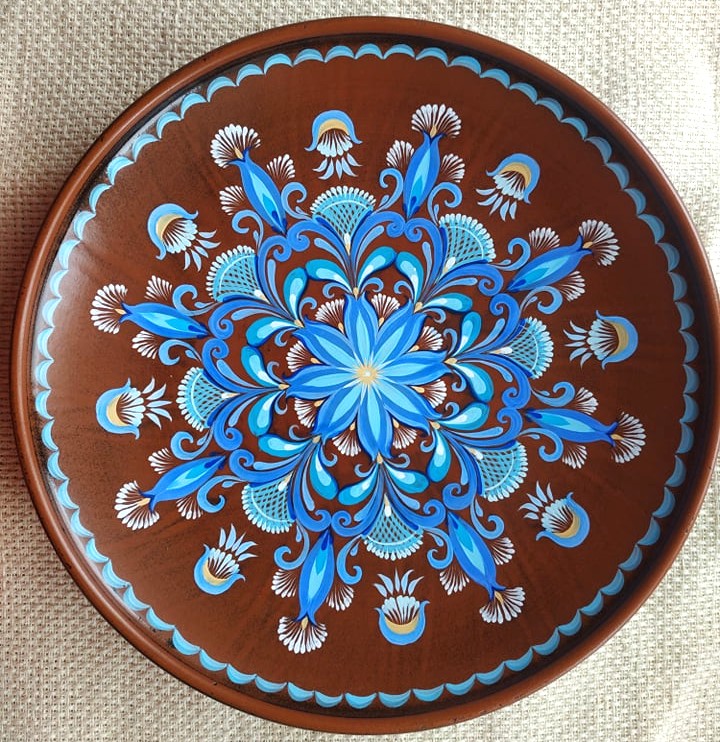
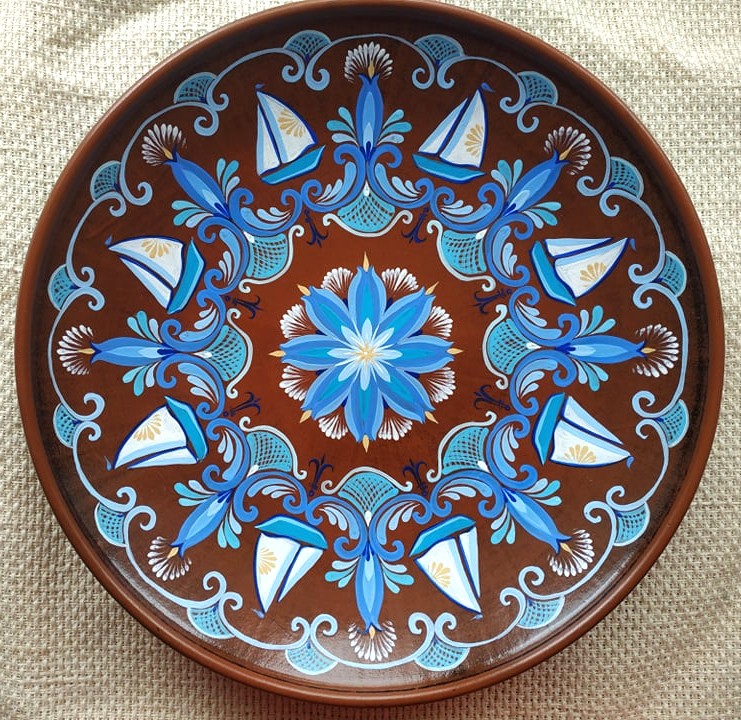
Liubov Paraniuk recalls when and how this symbol came to her. She was so taken aback that, afraid of forgetting it, she began to sketch there and then in a minibus.
It is worth saying that, for all the accepted symbolism of the images and for all Yevhenia Bondarenko’s own descriptions, the local people of Kinburn and the Ochakiv region looked at them quite simply and with great tenderness. For them this was a picture of everything they loved, of everything that surrounded them. Even so complex an image as the Berehynias was, for them, the image of an ordinary woman — first of all the guardian of the household hearth, of her family and of the remarkable nature around her. They were not afraid of any work of the house; they sat bravely in a boat and fished alone when the men were long in returning from the sea; and in hard times of storm they went out onto the highest hills, lit a fire and became true living lighthouses for those they loved. Sometimes they even threw themselves into the dark of the water and saved people.
During the full-scale war the image of the lighthouse has been transformed still more strongly. Now it embodies all the women of the country, and each of them in particular. It is about mothers, wives, daughters, sisters, beloved ones… about all who wait and hold the rear, guarding the house, the family, the kin. For they are all guardians of the household hearth, who know how to wait — thanks to everything, and in spite of everything.
We also give the meanings of more general and widely shared images:
- grain — a symbol of wealth, plenty, happiness;
- ears of grain — life, fertility, plenty, and also spiritual growth and renewal;
- flowers — eternal blossoming, undying beauty;
- birds — mediators between the sky and people, heralds of spring, friends, family;
- fish and sea creatures — health, longevity, movement, plenty, wealth, fertility, harmony, calm.
More particularly, of the sea creatures most often shown in Tavrian painting:
- the crab is a symbol of wisdom, steadfastness and hidden strength, of calm and balance beneath the surface of the water, of protection from outer troubles and dangers. It may also stand for persistence, for it does not give up before obstacles and moves stubbornly toward its goal; for success, prosperity and endurance;
- the turtle — longevity, a standing order, balance, stability and renewal, success and support;
- the dolphin — a symbol of the sea, of sea force and of the element, of freedom (will), joy, safety and speed, of love, delight, rescue and nobility;
- the jellyfish — calm and movement at once; refinement, harmony, strength and beauty, and also steadfastness and transformation;
- the seahorse — purpose and good nature, a positive attitude to life and to people; a symbol of attentiveness and observation, of honesty and fidelity in friendship.
Summing up the work of Yevhenia Bondarenko, Liubov Paraniuk and the teachers Olena Borozdina and Aryna Yakovleva, one may distinguish the following thematic groups of the painting:
- natural phenomena and the elements;
- objects of the working life of coastal settlements;
- floral compositions;
- animal symbolism;
- images from oral folk tradition.
Of course Tavrian painting still holds many interesting themes, symbols and hidden charms. But the images already “decoded” speak of the extraordinary depth and complexity of things that seem simple; of an all-embracing love of the native land; of the kindness of heart of the people of a southern country bound from of old to the sea and to the rivers.