Teaching Methodology
Foundations of Composition
Composition is one of the main steps toward understanding every kind of painting, including Tavrian. “Letters” gather into “words” — but what will those words convey, into what text will they enter, and in what place will they stand? Whether this will be a note on a refrigerator or a poem in verse depends on the composition and on the one who “assembles” it.
Quite often, for example, one may see a fine command of technique, so-called “perfect strokes,” but an inability to convey a theme or to fill it with meaning substantially lessens the work. A successful composition and a well-chosen colour range, on the contrary, enchant, and they matter greatly for how an image is received — in the aesthetic sense and in the sense of idea.
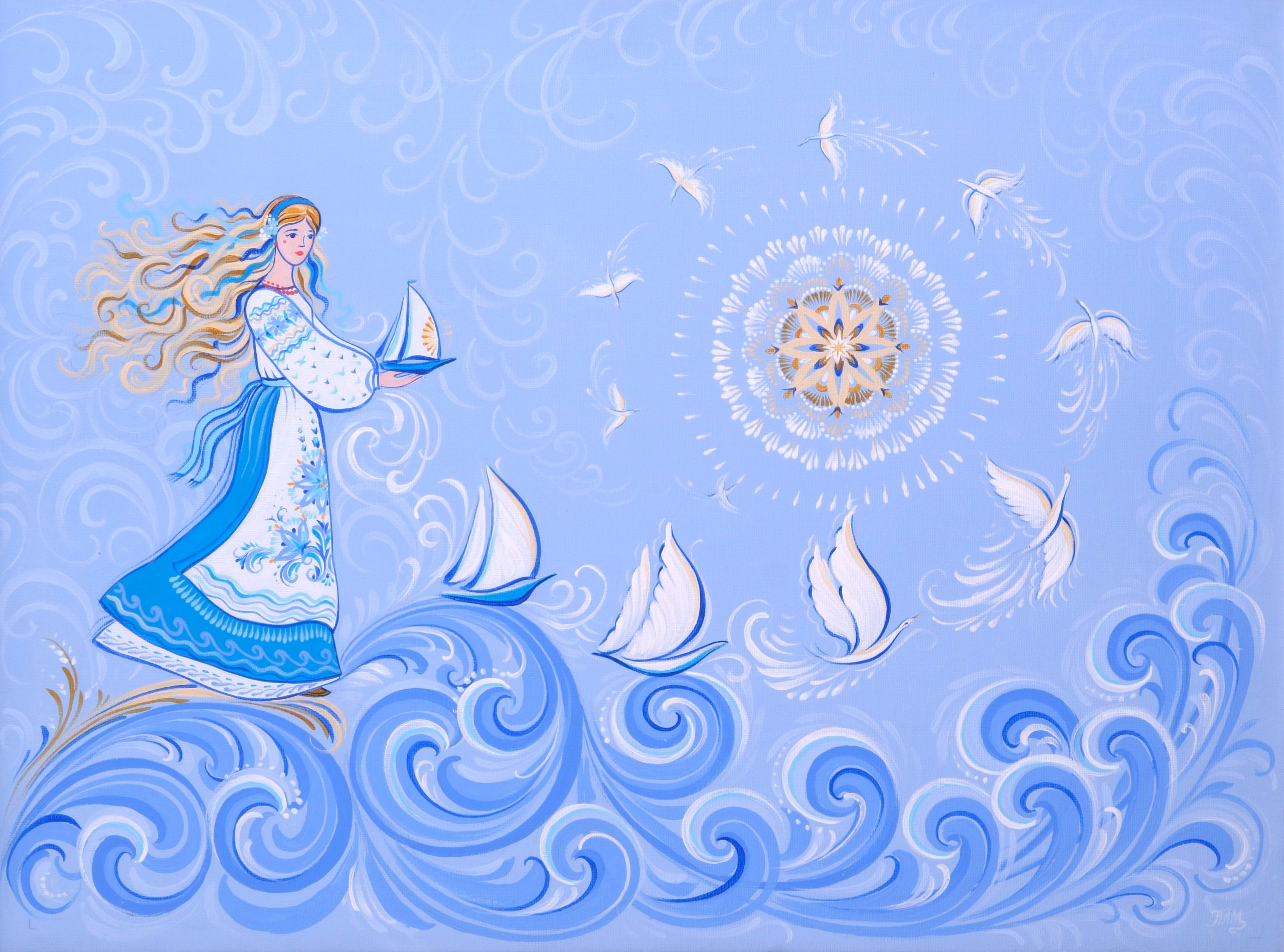
According to the observations of Yevhenia Bondarenko, decorative wall painting in the Mykolaiv Region has compositional features of its own. In the folk wall “pictures” a clear expanse of sky, sea or steppe predominates. The Tavrian master did not pack it tight, did not overload it with decorative detail, giving the viewer a chance to dwell on the main subject. One could also discern the dynamism of the pictures. The flight of birds, the movement of waves, the play of wind with water or with plants — all this made the work dynamic, alive.
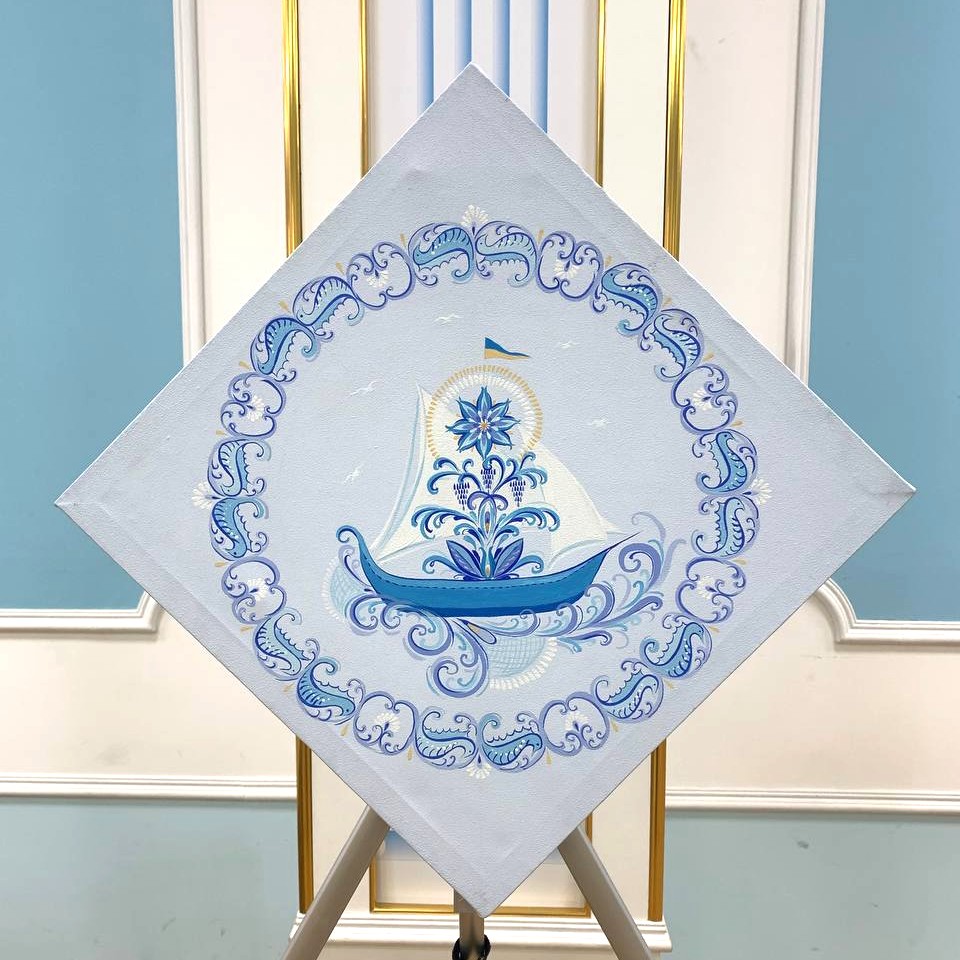
Decorative compositions of Southern Ukraine are also marked by a centripetal placing of Trees of Life, flower vases and the like.
As for ornamental motifs, they were mainly ribbon-like, shown as horizontal and vertical bands. Sometimes the motifs were arranged in closed compositions of a circle or a rectangle, depending on what was being decorated: walls or objects of everyday use.
In all, the compositions are not overloaded. It is important not to lose, in the work, a sense of lightness and airiness, for this is one of the chief traits of the painting.