Technique of the Painting
Technique of the Painting. Tools and Materials
In Ukraine, decorative painting was used mainly on wooden household objects and on ceramics. On such surfaces the painting survived better, which made it easier to study and to master. Wall painting did not exist in every region. It has been less well preserved: it constantly needed renewal and competed with new materials and techniques of wall decoration, which in time almost entirely displaced it. So such painting is hard to study.
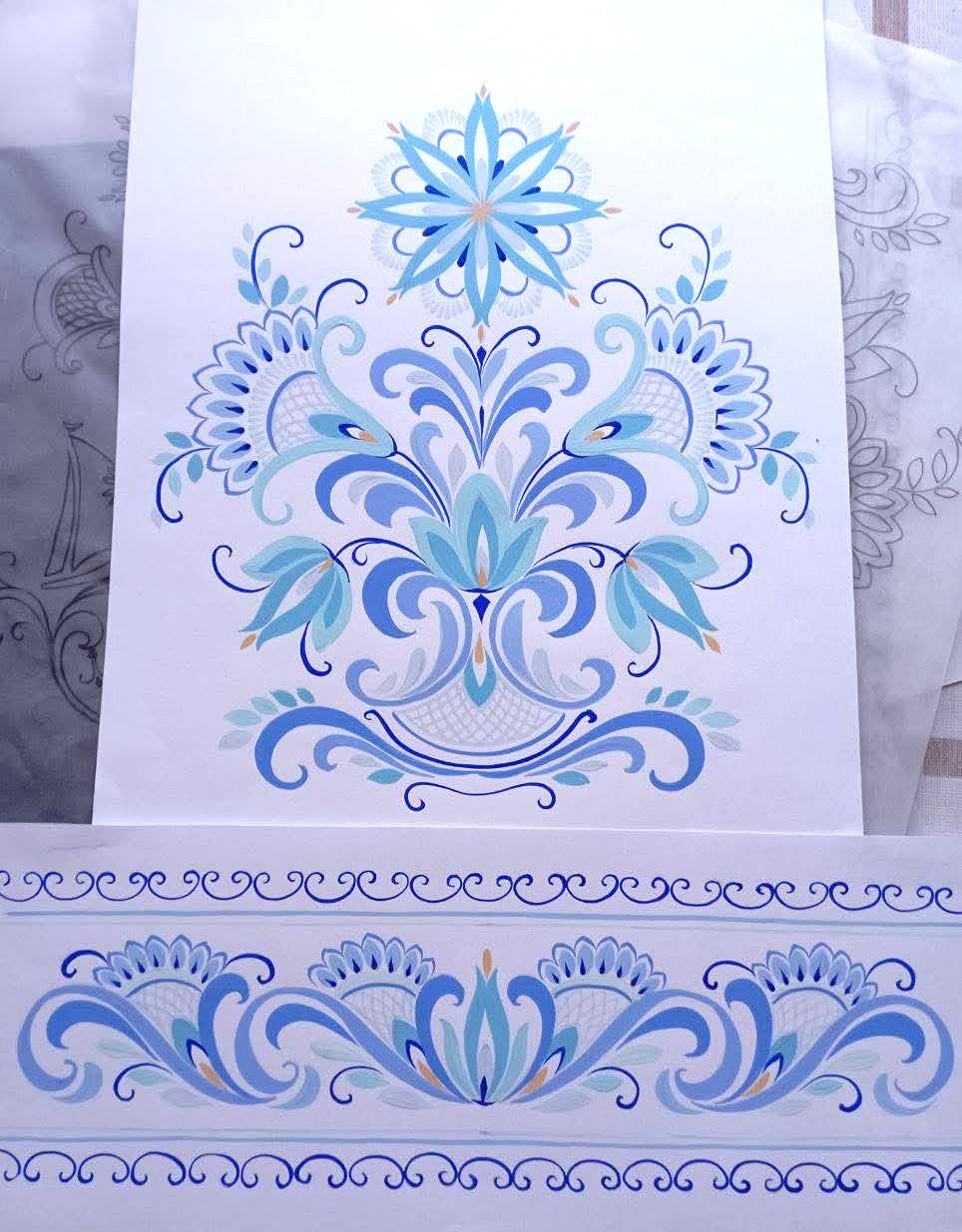
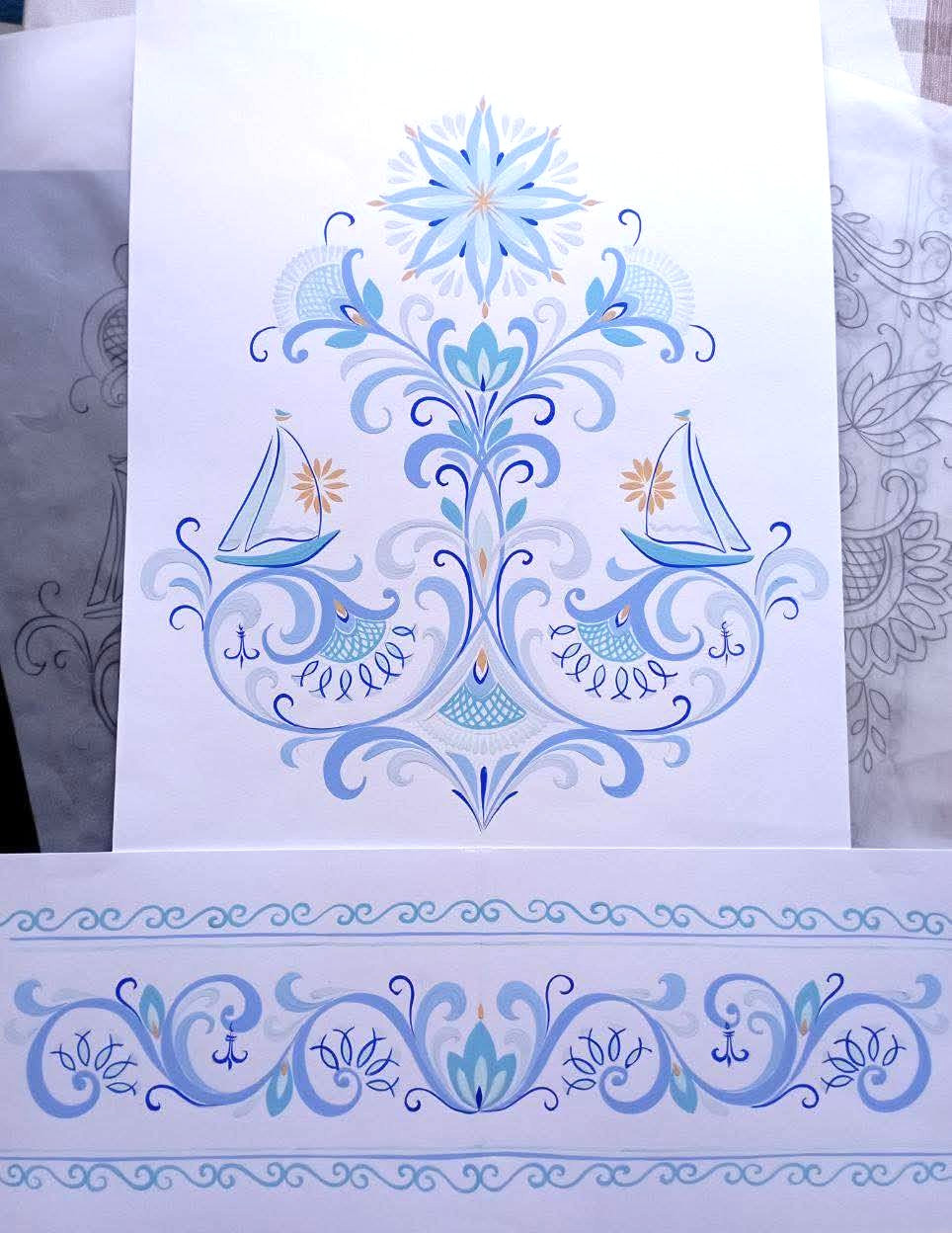
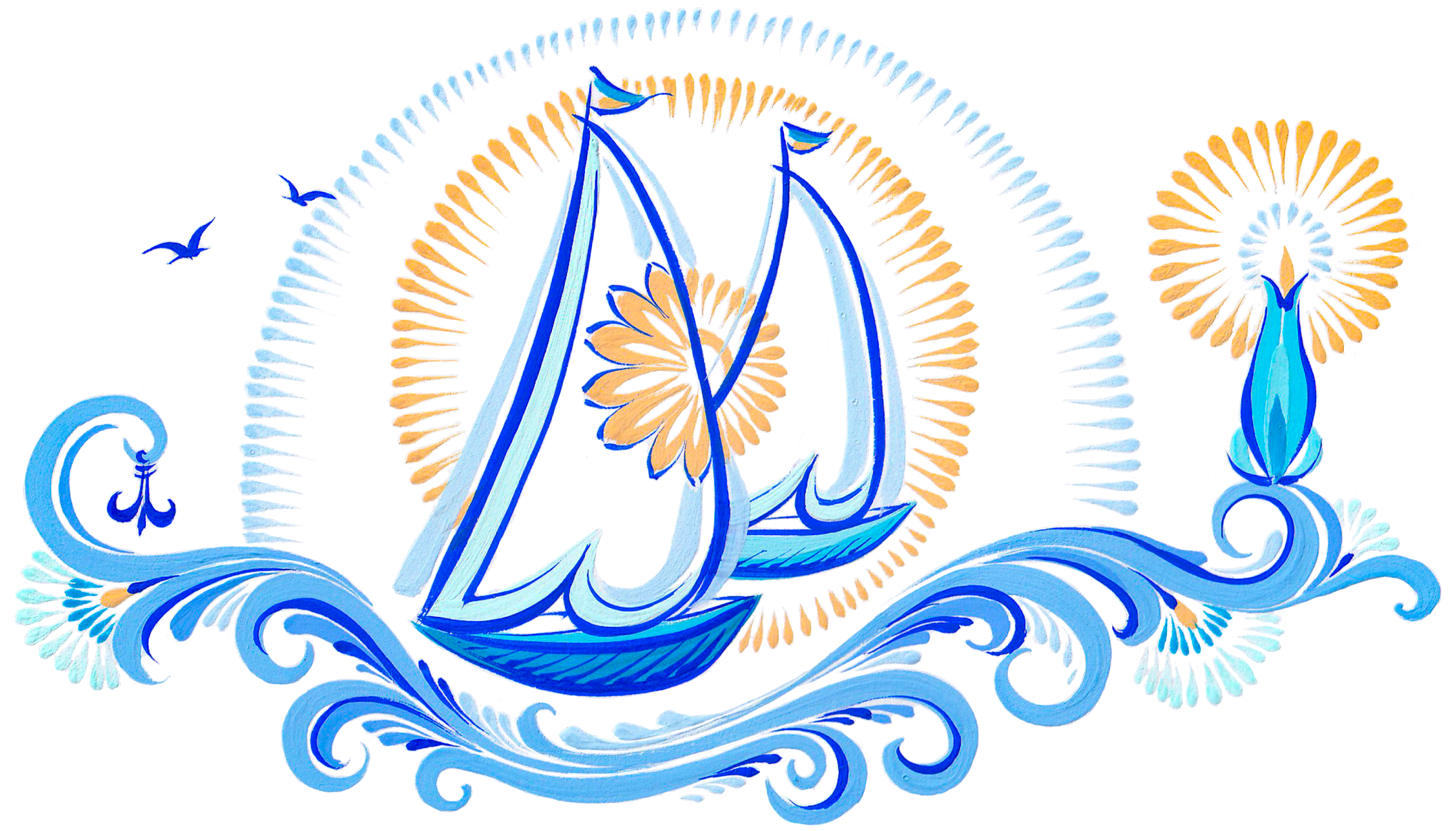
Decorative painting may be divided, broadly, into graphic kinds, in which the contour is principal and colour is “filled in” within it (Kosiv, Opishnia and Samchyky painting belong here, for example), and kinds in which the stroke — the mark of the brush — plays the main part (Petrykivka, Poltava, Slobozhan). Sometimes the stroke is made with a finger, a reed or a quill. Depending on the master’s idea, a stroke may become a bird’s wing, a sail, a leaf and so on. There are also paintings that use both ways of laying an image on a surface. The sequence of work is this: large planes are outlined, “filled” with colour, and only then is a fine “overdrawing” added in strokes. These are mixed techniques. To them belong Mykolaivka painting (Dnipropetrovsk region), Yavoriv painting and Podillia painting.
By its technique, Tavrian painting may be placed, broadly, in the second type, because most elements are made with brushstrokes. At the same time, in narrative compositions a colour fill is sometimes used for a separate plane — in figures of people, houses and boats with sails. Over the fill, in most cases, a fine brush “overdrawing” is added: contours, small elements and ornaments are emphasised.
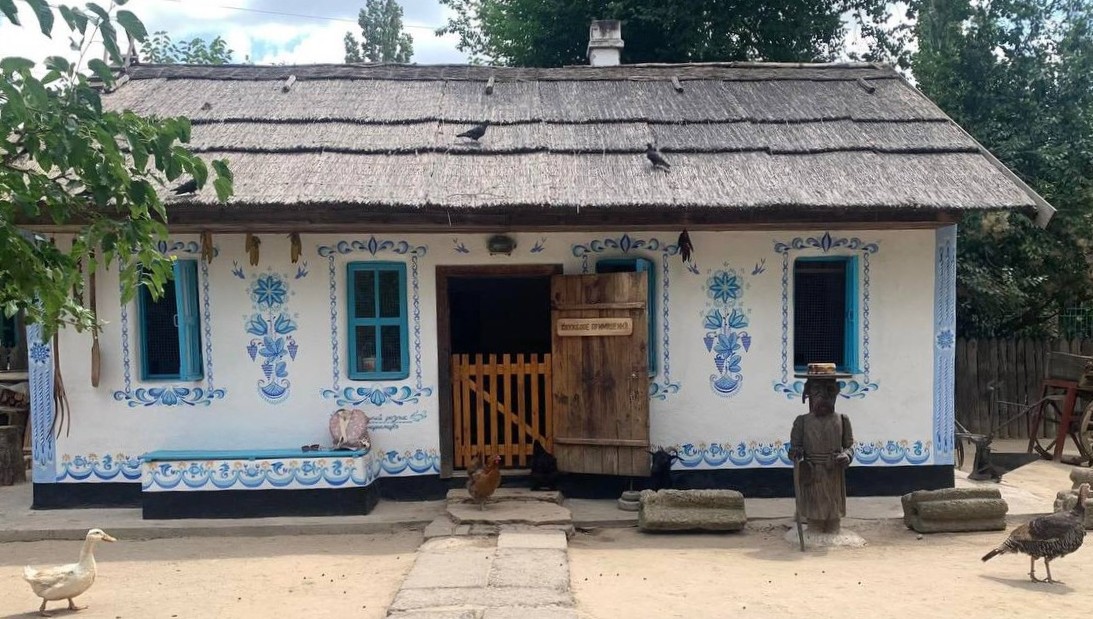
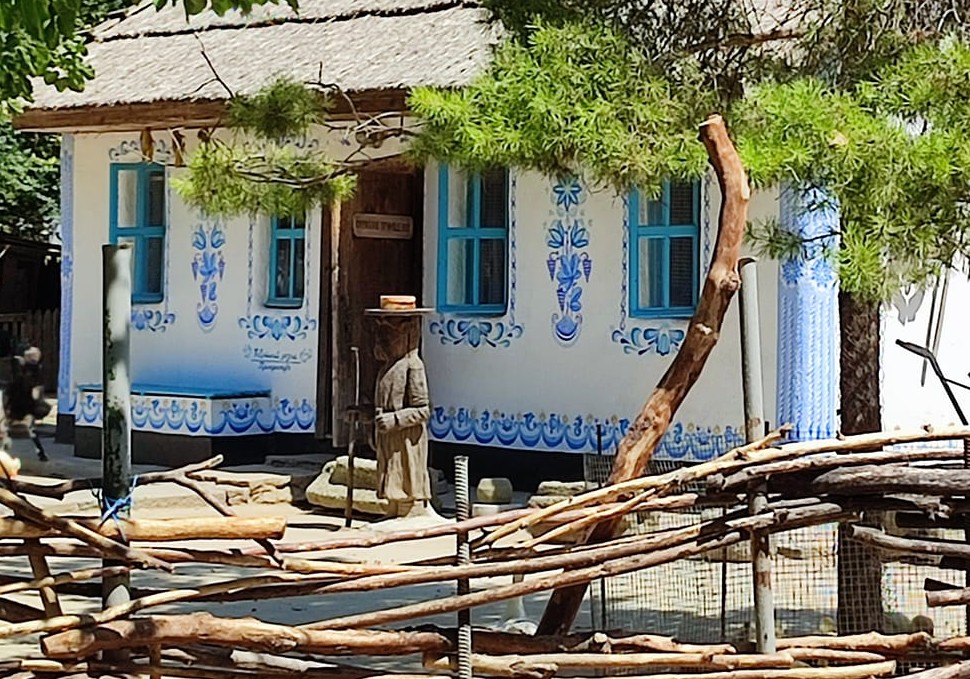
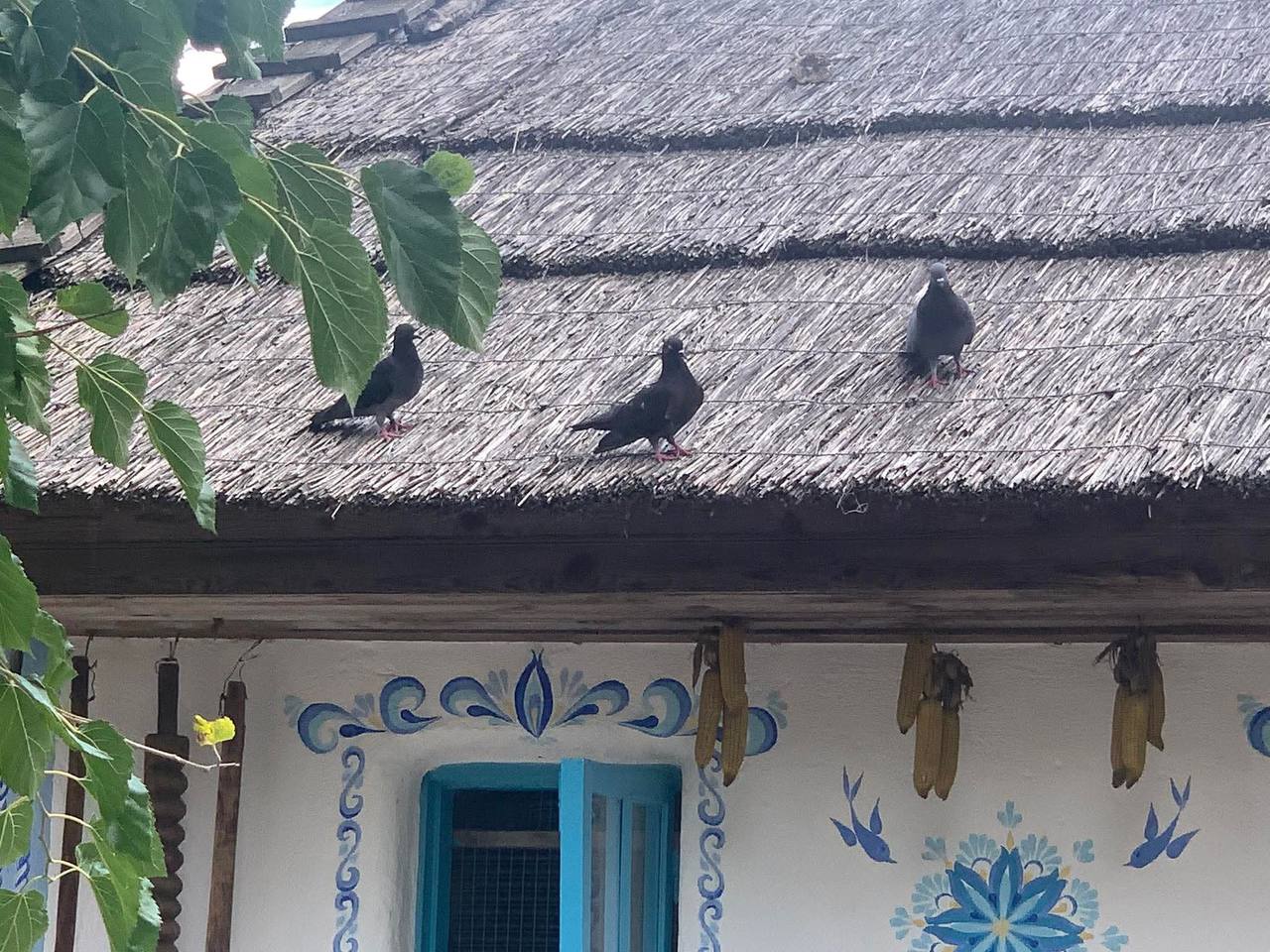
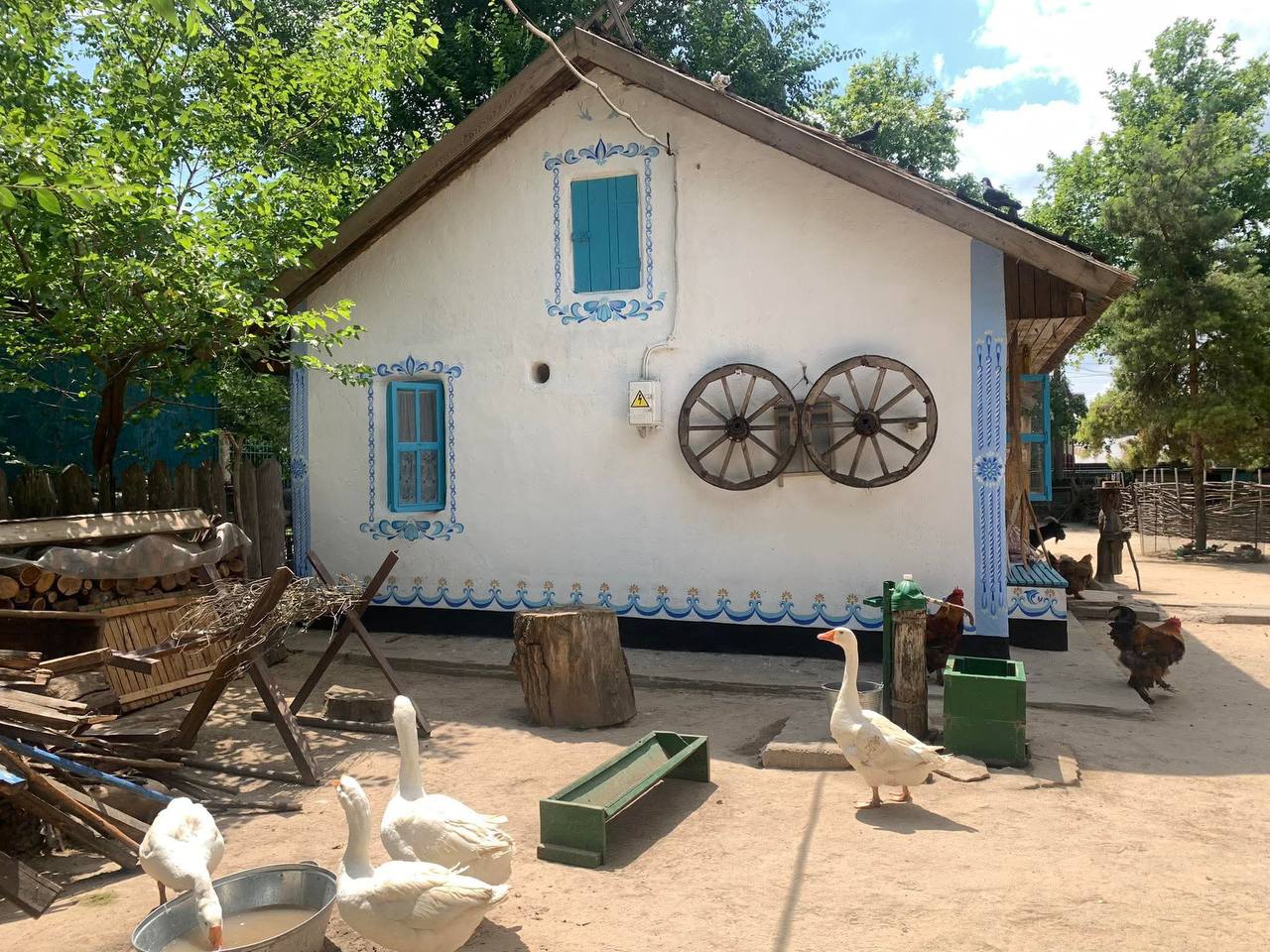
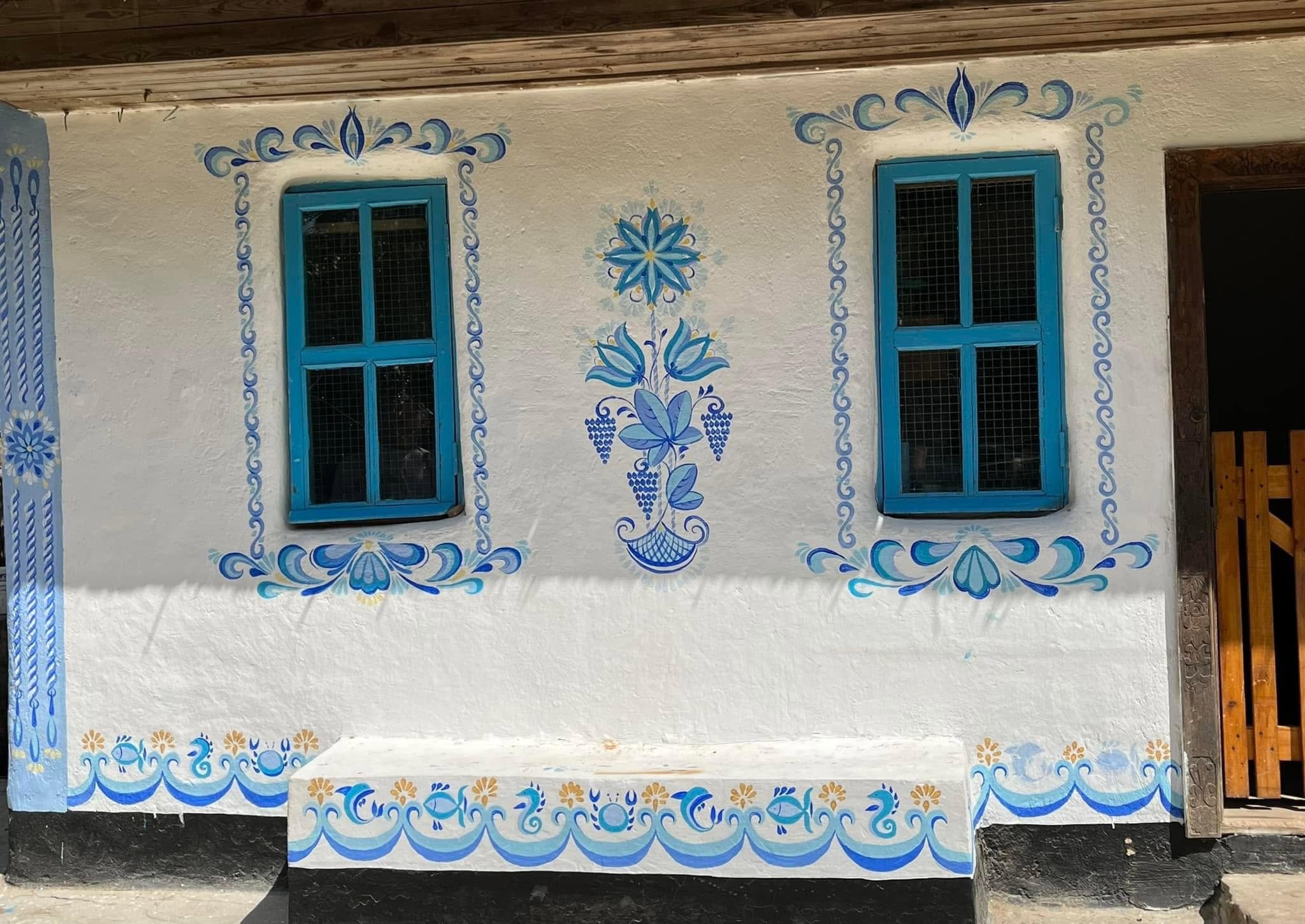
Ethno-location “Grandfather’s House” at the Mykolaiv Zoo
In earlier times the tools for Tavrian painting were quite simple. They were ordinary brushes for household and repair work; plain vikhtyky — bundles of cloth, straw, grasses and the like, with which houses were smeared; and, for small or modest details, “cat-hair” brushes and feathers. Some elements were made with the fingers or the palms.
Yevhenia Bondarenko used a transitional stroke in places in her work. Liubov Paraniuk deliberately gave it up. The master says: “The transitional stroke is a feature of Petrykivka painting. It adds a painterly quality and helps to convey volume and the play of light. But the same effect can be reached through tonal relations of one colour or of several colours set side by side. Then the elements look lighter, more transparent and more graphic than painterly. I do not see this as a shortcoming. On the contrary: it widens the possibilities of using the elements of Tavrian painting not only in painting itself, but in other techniques — embroidery, printed cloth, appliqué and so on…”
The painting may be done on many surfaces, from a whitewashed wall to metal and glass. Everything depends on the character of the place, on the materials to hand, and on related crafts such as woodwork or ceramics. The main thing is not to forget that the basic elements of Tavrian painting are the fundamental strokes from which all other images are built. When “Tavryka” is carried onto other surfaces and other techniques and materials are used, it is important to keep the living plasticity of the brushstroke, and not to turn the elements into contour images with a fill, as in graphic painting.
A fine example of the passage of the painting’s elements into another technique is the phenomenon of the Mykolaiv vyshyvanka based on motifs of Tavrian painting. In order to keep the plasticity and dynamism of the stroke in embroidery, the masters use satin stitch, which best preserves and conveys the character of the painting. It is clear that the painting cannot be rendered in embroidery in full, so the sketches are adapted to embroidery stitches while the main features are kept: the colour range, the principal elements, the symbolism and the compositional structure.
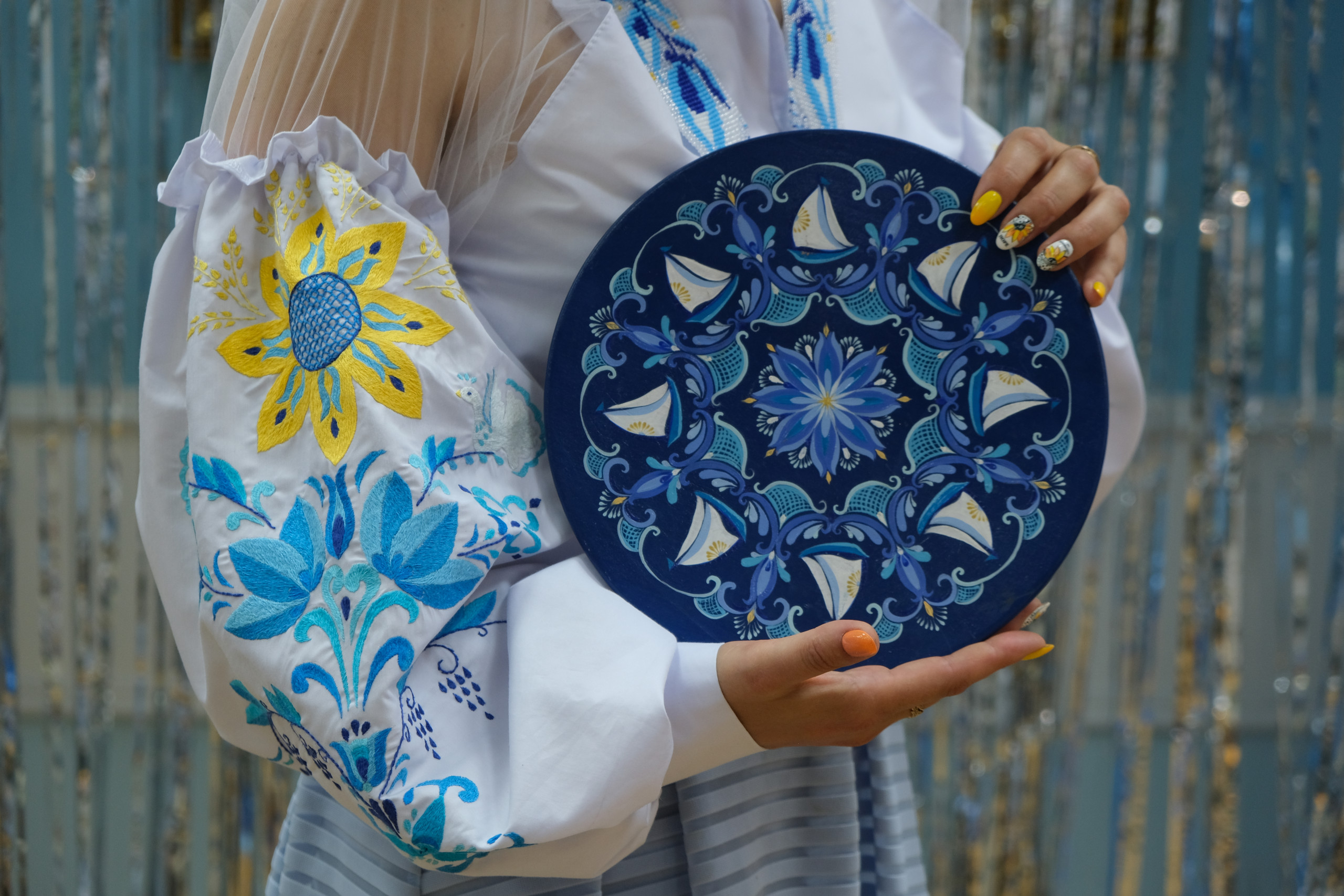
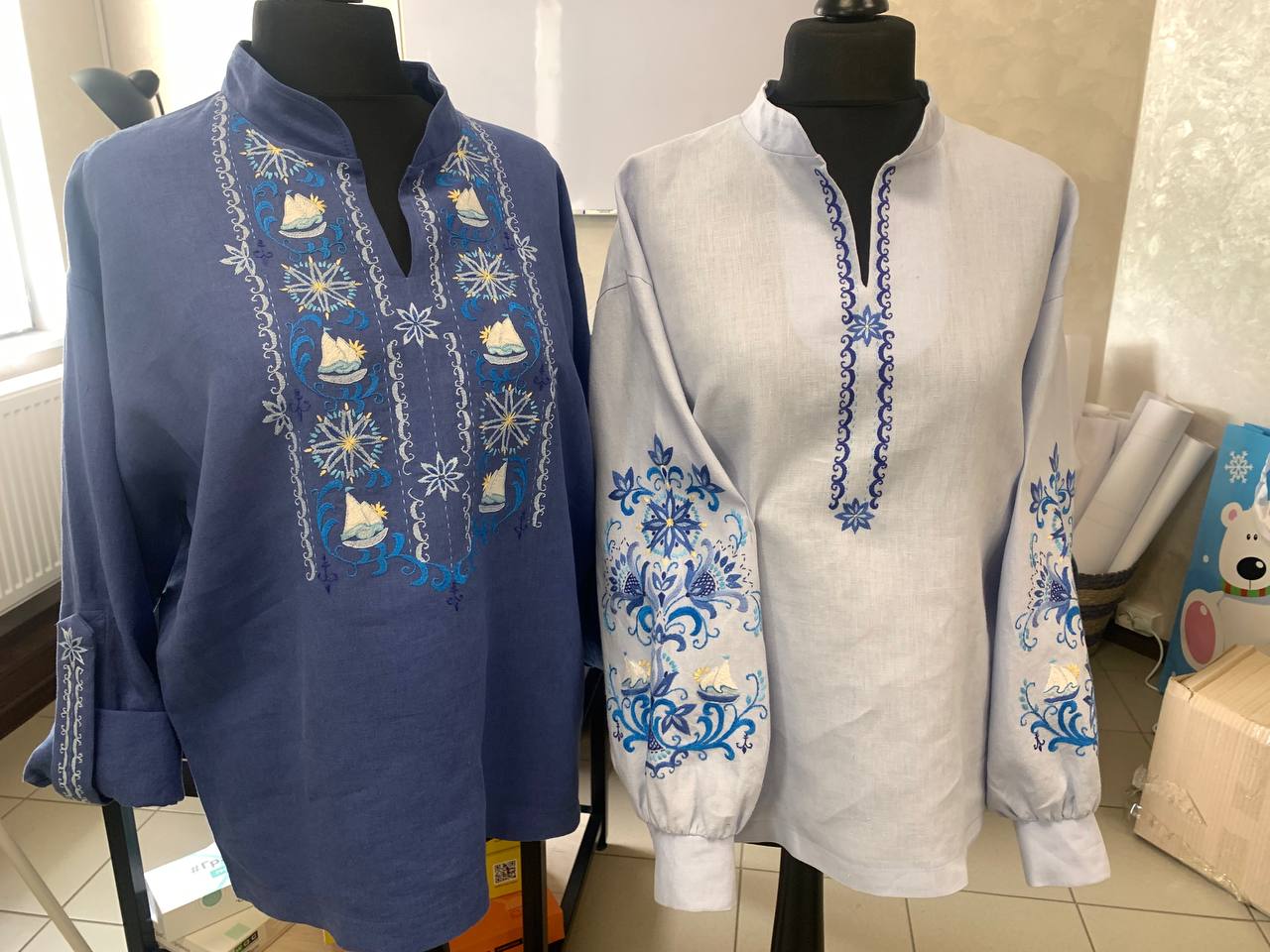
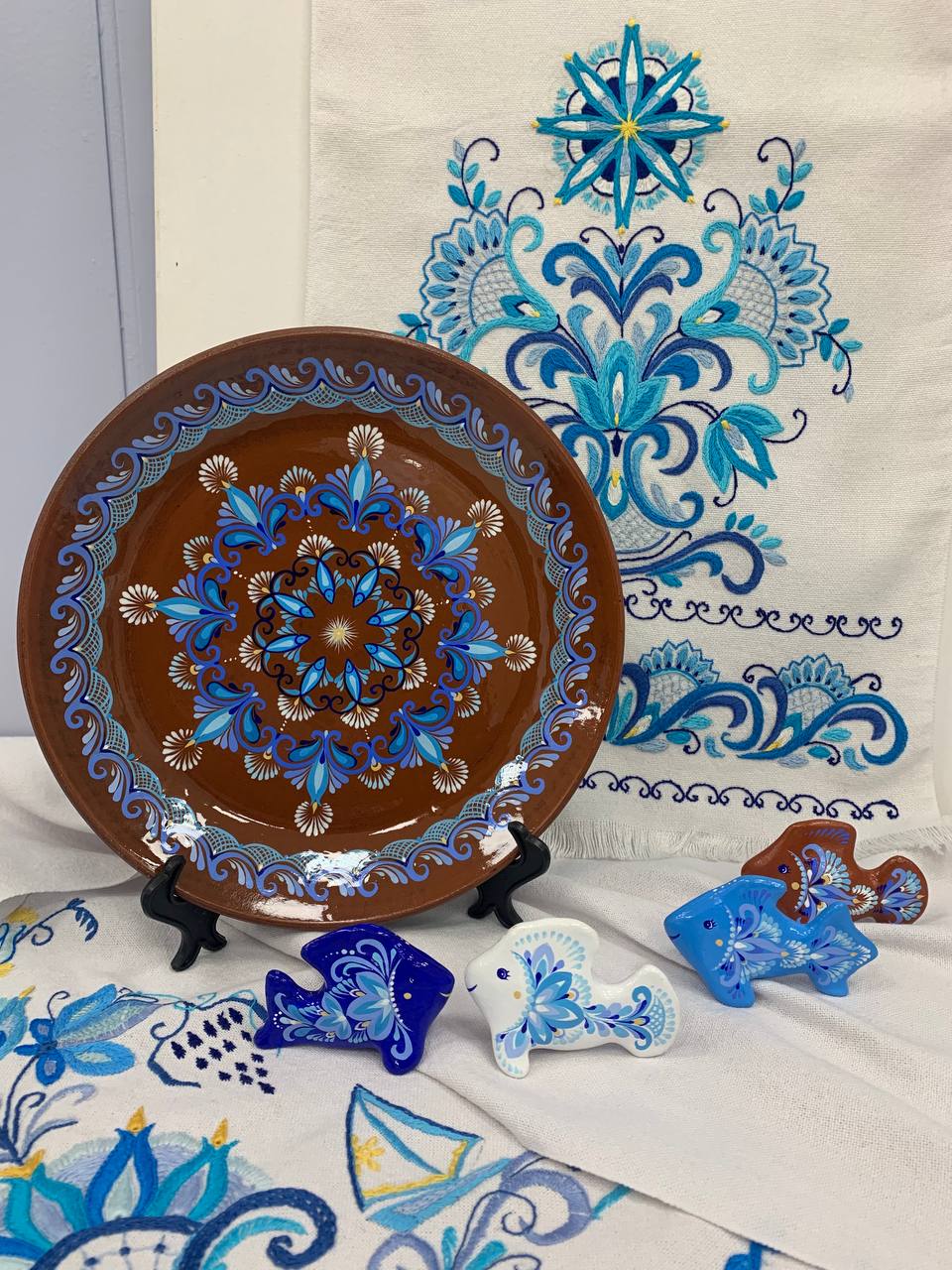
As for paints, the choice today is wide. Depending on preference, on the surface and on its area, one may choose gouache, acrylic, engobe, water-based emulsion and more — but it is important to keep to the principal colour range.
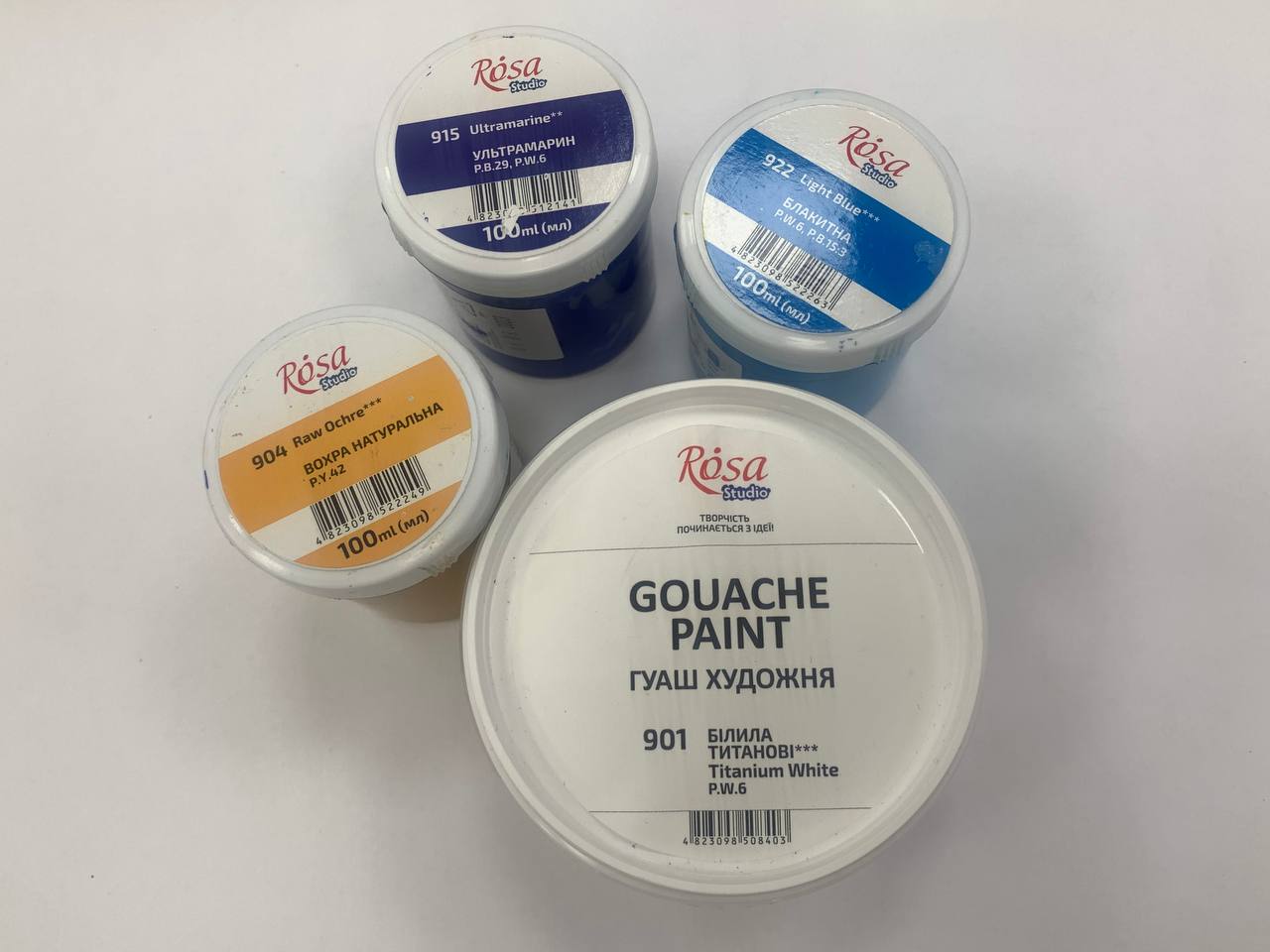
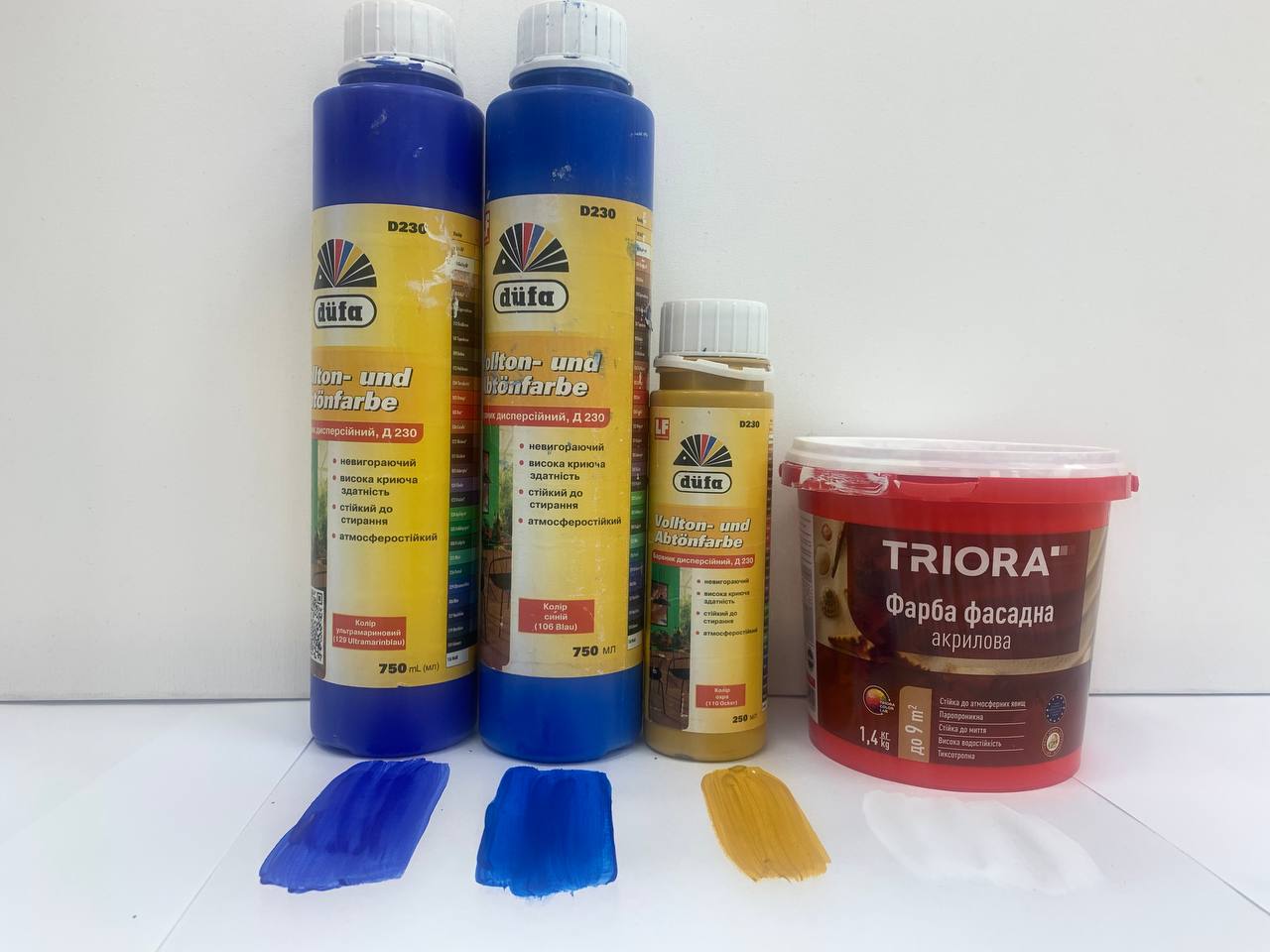
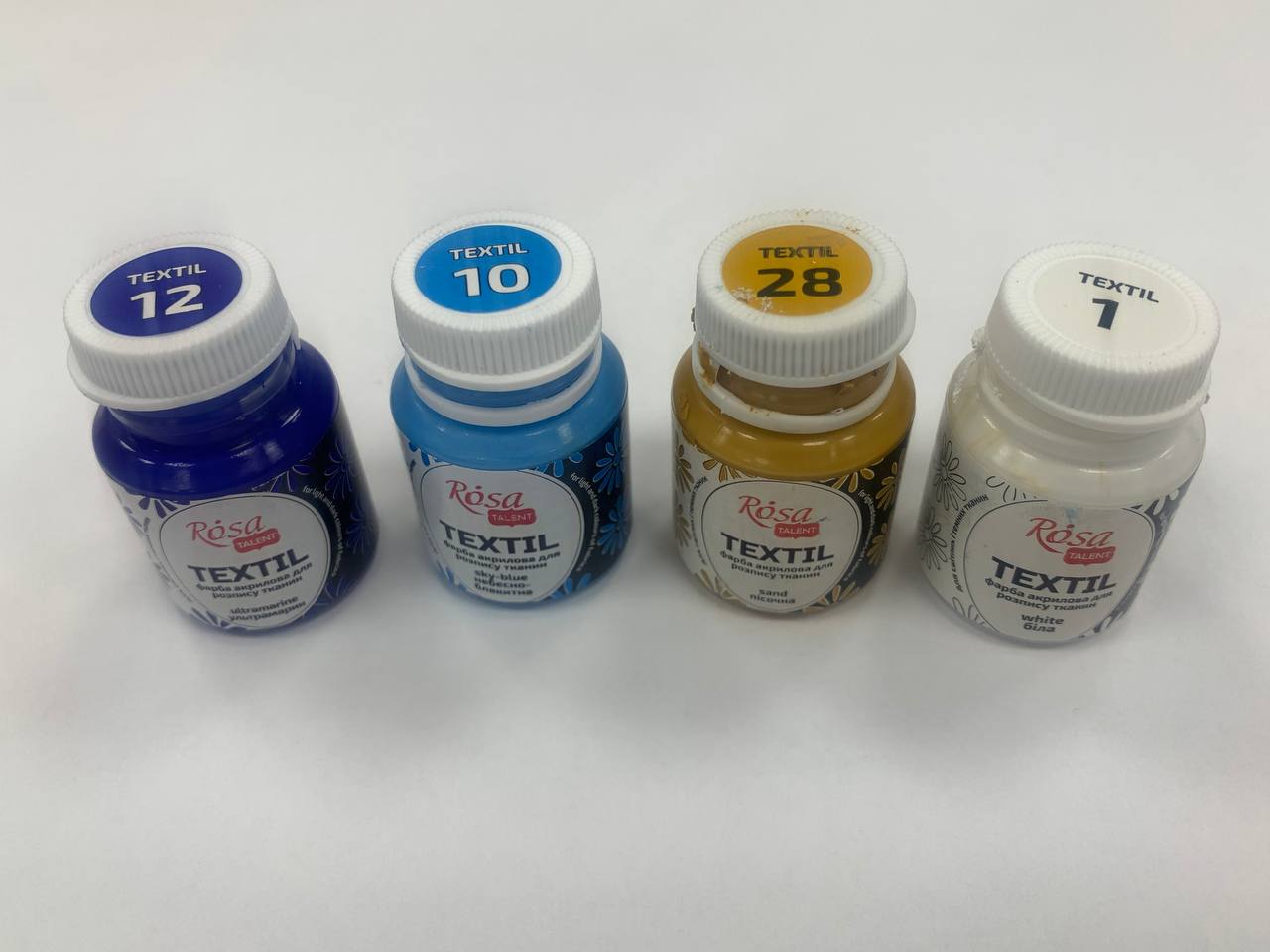
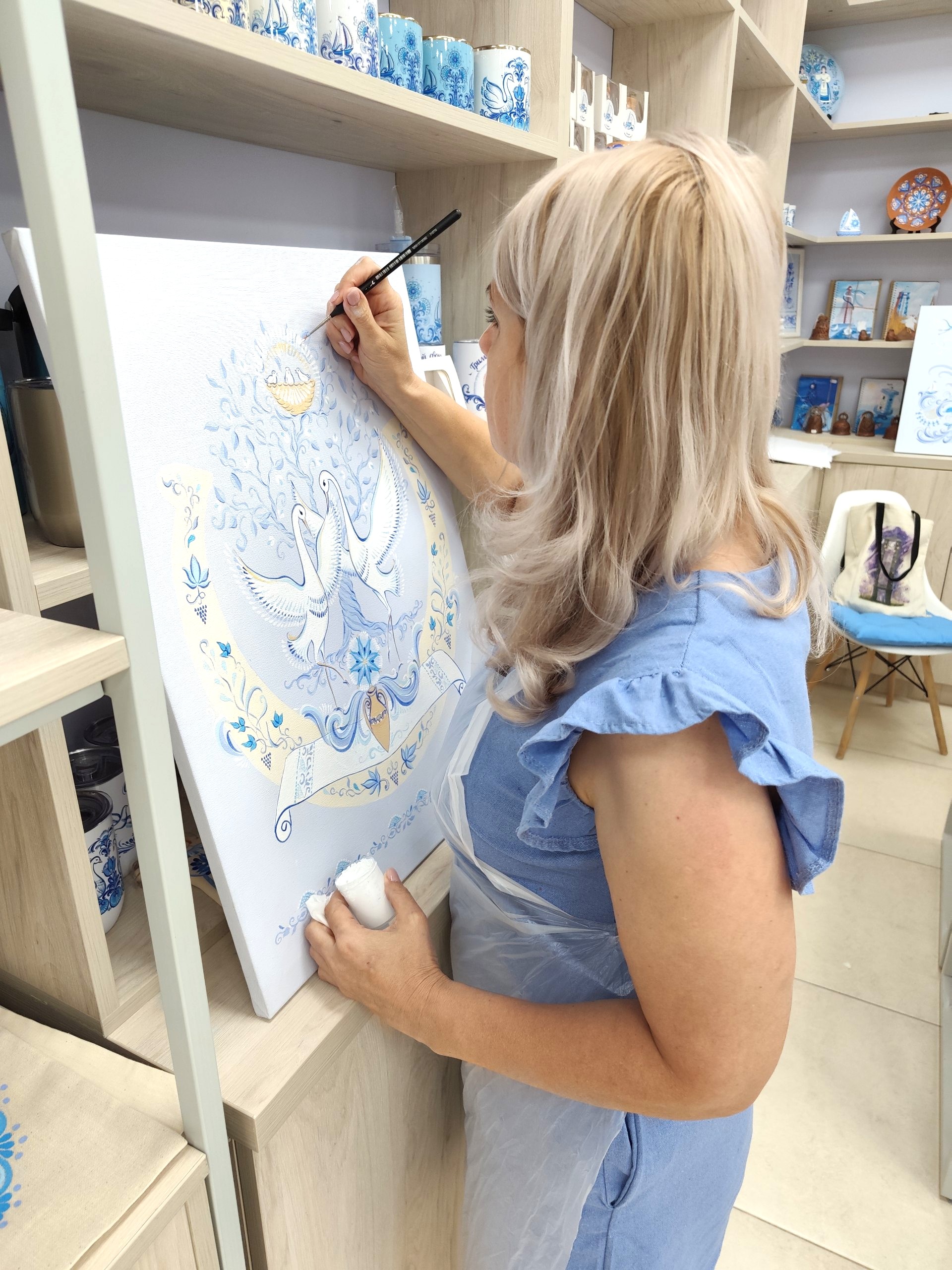
At the beginning of an acquaintance with Tavrian painting it is recommended to use watercolours and squirrel or synthetic brushes nos. 1–2. For “filling” large surfaces, synthetic brushes nos. 3–5 will serve. Those who have never painted before will need some time to master the basic elements. There is no need to be discouraged if the first attempts are not quite what was hoped. Remember learning letters at school — not everything comes at once. Time is needed for the hand to grow used to certain movements, for lightness and accuracy to appear, and for the ability to control the pressure on the brush. So one should not give up, but go on working — and soon, among the “little worms” and “blots,” the first “waves” and “drops” will appear.
And never forget: “Tavryka” has far fewer basic elements than there are letters in the alphabet, and yet most people can write… Work, and it will come. When the principal elements have been mastered, one may move on to building more complex forms from them. If it is still hard to do them freehand, help yourself — draw a faint pencil scheme, as in a school copybook.
If you cannot wait to move on to complex narrative compositions of Tavrian painting, a few pieces of advice are worth keeping in mind.
“A good sketch is two-thirds of the work” — a golden rule that applies not only to painting. It is better to spend more time on the sketch than to spoil materials and then redo the whole piece.
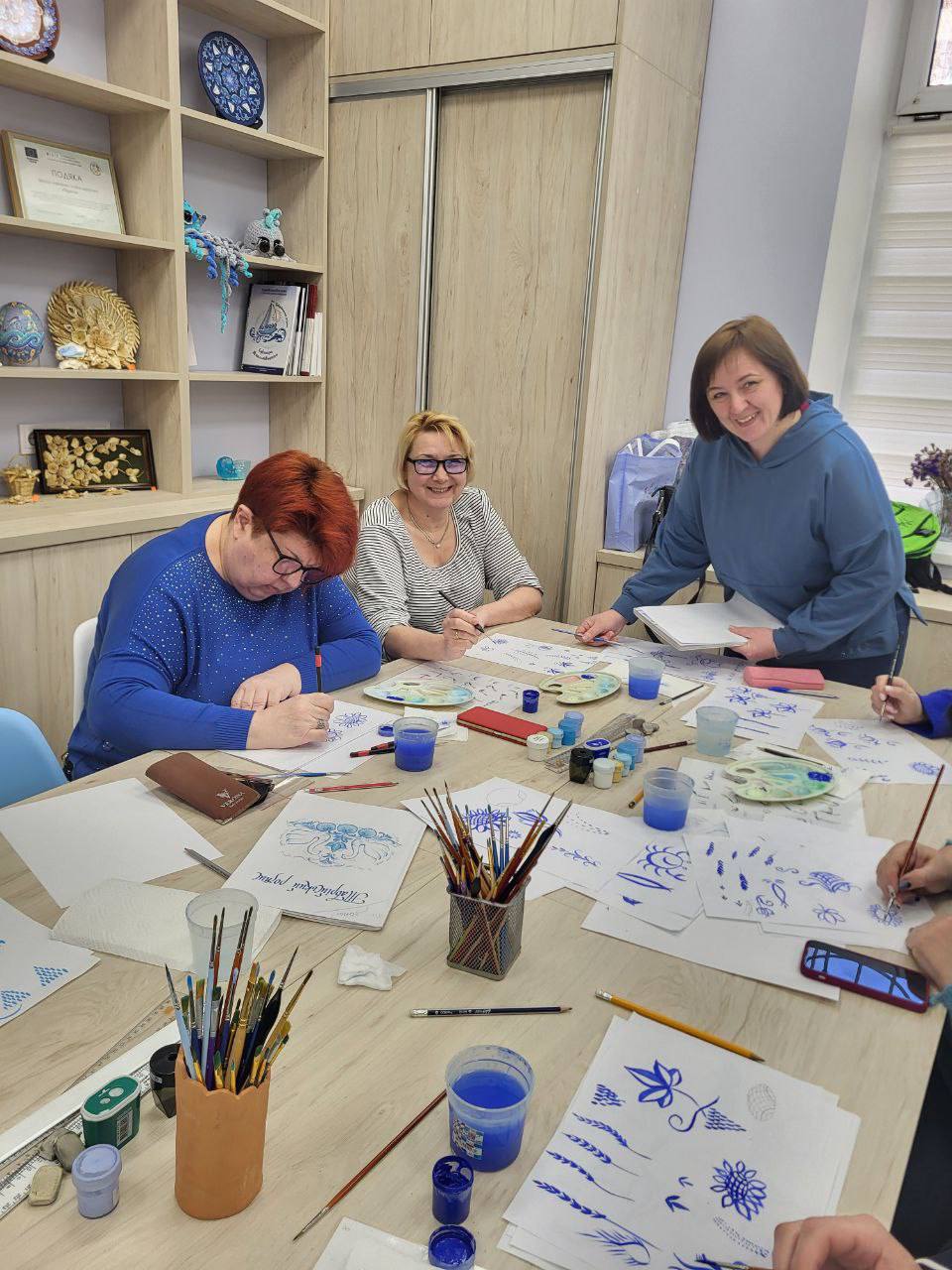
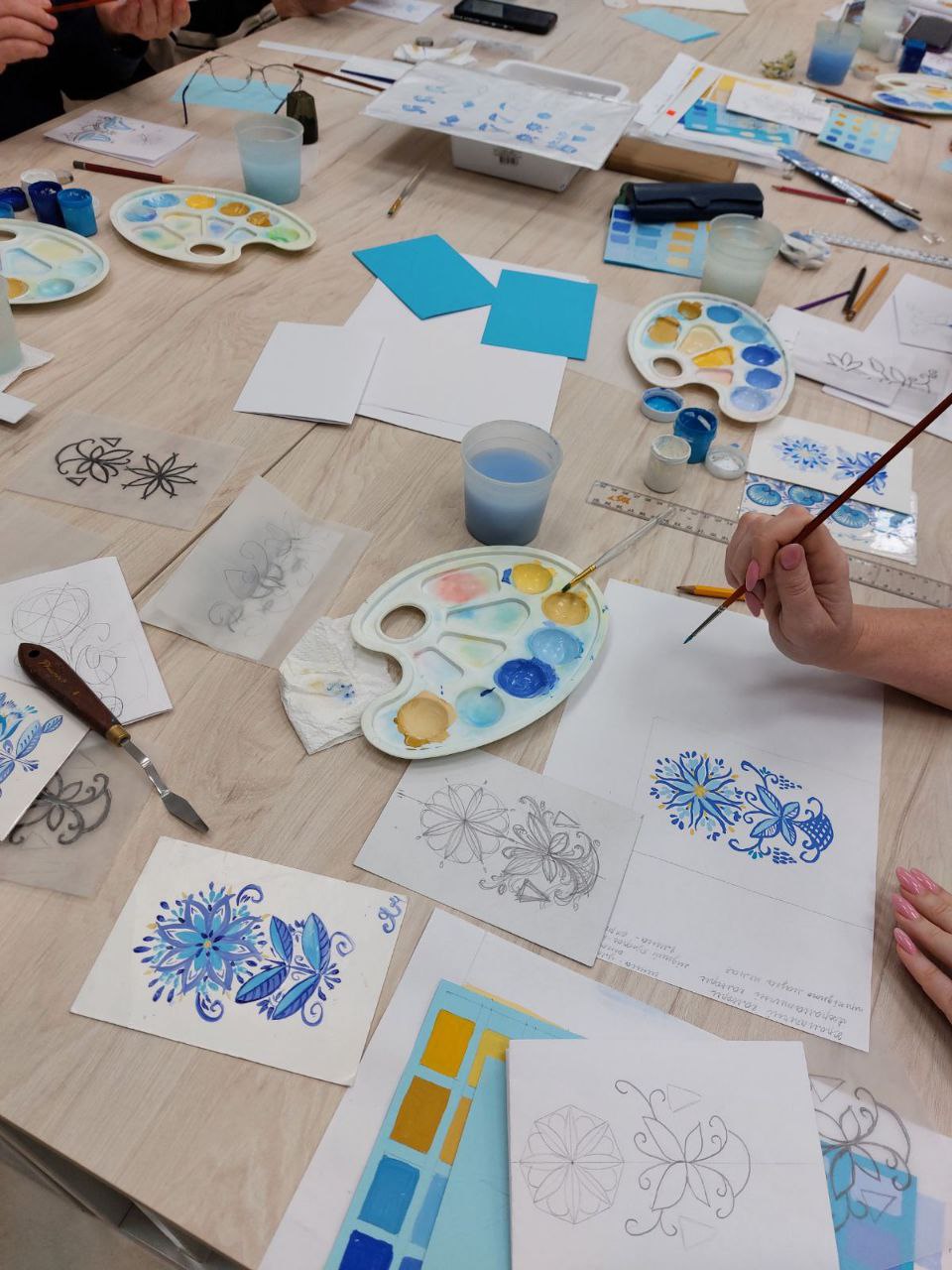
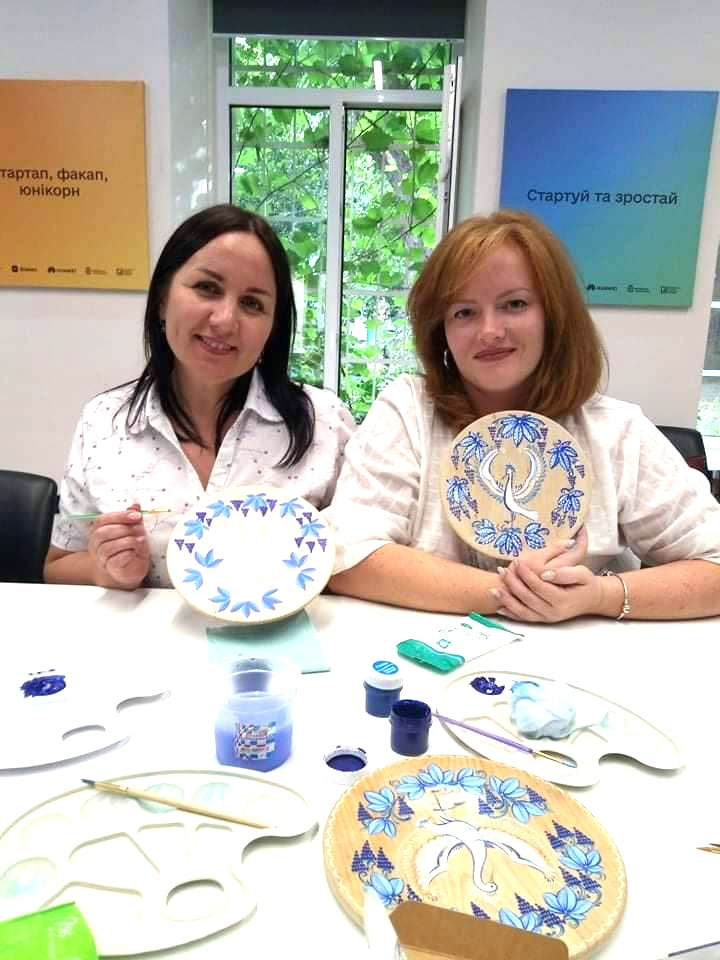
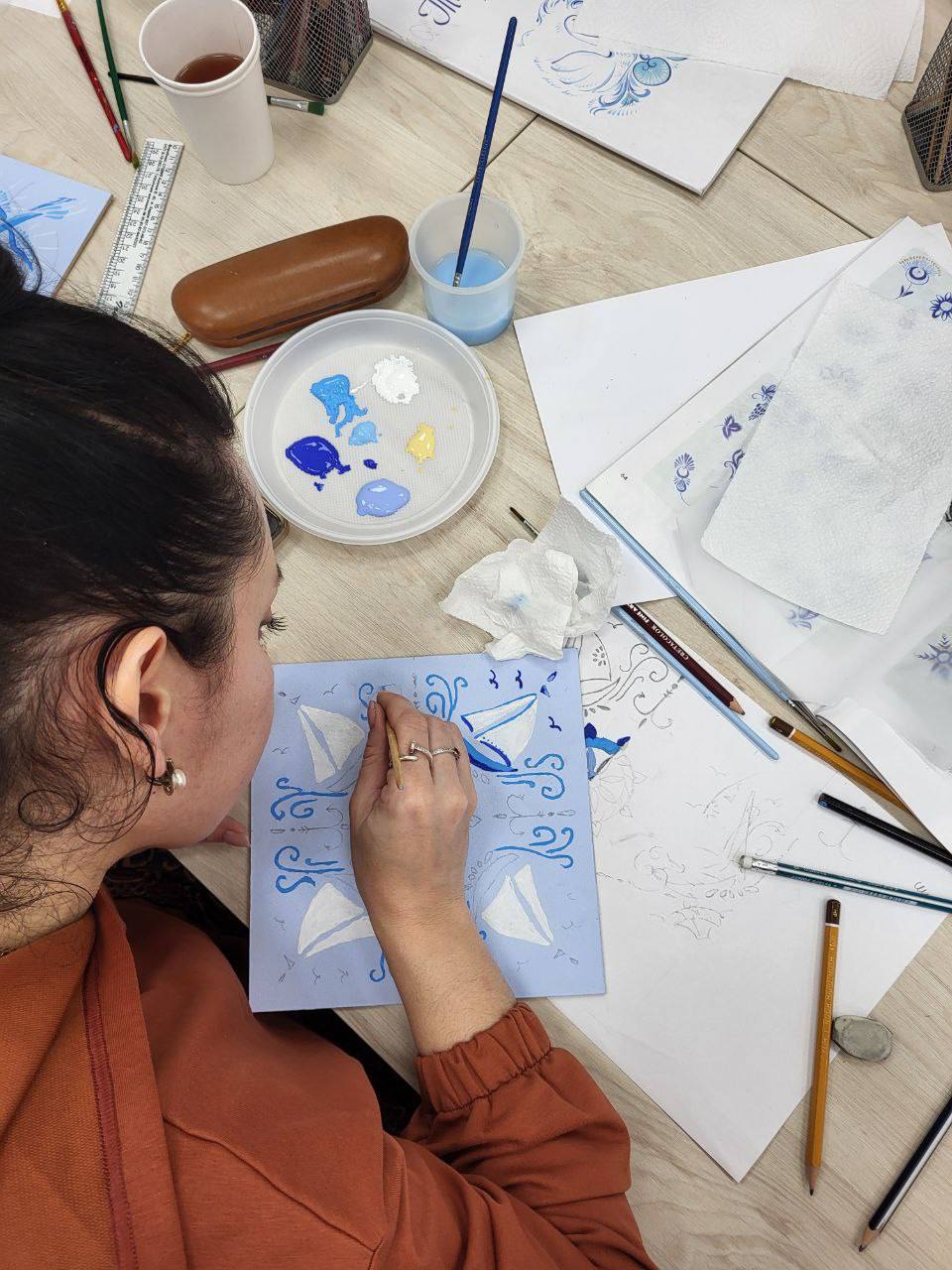
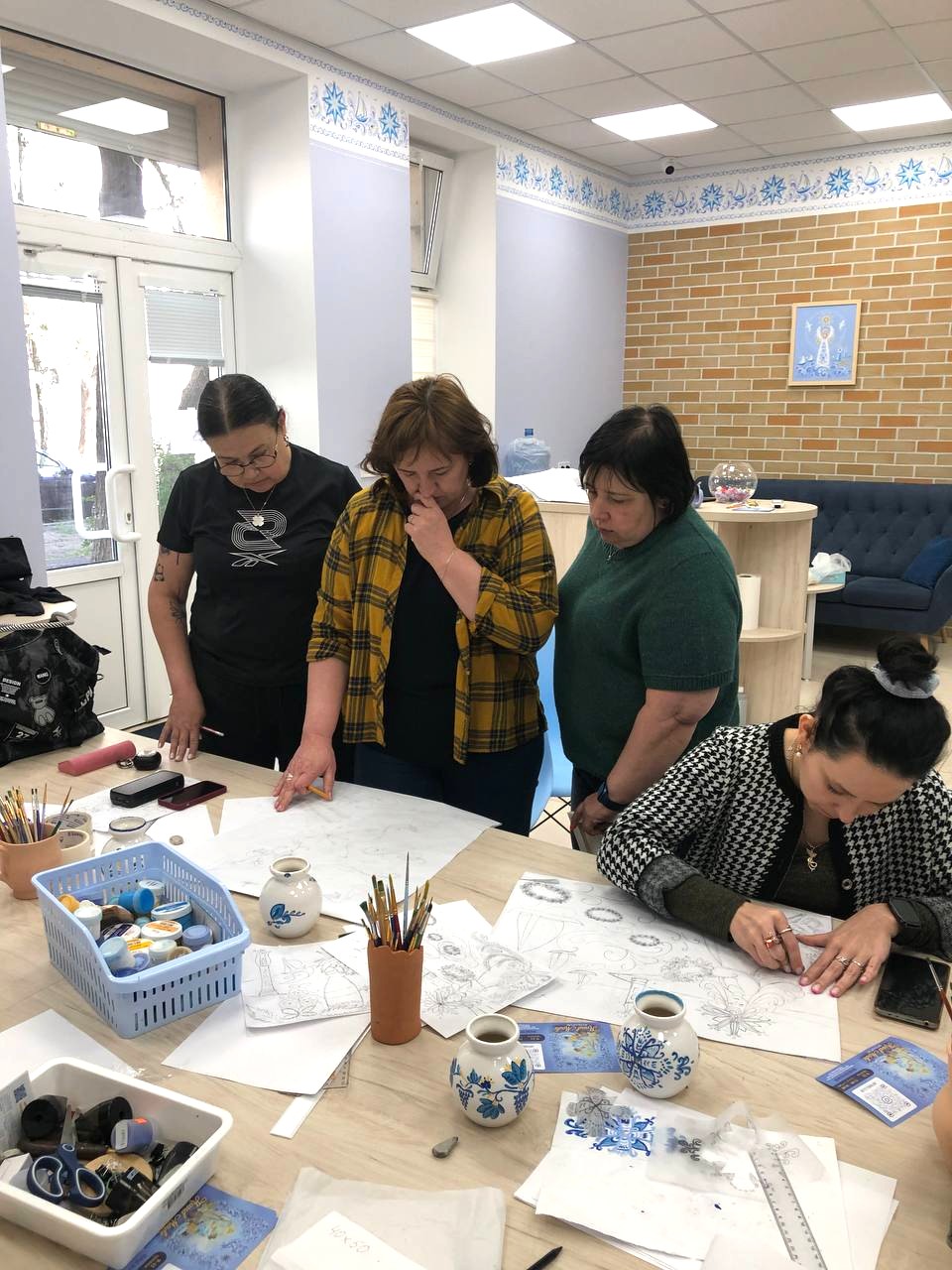
For a successful sketch one needs a good grasp of the subject, studies of the elements that will be used, and a thought-through composition — the placing of every element so that it carries the idea and looks harmonious.
The accepted laws and principles of composition have not been abolished either: a compositional centre, the principal and the secondary, balance, and so on. Give attention to colour as well; think through the placing of the main colour masses. Colour can lift what is principal and quiet what is secondary; it can also convey planes, even in a flat decorative composition.